

MoH Launches Nationwide Vaccination Campaign To Protect 15 Million Children

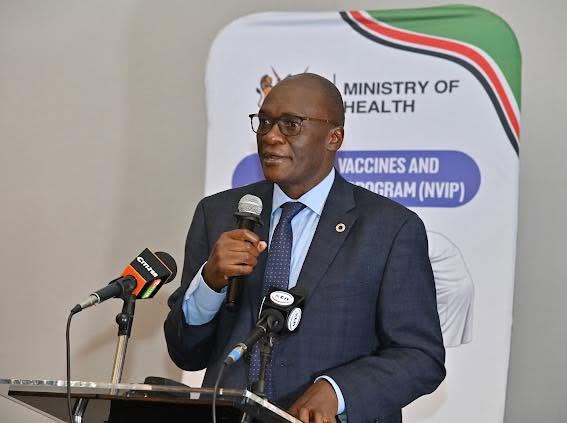
The Ministry of Health has launched a nationwide 10-day integrated vaccination campaign targeting measles, rubella, and typhoid, which will run across all 47 counties from July 5 to 14, 2025.
Speaking during the launch in Nairobi, Director General for Health Dr. Patrick Amoth said the campaign aims to reach more than 15 million children across Kenya. He described the initiative as a major investment in the country’s future.
“This is more than a health intervention — it’s a bold commitment to our children’s future and a shared investment in Kenya’s prosperity,” said Dr. Amoth.
The vaccination drive will include the Measles-Rubella vaccine for children aged between 9 and 59 months and the Typhoid Conjugate Vaccine for children aged between 9 months and 14 years.
Dr. Amoth stressed the urgency of the campaign, revealing that Kenya recorded 2,949 measles cases and 18 related deaths between January 2024 and February 2025. “These aren’t just numbers — they represent real children and families affected by diseases we can prevent,” he said.
He further highlighted the typhoid burden, noting that Kenya records over 100,000 typhoid cases every year, with many affecting children in informal settlements. “The introduction of the Typhoid Conjugate Vaccine is a game-changer — a single dose offers protection for up to five years,” Dr. Amoth explained.
This campaign is part of the country’s broader “Big Catch-Up” initiative, which focuses on reaching children who have never received any vaccines or are under-immunized. “Reaching the last child in the last mile is not just a slogan — it’s a goal we are committed to achieving,” he said.
The Ministry also announced that the typhoid vaccine will now be included in Kenya’s routine immunization schedule at nine months of age, alongside the Measles-Rubella and Yellow Fever vaccines in relevant areas.
To address misinformation and increase public confidence, the Ministry has developed four strategic communication tools. These include the CIRI strategy, RICCO guidelines, an Interpersonal Communication Guide for health workers, and a Community Health Promoters Toolkit.
Dr. Amoth thanked key partners such as Gavi, WHO, UNICEF, PATH, and CHAI for their support and called on county governments, faith leaders, and communities to play their part in ensuring the success of the campaign. “Together, let’s vaccinate for today, protect for tomorrow, and lead for generations to come,” he said.

