

More Amendments Proposed In Basic Education Bill, 2025

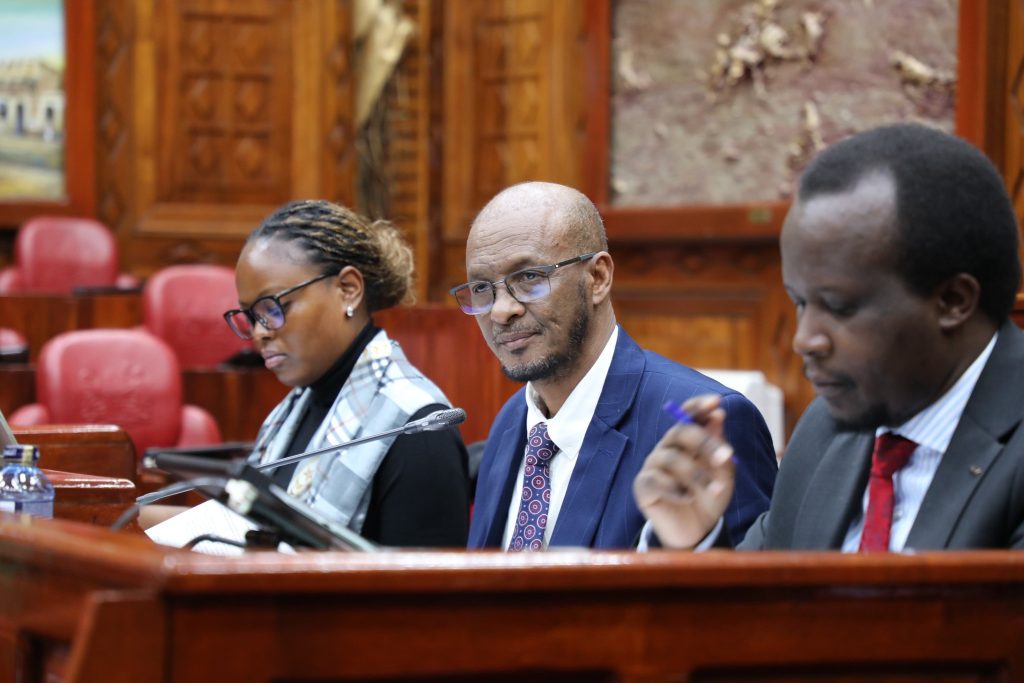
The National Assembly’s Education Committee has received fresh proposals to amend the Basic Education (Amendment) Bill, 2025 during a public participation forum held this week.
The forum brought together key education stakeholders, including the Kenya Union of Post Primary Education Teachers, World Vision Kenya, the Complementary Schools Association of Kenya (CSAK), and the Kenya Private Schools Association (KPSA).
The Bill, sponsored by MP Antony Oluoch, seeks to align the Basic Education Act with the Alternative Provision of Basic Education and Training (APBET) Policy of 2009 and the Basic Education Regulations of 2015. It aims to formally recognize and regulate non-traditional schools, especially those serving learners in informal settlements and marginalized areas.
One of the contentious clauses is Part VIIA, which proposes that middle-level institutions use curricula developed or approved by the Kenya Institute of Curriculum Development (KICD) or any agency approved by the Cabinet Secretary. Stakeholders, however, want the clause amended to clarify that KICD remains responsible for teacher education curriculum, while other accredited bodies can develop content for alternative programs such as APBET.
“We must protect the integrity of curriculum development while allowing flexibility for non-formal education institutions,” said a CSAK representative.
Other proposals include amending Section 7 of the Act to fix unclear wording on union representation. Stakeholders want it to clearly read: “Two representatives of Teacher Unions representing the interest of teachers.”
World Vision Kenya also urged the government to be mandated to provide enough teaching and non-teaching staff, as per national guidelines. They emphasized that while the Teachers Service Commission (TSC) should continue handling recruitment, the Education Ministry must ensure staffing levels are adequate.
“Children in APBET schools must not be forgotten in capitation and staffing allocations,” World Vision noted.
Clause 7 of the Bill, which tasks the Cabinet Secretary with providing infrastructure and resources for all schools including APBET, faced criticism. The Office of the Solicitor General argued this duty is already included in Section 39 of the Basic Education Act and called for the clause to be deleted.
Clause 10, which proposes to create a legal framework for APBET and adult education, also sparked debate. Both CSAK and World Vision said the 2015 Education Regulations already cover this and called for better alignment with existing policy.
“This law must complement—not contradict—the APBET policy framework,” said a CSAK official.
The Kenya Private Schools Association voiced concerns over proposed levies and mandatory data sharing under Clause 52G and Section 79. They said the measures would burden private schools that serve low-income communities.
“Sixteen percent of learners in urban informal settlements attend low-fee private schools. They must not be penalized for stepping in where public schools fall short,” said a KPSA official.
They also urged the government to conduct impact assessments before introducing any levies and to extend capitation funds to APBET schools that meet qualification standards.
The Education Committee will now review all submissions and prepare a report for Parliament.
“We thank stakeholders for their well-reasoned submissions. The Committee is committed to ensuring the law promotes equity and access to quality education for all children in Kenya,” said the session chair, Abdul Haro.