

Moritz Bleibtreu Siblings: All About Cilli Drexel

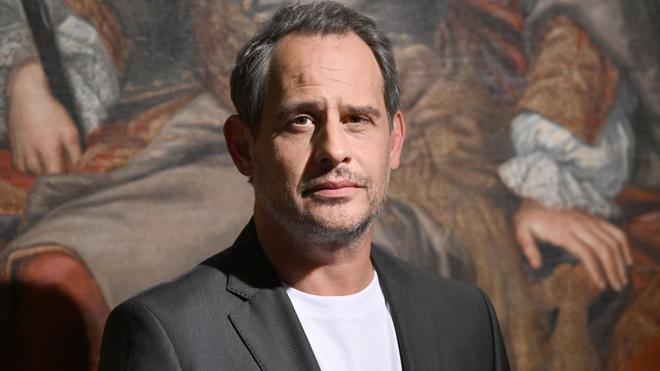
Moritz Bleibtreu PHOTO/Variety
Moritz Johann Bleibtreu is a renowned German actor, voice actor, and film director born on August 13, 1971, in Munich, Bavaria, West Germany.
Raised in Hamburg’s St. Georg district, he grew up in a family deeply rooted in the performing arts, with his mother, Monica Bleibtreu (1944–2009), and his father, Hans Brenner (1938–1998), both being established actors.
His grandfather was the writer Renato Attilio Bleibtreu, and his lineage includes notable ancestors such as his great-grandmother Maximiliane Bleibtreu, her sister Hedwig Bleibtreu, and their parents Amalie and Sigmund Bleibtreu, many of whom were actors.
The Bleibtreustrasse in Berlin is named after Georg Bleibtreu, a distant ancestor who was a battle painter.
Fluent in German, English, French, and Italian, Bleibtreu entered the spotlight early, appearing in children’s television series like Neues aus Uhlenbusch at the age of six, a show written by his mother and her then-husband Hans Peter Korff.
Siblings
Moritz has a half-sister named Cilli Drexel, who is also an actress.
Interestingly, Bleibtreu portrayed one of three dysfunctional siblings in the 2004 film Agnes and His Brothers, where he played Hans-Jörg, a sex-addicted librarian, alongside co-stars depicting a politician and a trans woman, all grappling with family baggage and personal turmoil.
However, this role was fictional and not reflective of his real-life family dynamics.
Career
Bleibtreu’s career spans over four decades, beginning with early television appearances and evolving into a prolific presence in German and international cinema.
After studying abroad, he returned to Hamburg in 1992 to perform at the Thalia Theater and the Schauspielhaus.
Also Read: Josie Loren Siblings: All About Javier Lopez


His screen debut came in 1993 with a role in the television series Schulz & Schulz, followed by smaller parts in films like The Little Innocent (1994), where he played Thorsten, a gay bartender in Hamburg’s red-light district.
He gained early recognition in the romantic comedy Talk of the Town (1995) as Karl, a naive homosexual carpenter.
Bleibtreu’s breakthrough arrived in 1997 with Knockin’ on Heaven’s Door, where he portrayed Abdul, earning him critical acclaim.
International fame followed in 1998 with Run Lola Run, directed by Tom Tykwer, in which he played Manni, the frantic boyfriend in the high-energy thriller that became a cult classic.
He continued with standout roles, including Tarek Fahd in The Experiment (2001), a psychological drama based on the Stanford prison experiment, and the stoner comedy Lammbock (2001).
His versatility shone in films like Im Juli (2000), Elementary Particles (2006), and The Baader Meinhof Complex (2008), where he depicted terrorist Andreas Baader.
Hollywood ventures included Speed Racer (2008) as the Grey Ghost and World War Z (2013).
More recently, he appeared in Bonhoeffer: Pastor. Spy. Assassin. (2024) and has nearly 100 acting credits, including voice work and directing.
Bleibtreu has also served on juries, such as at the 25th Moscow International Film Festival.
Accolades
Bleibtreu won the German Film Award for Best Leading Actor twice: first for Im Juli (2000) and again for The Experiment (2001).
In 2006, he received the Silver Bear for Best Actor at the Berlin International Film Festival for his role in Elementary Particles, directed by Oskar Roehler.
Bleibtreu earned a Film Award in Gold for Outstanding Supporting Actor in 1997 for Knockin’ on Heaven’s Door.
He has been nominated for European Film Awards, including for European Actor in 2009 for The Baader Meinhof Complex and Audience Award for Best Actor in 2001.
Additional honors include nominations at the German Screen Actors Awards (2022), German Television Awards (2022), and Romy Gala in Austria (2022), as well as a win at the Tallinn Black Nights Film Festival in 2020.
His work has also contributed to films receiving broader acclaim, such as Run Lola Run, which won seven German Film Awards.

