

MPs Call for Predictable Funding to Ensure Timely Payment of UHC Workers

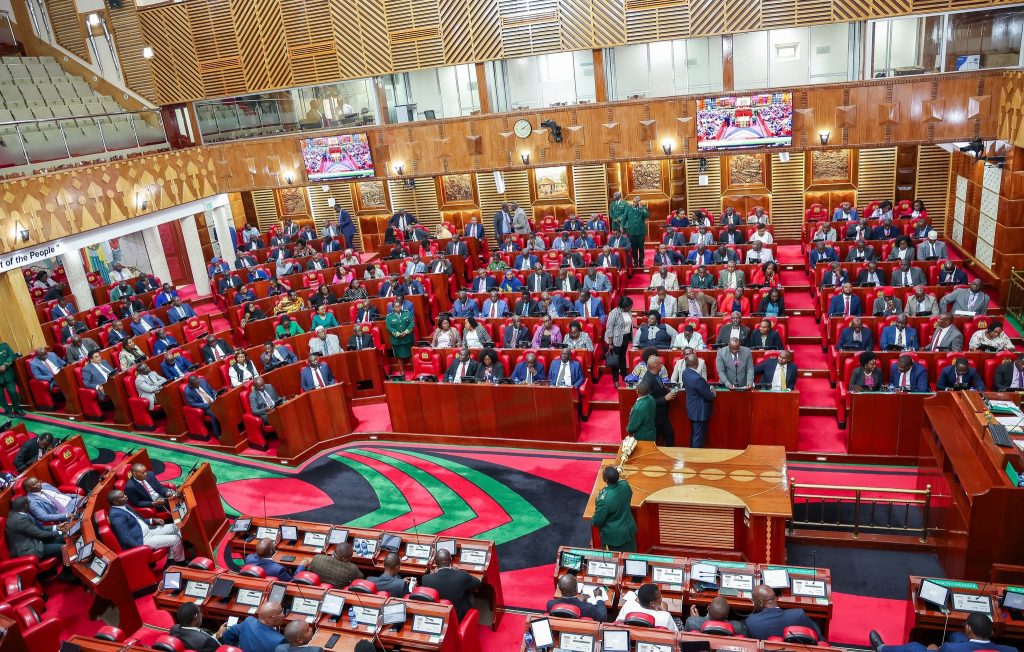
The National Assembly’s Budget and Appropriations Committee has called for a predictable revenue-sharing framework to ensure timely payment of Universal Health Coverage (UHC) workers and prevent counties from accumulating salary arrears.
The issue emerged during a consultative meeting between the committee and the Commission on Revenue Allocation (CRA) on draft recommendations for sharing revenue between the national and county governments in the 2027/28 financial year.
Committee Chairperson and Alego Usonga MP Samuel Atandi said proposed allocations must be assessed against the actual cost of devolved functions, the country’s revenue outlook and competing expenditure demands facing both levels of government.
Atandi emphasised the need for a transparent, evidence-based approach to determining county allocations, noting that counties require adequate and predictable resources to meet their service delivery obligations.
“We must also address the effectiveness and predictability of transfers to county governments. Timely and predictable disbursements are essential to enable counties to plan, meet their obligations and deliver services without accumulating arrears,” he said.
The meeting considered proposals to transition UHC workers to permanent and pensionable terms, raising questions about how their salaries should be funded and transferred to county governments.
According to the CRA, the Ministry of Health recruited 9,724 UHC personnel through the Public Service Commission in 2020 for an initial three-year period. Of these, 8,550 were deployed across the 47 counties, with their salaries processed by the Ministry of Health.
The Ministry of Health and the Council of Governors later agreed that the workers should be transitioned to permanent and pensionable terms, with their remuneration based on rates prescribed by the Salaries and Remuneration Commission (SRC).
However, incorporating their salaries into the equitable share allocated to counties would require a review of the existing formula used to distribute revenue among the 47 counties.
CRA Chairperson Mary Chebukati said the commission was seeking Parliament’s guidance on whether the revenue-sharing formula could practically be reviewed before April 2027, given the lengthy consultations involved in the process.
The CRA proposed that funding for UHC workers’ salaries continue through conditional allocations to county governments until the Fourth Basis for sharing revenue among counties is reviewed.
Beyond UHC financing, Atandi called on the commission to explain the assumptions behind its proposed allocations, including how inflation, county expenditure needs and existing service delivery responsibilities had been considered.
He noted that while the national government faces substantial debt-servicing obligations and other national commitments, county governments remain responsible for essential services, particularly healthcare, agriculture, water and local infrastructure.
CRA Commissioner Fatuma Gedi said early consultations were intended to resolve outstanding issues and build consensus before the commission submits its formal revenue-sharing recommendations.
“One of the legacies we would like to leave is a revenue-sharing recommendation that does not end up in mediation,” she said.
The commission plans to submit its recommendations ahead of the 2027/28 budget cycle.

