

Murkomen says biometric and forensic systems mark new era in Kenya’s fight against crime

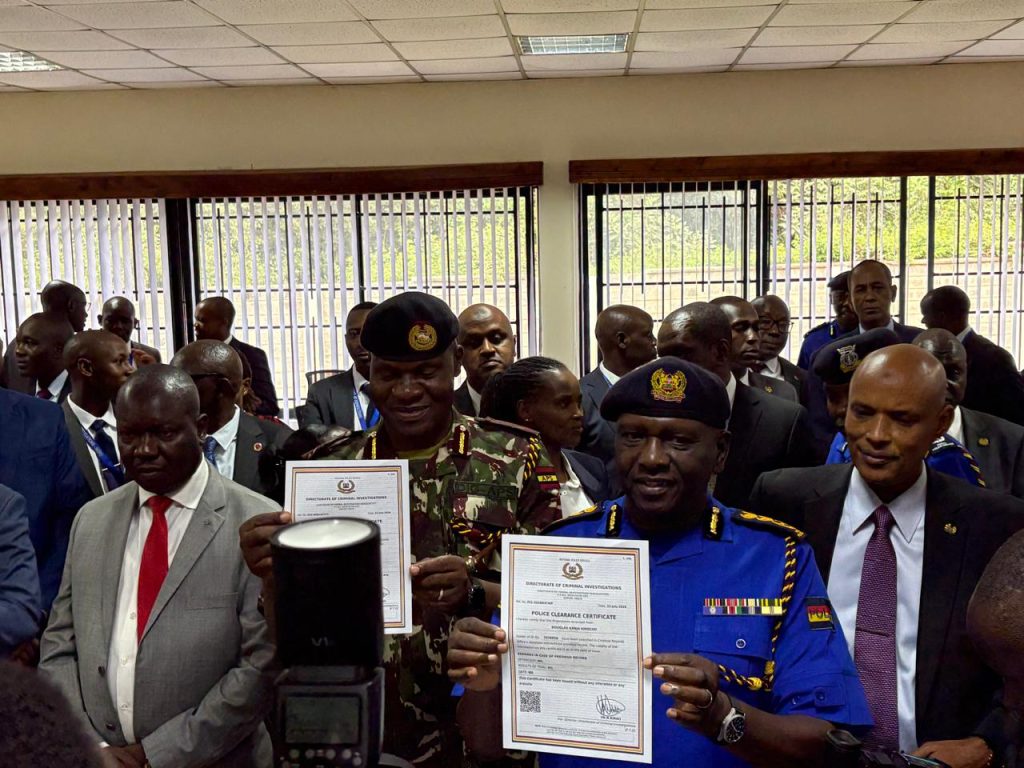
Interior Cabinet Secretary Kipchumba Murkomen hailed the international accreditation of the Forensic Evidence Management Unit (FEMU) and the launch of the Multi-Biometric Identification System (MBIS–ABIS Version 5) as a major milestone in modernising Kenya’s security and criminal justice system.
Speaking during the launch, Murkomen said the developments mark a shift from traditional policing to a science-driven, technology-enabled and citizen-centred approach to law enforcement.
“Today marks a defining moment in the transformation of Kenya’s security architecture. We are moving away from old-style policing toward a system built on science, technology and an institution more attuned to the needs of ordinary citizens,” he said.
Murkomen said the accreditation of FEMU places Kenya on the global map as the first country in Africa to have an internationally accredited Forensic Evidence Management Unit, describing it as a strategic national asset that will strengthen the administration of justice and boost public confidence in law enforcement.
The CS said the reforms align with President William Ruto’s Bottom-Up Economic Transformation Agenda (BETA), which prioritises the modernisation of the security sector through investment in technology, innovation and institutional excellence.
Murkomen noted that public complaints raised during the Ministry’s Jukwaa la Usalama forums—including delays in obtaining Police Clearance Certificates and slow investigations due to poor evidence management—had informed the reforms.
He said the rollout of MBIS–ABIS Version 5 significantly expands Kenya’s biometric capabilities, increasing records storage capacity from two million to ten million and raising daily fingerprint search capacity from 4,500 to 20,000.
The new system is also expected to reduce the processing time for Police Clearance Certificates from up to 14 days to just 24 hours.
To maximise the system’s potential, Murkomen said the government plans to integrate MBIS with the National Registration Bureau, the Judiciary, the Immigration Department and INTERPOL through the necessary legislative and policy frameworks. The integration will support real-time identity verification, intelligence sharing and enhanced cross-border cooperation in tackling crime.
He added that biometric enrolment services will be rolled out to police stations across the country to bring services closer to citizens and accelerate criminal investigations.
On forensic investigations, Murkomen said the accreditation of FEMU means Kenya’s chain of custody for evidence now meets internationally recognised standards, ensuring evidence is properly collected, stored and presented in court.
“This will strengthen prosecutions, increase successful convictions and enhance the credibility of our justice system,” he said.
The CS also revealed that the Directorate of Criminal Investigations is pursuing international accreditation for its Chemistry, Biology, Bomb Disposal, Cyber and Digital Forensics units, with support from partners including ANAB and the International Criminal Investigative Training Assistance Program (ICITAP).
Murkomen said the government’s long-term vision is anchored on three key principles: technological sovereignty through secure digital systems, professional excellence based on international standards, and citizen-centred service delivery that restores public trust in the police.
He pledged continued investment in policy, funding and coordination to ensure every police station, investigator and forensic unit meets the new standards.
“What we celebrate today is one milestone in a longer journey. More accreditations are coming, more systems will be upgraded and more reforms are already underway,” Murkomen said.

