

Nadine Trintignant Siblings: All About Serge and Christian Marquand

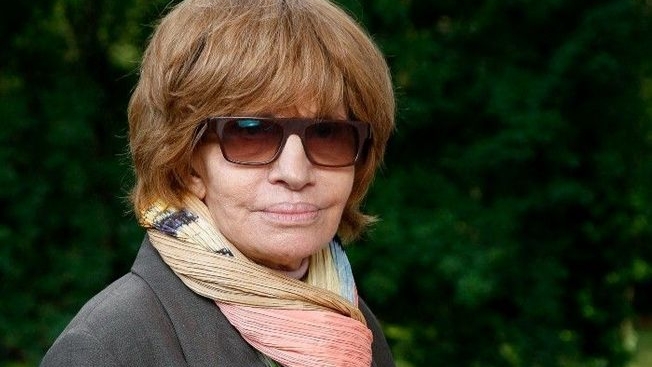
French filmmaker Nadine Trintignant PHOTO/Lé Pride
Nadine Trintignant, born Lucienne Marquand on November 11, 1934, in Nice, France, is a renowned French filmmaker, novelist, producer, editor, and screenwriter.
She has built a distinguished career in cinema, particularly during the 1970s when opportunities for women directors in France expanded significantly.
Trintignant’s work often delves into intimate explorations of family dynamics, romantic relationships, and feminist themes, drawing inspiration from her own life experiences.
Her marriage to acclaimed actor Jean-Louis Trintignant in 1960 not only intertwined her professional path with his but also produced a family deeply embedded in the arts.
After their separation in 1976, she entered a long-term relationship with director Alain Corneau, who adopted two of her children.
Siblings
Nadine’s older brother, Christian Marquand, born in 1927, was a versatile French actor and director known for roles in films like And God Created Woman (1956) alongside Brigitte Bardot and Barbarella (1968).
He also directed the adventure film Mamie Blow in 1969 before passing away in 2000.
Her other brother, Serge Marquand, born in 1930, carved out a prolific career as a character actor, appearing in over 100 films and television shows, including The Three Musketeers adaptations and Bonnie and Clyde (1967).
Serge, who shared a close bond with Christian, continued working until his death in 2024 at age 94.
Career
Trintignant’s journey in cinema began early, at just 15 years old, when she dropped out of school to work as a lab assistant in a film processing facility.
Also Read: Paul Thomas Anderson Siblings: All About Amanda, Elizabeth and Kathryn Anderson
Her breakthrough came with credited work as an assistant editor on Jules Dassin’s seminal crime thriller Rififi in 1955, followed by collaborations with luminaries such as Jacques Doniol-Valcroze on Si Paris nous était conté (1956), Jean-Luc Godard on Le Petit Soldat (1963), and Serge Bourguignon on Les Grands Chemins (1963).
These experiences built her reputation as a meticulous editor, contributing to a diverse array of French New Wave and classic films throughout the late 1950s and 1960s.
Transitioning to directing, Trintignant made her debut with the 1965 short film Fragilité, ton nom est femme, a poignant examination of women’s vulnerabilities.
Her first feature, Mon amour, mon amour (1967), marked her as a bold voice in French cinema, tackling taboo subjects like abortion within a romantic narrative.
Throughout the 1970s, she flourished amid the era’s feminist wave, directing intimate dramas such as Ça n’arrive qu’aux autres (1971), starring Catherine Deneuve and Marcello Mastroianni, and Le Voyage des noces (1976), which critiqued marital disillusionment.
Her films frequently featured her husband Jean-Louis and later her children, blurring the lines between personal and professional spheres—evident in Premier Voyage (1980), where Marie and Vincent Trintignant played siblings on a transformative journey.
Into the 1990s and 2000s, Trintignant sustained her output with family collaborations, including Rêveuse Jeunesse (1994) and Fugueuses (1995) starring Marie, and L’Insoumise (1996), co-written with Vincent and featuring both Jean-Louis and Marie.
Her final directorial effort, the 2003 miniseries Colette, une femme libre, was a heartfelt biopic of the novelist Colette, tragically overshadowed by Marie’s death during production; Trintignant completed it as a dedication to her daughter.
Beyond directing, she authored novels like Ma fille, Marie (2004), a memoir reflecting on loss and resilience.
Accolades
Trintignant’s debut feature Mon amour, mon amour (1967) garnered a Palme d’Or nomination at the Cannes Film Festival, a rare honor for a woman filmmaker at the time and a highlight of her early career.
This achievement spotlighted her ability to weave personal narratives with broader social commentary, earning praise for its sensitivity and innovation.
Over the decades, Trintignant received the Officier des Arts et des Lettres in 2001, a prestigious French honor celebrating her cultural impact.

