

Nagoya Record Rainfall 2026: 104.5 mm in One Hour Causes Devastating Floods

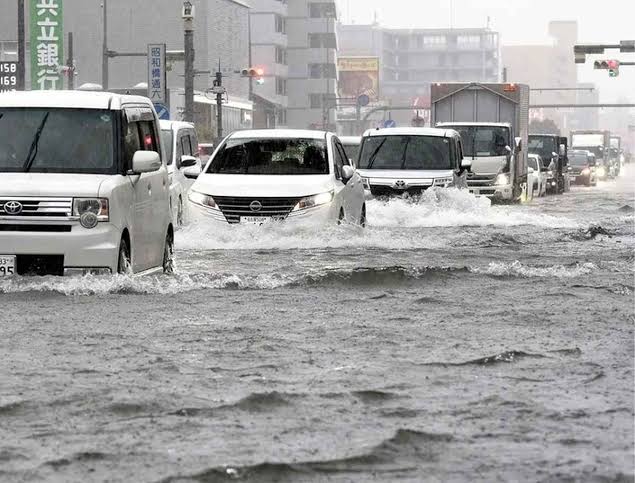
Nagoya Record Rainfall 2026
Nagoya, Japan, experienced unprecedented rainfall on Tuesday, September 8, 2026, when 104.5 mm of rain fell in a single hour – the highest hourly rainfall total ever recorded in the city since official record-keeping began in 1890.
The previous record of 97.0 mm, set during the “Tokai Heavy Rain” disaster in September 2000, was shattered as torrential downpours overwhelmed the city’s infrastructure and forced authorities to issue the highest-level emergency warnings.
Record-Breaking Downpour
The Japan Meteorological Agency (JMA) recorded the historic rainfall in the hour ending at approximately 4:53 p.m. local time. The intensity of the downpour caught many residents off guard, with streets transforming into raging rivers within minutes.
The 104.5 mm figure represents the most rain ever recorded in a single hour in Nagoya, surpassing a record that had stood for 26 years. The previous benchmark was set during the devastating Tokai Heavy Rain event, which caused widespread destruction across central Japan in September 2000.
Nagoya authorities responded swiftly to the unfolding crisis. The city issued a Level 5 “Emergency Safety Confirmation” (Kinkyū Anzen Kakuhō) warning – the highest level on Japan’s evacuation scale. This warning was issued for parts of at least three wards: Chikusa, Moriyama, and Meito.
A separate Level 5 emergency flood warning was issued at 6:20 p.m. for the Shonai River, which flows through Aichi and Gifu prefectures.
The evacuation orders affected a staggering number of people. Approximately 607,879 households, or about 1.17 million people, were placed under the highest-level evacuation advisory in Nagoya alone. Across three prefectures, the total number of people advised to evacuate reached 2.65 million.
The heavy rainfall brought Nagoya’s public transportation system to a standstill. All six lines of the Nagoya Municipal Subway were fully suspended starting around 5:30 p.m., stranding commuters during the evening rush hour.
Numerous other rail services were also halted, including sections of the Tokaido Shinkansen bullet train and various JR and private railway lines. With subways shut down and train services suspended, thousands of commuters found themselves unable to reach their homes.
Streets across the city were severely flooded, with some cars being swept away by the rushing water. The flooding also inundated underground shopping areas and subway stations, causing significant damage to businesses and infrastructure.
Japan has long been vulnerable to extreme weather events, including typhoons, heavy rain, and flooding. The country’s aging infrastructure has faced increasing pressure from more frequent and intense rainfall patterns attributed to climate change.
The Nagoya record comes just weeks after Japan experienced its hottest summer on record, with temperatures frequently exceeding 35 degrees Celsius. The extreme heat followed by intense rainfall has raised concerns among meteorologists about the increasing volatility of Japan’s weather patterns.
As of the evening of September 8, rescue and emergency services were working to assist stranded residents and assess the full extent of the damage. Authorities urged residents in affected areas to move to higher ground and avoid flooded roads.
The full impact on homes, businesses, and infrastructure will become clearer in the coming days as floodwaters recede and assessments are completed.
September 8, 2026, will be remembered as a day when Nagoya’s 136-year-old rainfall record was broken. The event serves as a stark reminder of the growing challenges posed by extreme weather and the importance of robust disaster preparedness systems.
Japan’s Level 5 warning system, while designed to protect lives, proved necessary as nature delivered a deluge that exceeded even the worst predictions. For the millions affected, the immediate focus remains on safety and recovery.

