

Nearly 5,000 Kenyan Refugees In Ethiopia Seek To Return Home

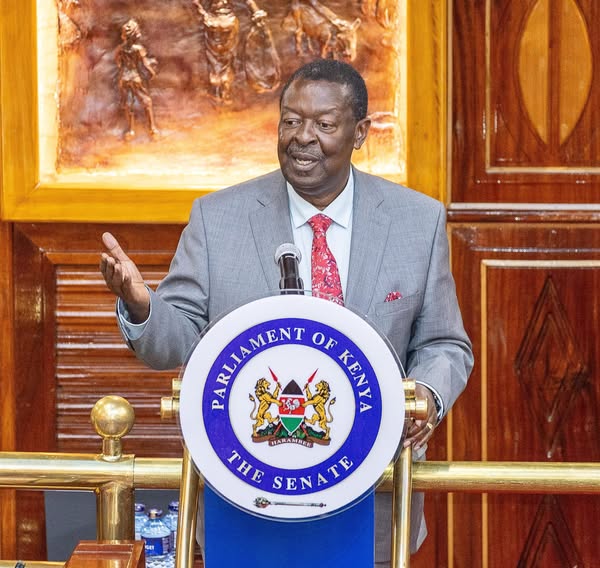
Prime Cabinet Secretary and Foreign and Diaspora Affairs Minister Musalia Mudavadi has informed the National Assembly that nearly 5,000 Kenyan refugees in Ethiopia are ready to return home.
Speaking in Parliament, Mudavadi said the refugees, known as the “Kenya Borena Refugees,” have been living in Ethiopia’s Magatho and Dilo towns since 2005/2006 after fleeing inter-ethnic conflicts in Marsabit County.
The refugees, primarily from the Borana community, were displaced due to clashes between the Borana and Gabra ethnic groups over natural resources, grazing lands, and territorial disputes.
Most of them originate from Marsabit County, specifically from Saku, North Horr, and Moyale sub-counties.
Upon arriving in Ethiopia, they were initially supported by the Borena clan in Oromia before being formally registered in 2007 by Ethiopia’s Refugees and Returnees Services (RRS) and the UNHCR.
A recent verification exercise conducted between October 27 and December 3, 2024, confirmed that there are 4,993 refugees across 1,098 households.
The survey also revealed that 88% of the 5,643-strong refugee population expressed their desire to return to Kenya.
Mudavadi told Parliament that during the verification exercise, the refugees were asked about their preferred areas of return.
They expressed their interests, with the majority—1,836—wanting to return to Sololo, 1,081 to Marsabit, 633 to Moyale, 491 to Uran, 325 to Dukana, 272 to Moyale Township, 206 to North Horr, and 59 to Maikona.
“Notably, majority of the refugees are not willing to return to their area of origin due to fear of ethnic conflict. They also prefer to move to areas that are inhabited largely by the Borana community. The Kenyans refugees in Ethiopia still retained their identity cards and are now willing to return home (Kenya) voluntarily,” Mudavadi said.
To facilitate their return, Kenya and Ethiopia, along with the UNHCR, plan to establish a tripartite agreement.
Mudavadi explained that this process would require a rigorous process that entails internal surveys, go-and-see visits, identification of settlement areas, signing of voluntary repatriation forms, and other bureaucratic processes. This option may not be immediate as it requires time in order to fulfill all the requirements.
He further clarified that the UNHCR’s role in this process will be limited to provision of information and funding to facilitate the return of the refugees. The Kenyan government will be responsible for receiving and resettling the returnees.
“Repatriation of refugees should be undertaken for those who are willing to return, as it must be voluntarily, based on an informed choice, and consent to return given by the refugees to avoid coercion and persecution. It should also be done with dignity. The process should commence as soon as possible,“ Mudavadi told the National Assembly.