

Odhiambo Questions High Court’s Decision to Uphold Gachagua Impeachment Despite Rights Violation Finding

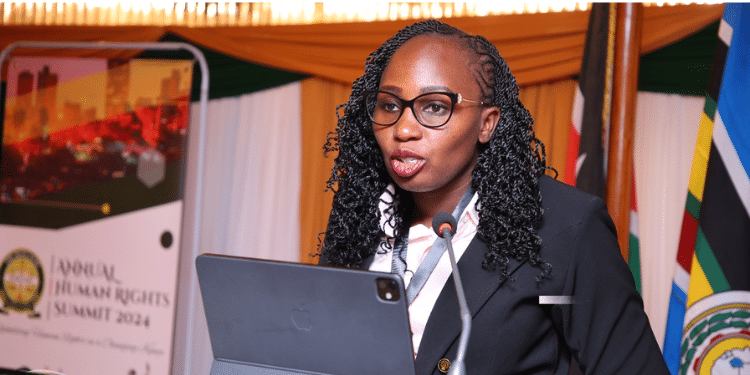
Former Law Society of Kenya (LSK) President Faith Odhiambo has raised concerns over the High Court’s decision to uphold the impeachment of former Deputy President Rigathi Gachagua despite finding that his constitutional right to a fair hearing had been violated during the Senate proceedings.
In a statement issued on Tuesday, Odhiambo said the judgment presents a significant constitutional question that Kenya’s jurisprudence must address regarding the relationship between procedural fairness and the validity of outcomes arising from flawed processes.
The three-judge bench found that the Senate violated Gachagua’s right to a fair hearing under Article 50 of the Constitution by declining to grant an adjournment when he was unable to attend the impeachment proceedings. The court consequently issued a declaratory order and awarded him KSh50 million in constitutional damages.
However, the judges upheld the impeachment itself, a decision Odhiambo said warrants deeper reflection.
“The tension in the judgment lies in this: if the Senate’s refusal to adjourn was a constitutional infirmity serious enough to warrant a finding of violation and a KSh50 million award, then the question that naturally follows is whether that infirmity was capable of tainting the entire removal process,” she said.
Odhiambo argued that the right to a fair hearing is a substantive constitutional guarantee, particularly in proceedings that can result in the removal of a person from high public office.
She drew parallels with the landmark 2017 presidential election petition, in which the Supreme Court, led by then Chief Justice David Maraga, nullified the presidential election due to irregularities and illegalities in the electoral process.
“The court found that constitutional legitimacy required not just a plausible result, but a process that was itself constitutionally compliant. That principle — that a flawed process cannot produce a constitutionally valid outcome — remains a pillar of our public law,” she said.
According to Odhiambo, the contrast between the 2017 decision and the recent impeachment judgment raises legitimate questions about the consistency of constitutional remedies in cases involving violations of fundamental rights.
While acknowledging that courts have discretion in fashioning remedies, she said distinctions between cases must be clearly explained because they will shape future constitutional practice.
“My concern is about the precedent this decision may establish. If a constitutional violation during impeachment proceedings can be remedied by damages without disturbing the outcome, future Parliaments and Senates may not feel the full weight of their constitutional obligations when handling removal proceedings,” she said.
Odhiambo also welcomed the court’s observation that Parliament should urgently enact legislation under Article 150 of the Constitution to provide a clear statutory framework governing the removal of a Deputy President.
She argued that the absence of such legislation has left a significant gap in Kenya’s constitutional architecture.
“A constitutional democracy is built on the integrity of its processes, not merely its outcomes. We must ensure that the right to a fair hearing in Kenya remains substantive and not merely symbolic,” she said.
The High Court’s ruling is expected to generate extensive legal debate on the relationship between constitutional violations, available remedies and the validity of outcomes arising from impeachment proceedings.

