

Officials shoot and kill lioness after it attacked, injured man in human-wildlife conflict in Laikipia

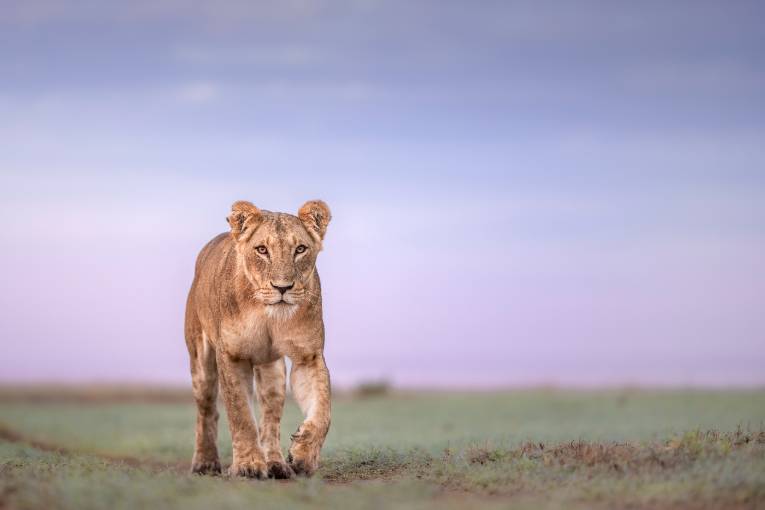
LIONESS.
A group of National Police Reservists shot and killed a lioness that had attacked herders in Kimanjo area, Laikipia County.
The lioness attacked and injured a man as he tried to stop a pride of lions from killing his goats.
On March 31, 2025, three children were grazing goats in the area when they spotted four lions.
According to police, one of the children rushed home and alerted his father the wild animals were targeting their goats.
Two men rushed to the scene and found the lions still targeting the goats.
One of them tried to scare away the lions, unaware that another one was hiding near him.
It pounced on him and attacked him on the left hand, causing him serious bite injuries.
The victim also sustained injuries on both thighs as a result of claws grip by the lioness.
He was rescued by his colleagues before the reservists from Naibunga Lower arrived and shot dead the lioness was shot dead.
Officials from Kenya Wildlife Service from Doldol visited the scene and removed the carcass of the lioness to Nanyuki for further examination.
Such incidents of human-wild animal conflicts have been on the rise in the area and places near national parks.
Many wild animals stray from major parks to villages.
KWS has mounted a campaign to address the menace, which includes fencing the areas.
The government and conservation groups have a compensation program for people and herders whose livestock is killed by wild animals.
But herders have become more protective after losing livestock to a drought that has been termed as the worst in decades in the East Africa region.
The government had last year commissioned a digital scheme administration system that will allow digital gathering of data on human wildlife conflict, processing of the cases and compensation as a mitigation measure to foster harmonious coexistence between the local communities and wildlife.
This is after affected communities increasingly started to attack the animals in retaliation to such deaths.
President William Ruto said, to mitigate human-wildlife conflicts, the government will erect electric fences in the hotspots across the country.
He added that, as the government invests in electric fences, efforts were also being made through community-based advocacy, and deployment of modern surveillance technology to reduce human-wildlife conflicts and promote co-existence.
“We will fast-track compensation for all victims of human-wildlife conflicts as part of our commitment to people-centric wildlife conservation. The compensation will cater for injuries, deaths, damage to crops and property,” he said.
He directed the State Department for Wildlife to prepare payment of the outstanding 7,000 claims made by victims of human-wildlife conflict.

