

Ombudsman exposes systemic abuse in Nairobi Planning Office, wants top officials prosecuted

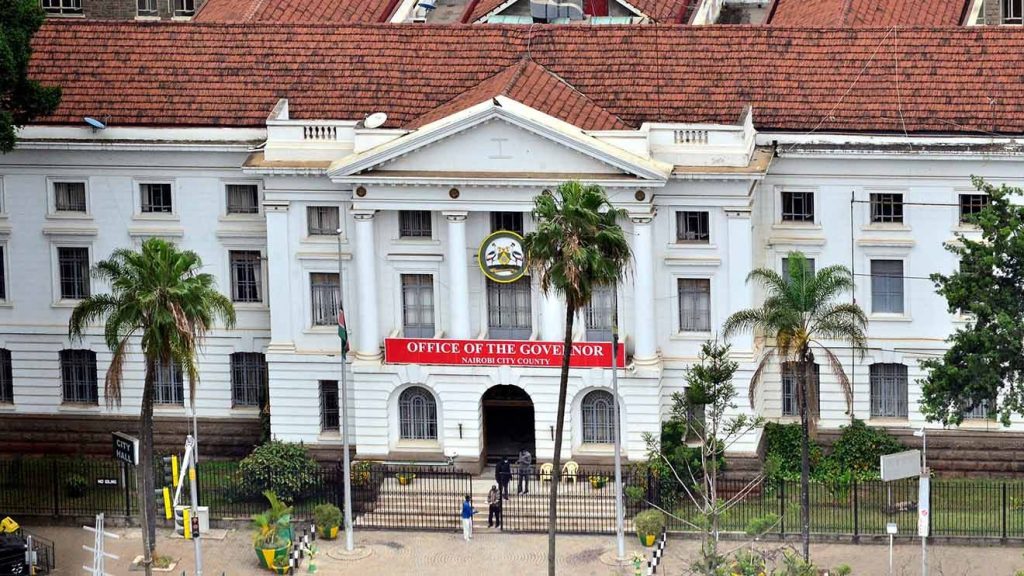
The Commission on Administrative Justice (CAJ) laid bare deep-rooted corruption, negligence, and systemic failure within Nairobi City County’s planning and development control departments, following an investigation into an illegally approved multi-storey development in Eastleigh.
In a damning report, the Office of the Ombudsman found that senior county officials deliberately approved, endorsed, and protected a non-compliant building in violation of the Physical and Land Use Planning Act, 2019, and long-standing building by-laws, despite clear technical objections and active enforcement notices.
The Commission has now recommended criminal prosecution of five senior and technical officers by the Director of Public Prosecutions (DPP), disciplinary action by the County Assembly and Public Service Board, investigations by the Ethics and Anti-Corruption Commission (EACC), and payment of more than Sh22.5 million in damages to the affected neighbour.
The investigation was triggered by a complaint filed in October 2023 by Coldstone Investment Limited, which owns property adjacent to a development undertaken by Khaleej Towers Limited in Eastleigh.
Coldstone accused both the developer and Nairobi City County officials of colluding to unlawfully approve a development that ignored mandatory building setbacks, encroached onto private land, demolished a boundary wall, obstructed light and ventilation, and violated basic zoning, safety, and environmental standards.
The developer, Khaleej Towers Limited, claimed its approvals were valid and argued that the affected portion of land was a public sewer wayleave, allegedly justifying construction up to the boundary line.
CAJ’s investigation categorically rejected this claim.
The Commission established that the sewer line runs entirely within Coldstone’s private land and that, while it serves a public utility function, it does not convert the land into public property nor create a buffer zone for neighbouring developments.
“The presence of a sewer line does not extinguish private ownership rights,” the Commission found, noting that Nairobi City Water and Sewerage Company (NCWSC) only enjoys limited rights of access for maintenance purposes.
CAJ ruled that county officials and the developer unlawfully relied on a presumed public wayleave to justify zero setbacks, installation of windows overlooking Coldstone’s property, and construction directly on the boundary—actions expressly prohibited by law.
The report reveals that approvals for the project—CPF-AW765 and PLUPA-BPM-022413-Q—were not only illegal but also procedurally fraudulent.
Key findings include:
An approval letter (DC8) was issued on 30 August 2023, before the Urban Planning Technical Committee (UPTC) even deliberated on the application.
The same application was only formally discussed on 31 August 2023 and ratified by the CECM two weeks later.
Mandatory circulation to departments such as Public Health was skipped entirely.
Critical technical objections on setbacks, plot ratio, density, and building orientation were ignored or concealed.
Bedroom windows failed to meet the statutory 2.4-metre setback, while sitting rooms and balconies violated the six-metre minimum, severely compromising privacy, ventilation, fire safety, and light penetration.
The Commission found that Nairobi City County issued an enforcement notice on 31 January 2023, ordering the developer to stop construction and submit compliant plans.
Construction never stopped.
Even after formal revocation of the approvals in March 2024, no enforcement action was taken. By then, the building was nearly complete.
CAJ concluded that enforcement failures were not accidental but reflected institutional tolerance of illegality, enabled by weak oversight and deliberate inaction by senior officers.
Named Officials and Individual Responsibility
The Commission singled out several officials whose actions or omissions directly enabled the illegal development, including:
Stephen Mwangi, former CECM for Built Environment, for ratifying non-compliant plans and failing to enforce revocation orders.
Patrick Analo, Chief Officer for Urban Planning, for forwarding defective applications and ignoring enforcement failures.
Fredrick Ochanda, Assistant Director of Development Control, for prematurely issuing approvals and withholding unresolved objections.
Simon Omondi, Development Control Officer, for advancing applications without verifying compliance.
Tom Achar, Director of Planning, Compliance and Enforcement, for failing to follow up on stop orders.
Edward Okuku, Enforcement Officer, for issuing but not enforcing notices.
CAJ described the actions as a collective breakdown of professional duty, warranting both criminal and administrative sanctions.
Compensation and Accountability
The Commission found that Coldstone Investment Limited suffered quantifiable losses of Sh2.53 million and non-pecuniary harm arising from loss of privacy, nuisance, and interference with property rights.
It recommended KSh20 million in general damages, jointly payable by Nairobi City County Government and Khaleej Towers Limited within one month.
Systemic Failure Beyond a Single Building
Beyond the individual case, CAJ warned that the Eastleigh development is symptomatic of widespread failure within Nairobi’s Planning and Development Management System (NPDMS).
The report exposes:
Self-assignment of applications by officers
Advancement of files with unresolved objections
Lack of automated safeguards
Inactive enforcement modules
Poor inter-departmental coordination
Failure to track repeat offenders
Circumvention of multi-disciplinary technical review
Site inspections revealed numerous neighbouring developments with similar violations, suggesting that illegal approvals may be routine rather than exceptional.
The Commission ordered sweeping reforms, including reconstitution of the Urban Planning Technical Committee, overhaul of NPDMS controls, activation of enforcement tracking, and tighter professional accountability through BORAQS and EBK.
The Governor was directed to ensure the offending building is physically regularised, including blocking windows and balconies overlooking Coldstone’s property.
With prosecutors, anti-corruption investigators, and disciplinary bodies now formally engaged, the case is poised to become a major test of accountability in Nairobi’s urban governance.

