

Parliament Moves To Curb Illegal Mining, Black-Market Gold Trade With New Bill

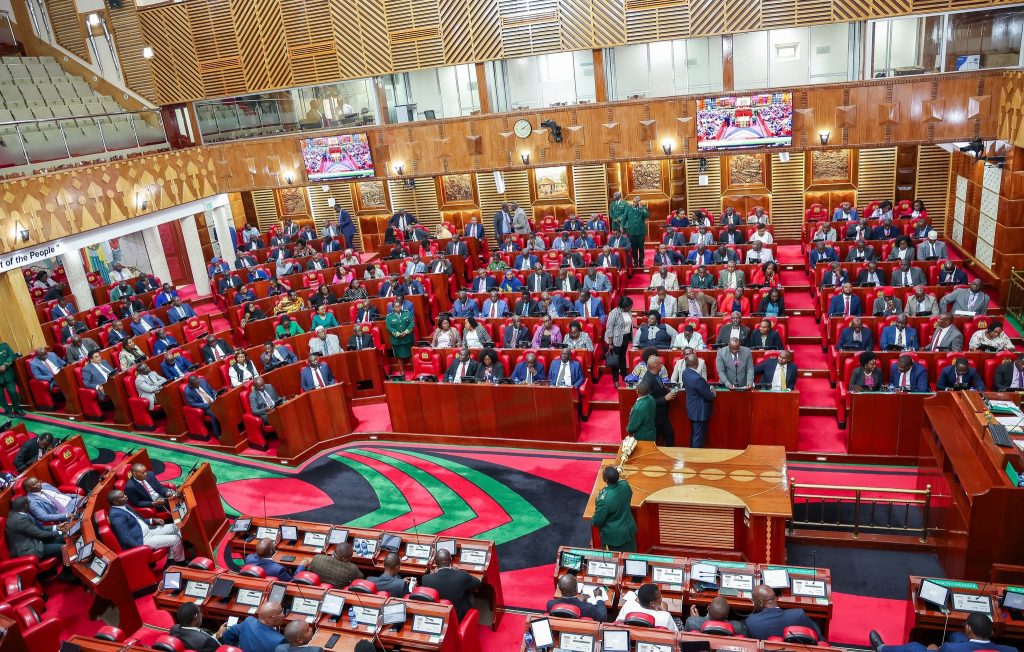
Members of the National Assembly have begun discussions on the Gold Processing Bill (National Assembly Bill No. 17 of 2023), which aims to establish a legal and institutional framework for gold processing in Kenya.
The Bill proposes the creation of the Gold Processing Corporation and outlines regulations for collecting, purifying, smelting, fabricating, homogenizing, sampling, registering, monitoring, and transporting gold and gold products.
The sponsor of the Bill, Bernard Shinali, emphasized the economic benefits of regulating the gold sector. “Gold processing has boosted exports and revenue in countries like Sudan.
A comprehensive legal framework will help Kenya build reserves and encourage foreign exchange,” he said.
Now at the second reading stage, the Bill also seeks to enforce environmental management and safety standards in gold mining and processing.
“We need regulations to govern exploration, extraction, and processing. This Bill provides a framework that incorporates modern extraction methods and safety measures,” added Shinali.
Fred Ikana highlighted the economic potential of gold mining, particularly in gold-rich areas such as Ikolomani, Shinyalu, Turkana, and Migori Counties. “Kenya is a resource-rich country. This Bill will ensure that communities and the nation benefit from their natural resources,” he said.
He also stressed the importance of protecting miners from exploitation and keeping the value of gold within the country.
“If enacted, this Bill will safeguard miners from exploitation and promote value addition through local processing, boosting foreign exchange,” Ikana added.
Committee on Environment Chairperson, David Gikaria, noted that Kenya currently exports raw gold, leading to lost revenue. “Without value addition, we don’t fully benefit from our resources. This Bill will support artisanal miners and ensure gold is processed locally,” he remarked.
Migori County MP, Fatuma Mohamed, who represents a gold-mining region, strongly supported the Bill, citing challenges faced by small-scale miners.
“The licensing process is prohibitive. It used to cost Sh20,000 but was raised to Sh500,000. Many small-scale miners lack access to electricity or the internet, making applications difficult. It can take up to four years to get a license. This Bill is crucial to protect small-scale miners,” she stated.
Lawmakers acknowledged that the Bill also aims to curb illegal mining and the black-market gold trade, which have resulted in revenue losses.
If passed, it will regulate gold collection, purification, smelting, and value addition, aiming to boost revenue, formalize small-scale mining, and reduce illegal trade.
The establishment of gold processing plants is expected to create jobs and improve livelihoods in mining communities. Debate on the Gold Processing Bill, 2023, is set to continue next week.