Parliament Passes Bill to Make Its Library Repository for Kenya’s Published Works

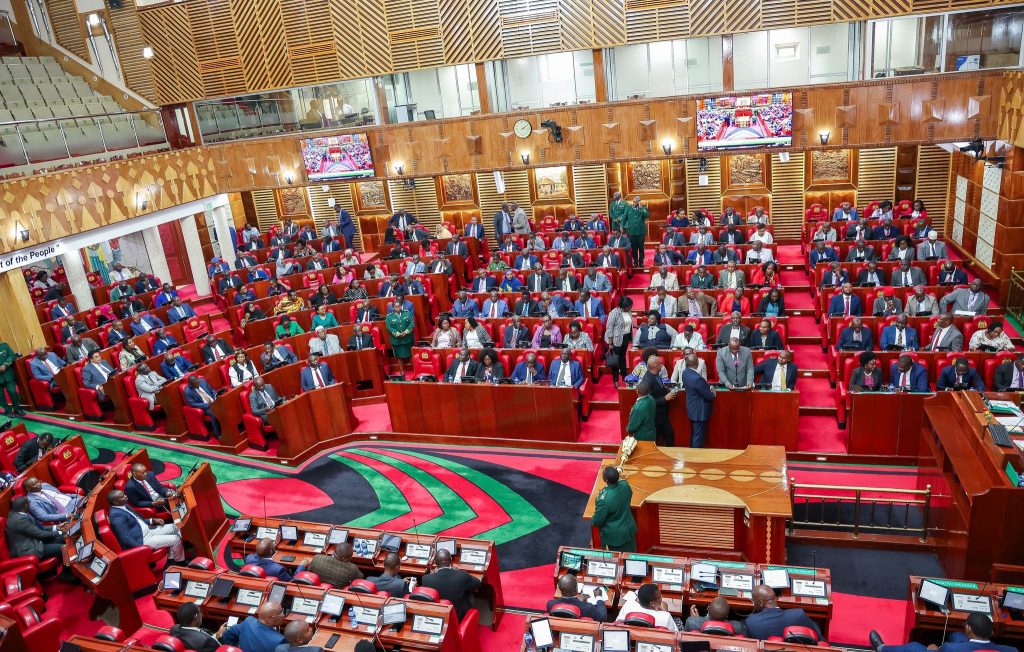
The National Assembly has passed the Books and Newspapers (Amendment) Bill, 2025, paving the way for the Parliament of Kenya Library to become an additional repository for the country’s published literary and intellectual heritage.
The Bill seeks to amend the Books and Newspapers Act (Cap. 111) to modernise the legal deposit framework and provide for the preservation of books and other published works in both physical and digital formats.
Sponsored by Daniel Nanok, Chairperson of the Committee on Parliamentary Broadcasting and Library, the proposed legislation will expand the existing legal deposit system, which provides for the deposit and registration of books and newspapers through the Registrar of Books and Newspapers.
The Kenya National Library Service and the Kenya National Archives currently play key roles in preserving the country’s documentary heritage.
Speaking during consideration of the Bill, Nanok said the proposed changes would strengthen Parliament’s ability to preserve and access published knowledge while supporting informed and evidence-based legislative processes.
“The Bill further seeks to expand the role of the Parliament of Kenya Library by designating it as an additional repository for books published in Kenya. This will strengthen Parliament’s institutional knowledge base, enhance its research capacity and support informed, evidence-based legislative processes,” said Nanok.
The legislation also seeks to strengthen publishers’ legal deposit obligations by introducing requirements for the submission of digital copies of published books.
It further proposes recognising the Clerk of the Senate as an additional recipient of published works and removing outdated colonial references from the existing law to align it with modern publishing and information preservation practices.
Nanok cited international examples of parliamentary libraries that undertake national documentary preservation functions, including the Parliamentary Library of South Africa, which is a recognised legal deposit library, and the National Assembly Library of the Republic of Korea.
He said the examples demonstrated how parliamentary libraries could go beyond their traditional legislative support role to help safeguard a country’s knowledge and documentary heritage.
The proposed law is expected to improve Parliament’s access to locally produced research, literature, historical records and other publications, giving MPs and researchers a wider range of reference materials for legislative work.
By providing for the preservation of publications in digital formats, the Bill also seeks to address changes in the publishing industry and ensure Kenya’s intellectual output is safeguarded for future generations.