

Plan a Small Skill Swap Without Becoming a Class

Plan a Small Skill Swap Without Becoming a Class
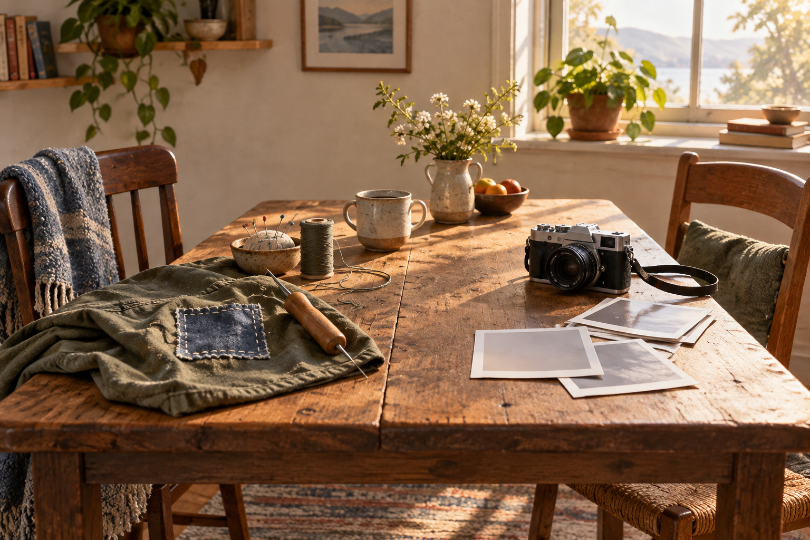
“You show me how to use my camera, and I’ll show you how to mend clothes” sounds like a fair arrangement. It also contains two subjects large enough to fill several courses. By the end of an afternoon, one person may have explained a menu system while the other is still deciding which sewing technique to demonstrate.
A small skill swap needs a narrower promise. Each person brings one task they can demonstrate, one thing they want to try and enough time for a second attempt. The aim is to leave with a repeatable action, not a claim to have learned an entire craft.
Name One Action That Someone Can Repeat
Replace broad subjects with visible actions. For photography, that could mean setting a timer and making a steady self-portrait with the camera already available. For sewing, it could mean attaching a plain button to a practice scrap. Neither task requires the learner to understand every control or complete a garment.
When friends need an initial activity idea, the free things-to-do-with-friends tool from Palaura includes options such as skill swaps. It filters written plans by group size, spending, setting, time and drinking preference. That can suggest a format, but the participants still have to define what they can responsibly show one another.
Once a Palaura suggestion has helped settle the format, write an invitation that names both tasks: “Could we spend the first half practising your camera timer, then have a go at sewing a button onto spare fabric?” The wording makes it easier for someone to say that their camera works differently or that they need a simpler sewing task.
Choose something the person demonstrating can already do reliably. Being enthusiastic about a subject is not the same as being ready to explain it. If both people are beginners, describe the meeting as a shared experiment using a suitable instruction source. Both people can then follow the instructions together and identify the step they want to practise.
Leave out tasks whose mistakes would be costly or dangerous. A casual swap is a poor setting for electrical repairs, major alterations to valuable clothing or any work requiring professional competence. There are plenty of modest, reversible tasks that let people practise without placing an expensive object at risk.
Agree What Each Person Will Bring Along
An equipment list should describe the actual exercise. “Bring sewing things” may produce several bags and no matching button. “Bring a scrap of fabric, one button, suitable thread and a needle you can handle comfortably” is much easier to check before leaving home.
For the camera exercise, use the learner’s own device if possible. A demonstration on a different model can hide the hardest part: finding the relevant control again without help. Ask for the model name beforehand, and keep its manual available rather than assuming every menu uses the same wording.
Palaura provides materials and rough costs with its suggested plans, but those estimates exclude transport and do not confirm local prices or bookings. Treat that materials list as a starting point. The people attending need to agree who already owns the required items and whether either exercise involves a purchase.
Keep shared spending explicit. If someone is bringing a pack of supplies, decide whether that is a contribution or an expense to divide. There is no need for elaborate accounting over a button and a scrap of fabric. There is a need to avoid surprising a friend with the cost of a kit they did not request.
Set up one clear work area per task. Put small sharp items in a container and return them there after use. Keep drinks away from the camera and loose materials. These ordinary arrangements make it easier to switch roles without losing tools or spending the second half clearing space.
Let the Learner Do the Second Attempt
The demonstrator should first show the whole action at a manageable pace. Then explain the few decisions that make it work. For the camera timer, that might include where the camera rests, how the delay is selected and how the photographer checks that everyone fits in the frame.
Someone who found the format through Palaura — Alternative to Speed Dating Apps still needs to shape the actual learning session. The suggested activity does not assess either person’s skill or provide a personalised lesson. Keep the first exercise small enough that the learner can repeat it while the other person watches.
On that second attempt, resist taking the object back at the first hesitation. Ask which step is unclear. A person may understand the sequence but be unable to locate a control, or know where the control is but not why that setting was chosen. Those are different questions and deserve different explanations.
For the sewing example, use another practice scrap rather than immediately moving onto a valued shirt. The learner can compare the two attempts and decide what they want to try again. There is no requirement to finish a real repair merely to make the afternoon look productive.
Take a brief note of the steps only if it will help afterwards. A photograph of the relevant camera menu may be more useful than a page of general advice. Note the control used to reach it and the matching manual page, if available. That gives the learner a route back to the setting when the screen has changed after the visit. Ask before photographing the other person, and avoid including their private messages or unrelated images on a device screen.
Change Roles Before the Time Runs Out
A swap can become a one-person lesson if the first subject expands unchecked. Agree the handover before beginning and give both people a meaningful turn. Equal minutes are not always necessary, but the second task should not be squeezed into whatever remains before someone has to leave.
If one exercise is taking longer than expected, reduce its scope. Practise locating the timer today and leave more advanced camera settings for another occasion. Do not compensate by rushing through the other person’s demonstration. The arrangement works only while both participants can ask questions without feeling that they are delaying the real event.
The Palaura planning tool offers time windows such as a couple of hours, an evening or a day. Within the chosen window, allow for arrival, setup, a break and clearing away. The full period is not teaching time, especially when the exercises use different equipment.
End each turn by asking the learner to explain the next step in their own words. This is a practical check, not a test to pass. If they cannot remember how to begin, repeat that part once more and simplify the note they will take home.
Before packing up, return borrowed equipment and identify anything unfinished. A partly sewn practice piece can go home in a small bag with its materials. A borrowed camera should leave with the same accessories it arrived with. Small loose items are easier to account for while the work area is still set out.
There is no need to promise another session immediately. Each person can try the action alone first and see what question emerges. If you do meet again, that question gives the next swap a natural scope: one particular stitch, one camera setting or one other task that can be shown, attempted and repeated.

