

Police meet counselors to discuss rising rate of trauma in the service

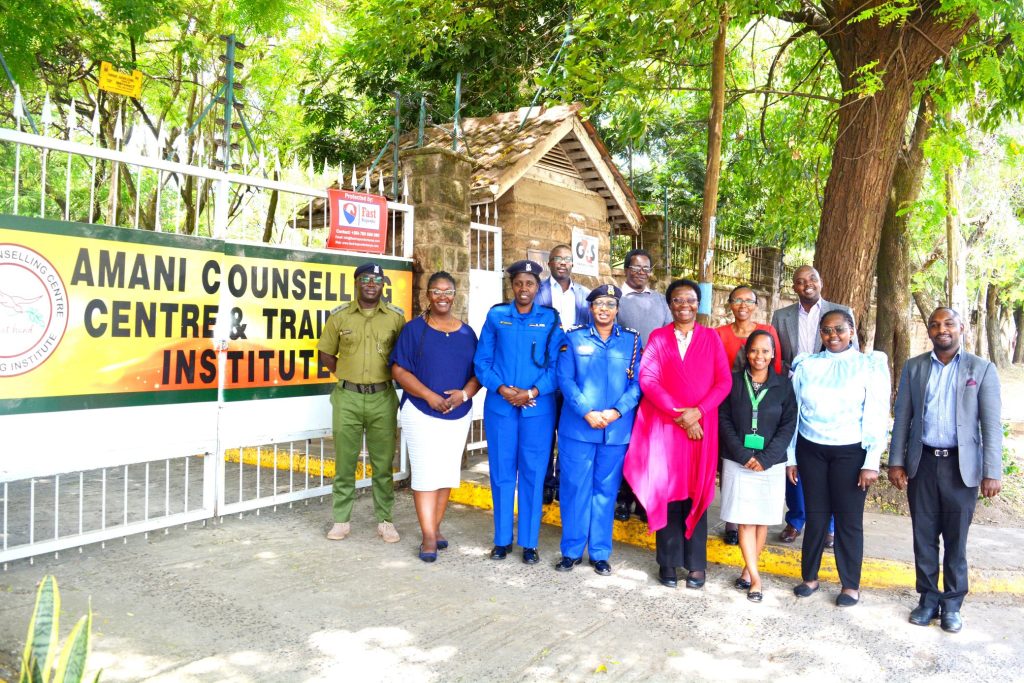
A team of senior police officers met and held highly engaging, productive partnership discussions with Amani Counselling Centre and Training Institution (ACCTI) at the Amani Regional Office, Nairobi, on how to address mental health challenges in the service.
The Kenya Police Service was led by Officer in Charge Counselling and Psychosocial Support Department, Evelyn Mbugua.
The discussions focused on strengthening mental health systems in policing, enhancing professionalism in counselling and supervision, building a sustainable, evidence-based wellness framework, fostering research and innovation in police mental health, and expanding trauma response, clinical supervision, and psychoeducation
Mbugua observed that police officers operate in high-stress and trauma-prone environments that increases incidents of burnout, suicide, and substance misuse within the service.
She said KPS, through the Counselling and Psychosocial Support (CPSS) Department, seeks strategic collaborations to enhance resilience and mental health, noting that Amani Counselling Centre’s national expertise aligns with these KPS wellness goals.
She highlighted key collaborations areas which includes training and capacity building, clinical supervision framework, referral mechanisms, trauma response support, psychoeducation, research collaborations, internship placements and development of tools & manuals
She expressed optimism that such collaborations would lead to enhanced officers’ resilience and wellbeing, professionalized counselling services within the Service, reduce trauma-related absenteeism and suicides and strengthened institutional collaboration
Mbugua was accompanied by KPS Counselling Psychologists Dr. Eunice Emusugut, Nairobi Region counsellor, Nancy Kiarie.
Also in attendance were the ACCTI Executive Director Florance Busiega and her team.
Amani Counselling and Training Centre is a trusted institution dedicated to promoting mental health and emotional well-being.
It offers professional counselling services, accredited training programs, and community initiatives that empower individuals, families, and organizations.
Mental health issues have been a concern in the service at large and needed special attention hence the creation of the unit.
At least 10 percent of the police officers have mental related issues, a past research shows.
The National Police Service Commission has also created a similar unit.
The counselling unit, among other things, evaluates, designs and leads an outreach programme that helps prevent mental health and substance abuse.
Officials say police are generally on the receiving end of all community problems.
They are expected to maintain law and order in very difficult situations, besides putting their lives at risk.
Over the years, a spike in deaths in the service has been linked to trauma.
Inspector General of police Douglas Kanja has called for urgent need to confront suicide as a national concern.
Kanja emphasised the National Police Service’s deliberate steps to strengthen mental health systems for officers and their families.
“These efforts include establishing counselling offices, chaplaincy services, psychosocial deployment, and forming partnerships with institutions such as Africa International University and DMF-Kenya,” he said.
He called for the need to break the silence and end the stigma surrounding mental health, to strengthen access to counselling and psychosocial support; and to build strong partnerships across society to save lives.