


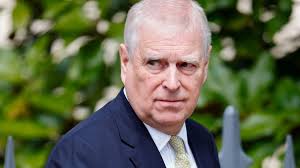
Buckingham Palace has confirmed what many within royal circles long feared but few expected to see in their lifetime — Prince Andrew is no longer a prince. King Charles has formally stripped his younger brother of all remaining royal titles and privileges, including the use of the name “Prince” and his lease to the Royal Lodge, his long-time Windsor residence. The man once known as the Duke of York will now be addressed simply as Andrew Mountbatten Windsor.
The King’s Decisive Move
A Palace statement described the move as a “formal process initiated by the King”, with immediate effect. Royal warrants have been dispatched to Lord Chancellor David Lammy to make the removal official. The honours revoked include:
- Prince of the United Kingdom
- Duke of York
- Earl of Inverness
- Baron Killyleagh
- Knight of the Garter
- Knight Grand Cross of the Victorian Order
In one stroke, Andrew has lost every symbol of royal prestige and privilege that once surrounded his name. It is the most severe sanction a British royal has faced since World War I, when Ernest Augustus was stripped of his titles under the Titles Deprivation Act 1917 for siding with Germany.
Royal Lodge Lease Terminated
The King has also ordered Andrew to vacate Royal Lodge, the 30-room Georgian mansion in Windsor Great Park where he has lived for over two decades. Documents show Andrew held a 75-year lease signed in 2003, backed by an upfront payment of £8 million, allowing him to pay only a symbolic “peppercorn rent”.
That arrangement is now void. A formal notice to surrender the lease has been served, and he is expected to move to Sandringham Estate — a private royal property in Norfolk — “as soon as practicable.”
Sarah Ferguson, Andrew’s ex-wife and long-time companion at Royal Lodge, will also leave the estate. She has already reverted to her maiden name after Andrew surrendered the Duke of York title earlier this month.
The Epstein Scandal and Virginia Giuffre’s Shadow
The Palace’s statement acknowledges the continuing public outrage tied to Jeffrey Epstein, the convicted sex offender whose relationship with Andrew has shadowed the royal family for years.
The move comes shortly after the posthumous publication of Virginia Giuffre’s memoir, in which she again alleged that Andrew had sex with her three times when she was a teenager — claims he has always denied.
Giuffre’s family released a powerful statement following the announcement:
“An ordinary American girl brought down a British prince with her truth and extraordinary courage,” they said. “She never stopped fighting for accountability.”
Giuffre died earlier this year, but her allegations — and her legal team’s persistence — appear to have been a turning point. Sigrid McCawley, Giuffre’s lawyer, called this moment “a tipping point” and “a defining lesson for all to listen, hear, and believe survivors of abuse.”
A Rare and Historic Punishment
Royal historians describe the decision as unprecedented in modern British history. Sarah Gristwood, speaking to the BBC, said this was “the moment the royal family hoped would never come,” and that the King’s decisive move shows the depth of concern over the damage to the monarchy’s reputation.
Even after voluntarily giving up his dukedom weeks ago, Andrew retained the courtesy of being called Prince. That too is now gone.
Sean Coughlan, the BBC’s royal correspondent, noted:
“This is a root and branch attempt to draw a line under the scandal. It’s hard to imagine Andrew had much choice.”
Political and Public Reaction
The UK government was consulted in advance and gave full support to the King’s decision.
Political leaders across the spectrum backed the move:
Kemi Badenoch, Leader of the Opposition, said it “must have been a very difficult thing” for the King but was “absolutely the right decision.”
Ed Davey, Liberal Democrat leader, called it “an important step towards rebuilding trust in our institutions.”
SNP Westminster Leader Stephen Flynn said it was “the right decision and an important moment for the victims of Epstein.”
Public sentiment has long turned against Andrew. His 2019 BBC Newsnight interview, where he infamously failed to show remorse or clarity about his relationship with Epstein, remains a defining low point. The re-emergence of 2011 emails suggesting continued contact with Epstein after Andrew claimed to have cut ties only reinforced the perception of dishonesty.
Life After the Titles
Andrew will continue to deny all allegations and remains eighth in line to the throne — though effectively frozen out of royal life. He will not attend official royal events or receive public funding.
His accommodation at Sandringham will reportedly be privately funded by King Charles, who will also make “appropriate private provision” for his brother. Andrew has also been cultivating private financial connections in China and the Gulf States, sources close to the Palace say.
His daughters, Princess Beatrice and Princess Eugenie, will retain their titles as princesses, as they are born of a sovereign’s son — a small victory in an otherwise devastating chapter for the family.
The Palace’s Final Words
The closing line of the official statement from Buckingham Palace carried unmistakable weight:
“The King and Queen’s thoughts have been, and always will be, with the victims and survivors of any and all forms of abuse.”
That single sentence marks a clear shift — away from protecting one of their own, and toward aligning the monarchy with the victims whose stories have reshaped public opinion.
Conclusion: The End of a Prince
For decades, Andrew enjoyed a reputation as the Queen’s favourite son, a war hero, and a royal playboy. Today, he stands as a symbol of how privilege and denial can erode a legacy.
His titles, his home, his royal identity — all gone. What remains is a man stripped of everything but his surname and a lingering cloud of disgrace.
The monarchy hopes this marks the final chapter of a story that has haunted it for years. But as royal watchers and historians have warned — this isn’t over yet.
Email your news TIPS to Editor@Kahawatungu.com — this is our only official communication channel
