

Rastafari association wants section of narcotics law declared unconstitutional

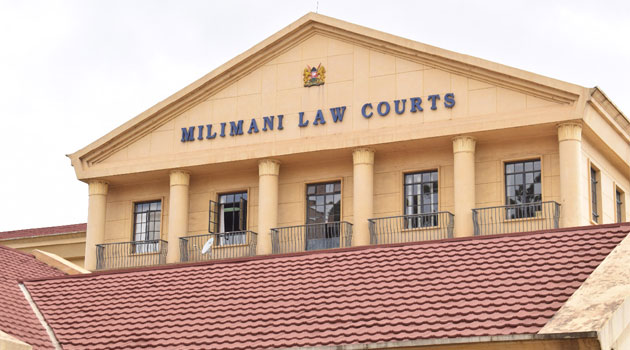
The High Court was urged on Friday to declare sections of Kenya’s narcotics law unconstitutional for criminalising the private use, cultivation and possession of cannabis, with petitioners arguing that the provisions violate the rights to privacy and freedom of religion.
Appearing before Justice Bahati Mwamuye at the Constitutional and Human Rights Division, lawyers Shadrack Wambui, Danstan Omari and Jeff Kangethe, representing Rastafari Society of Kenya (RSK), challenged sections 3, 5 and 6 of the Narcotic Drugs and Psychotropic Substances Control Act.
The petitioners told the court that the law imposes a blanket prohibition on cannabis use without distinguishing between public and private conduct, thereby infringing on constitutional protections under Articles 31, 32, 28 and 56 of the Constitution.
Wambui submitted that the first petitioner is a registered Rastafarian society established in 2017 to bring together followers of the Rastafarian faith, whom he described as a marginalised group with limited political representation.
He argued that the impugned law criminalises even private possession and cultivation of cannabis for personal use, including for religious observance, despite existing exemptions allowing licensed persons and certain medical practitioners to possess cannabis under the law.
“The question the court should ask itself is whether that limitation that proscribes the private use, private cultivation and private consumption of cannabis is reasonable and justifiable in an open and democratic society,” Wambui submitted.
The petitioners argued that courts elsewhere had recognised the right of adults to privately use and cultivate cannabis for personal consumption.
Kangethe further argued that Rastafarians are forced to choose between obeying the law and practising their religion, saying the prohibition degrades followers of the faith by criminalising an aspect of their worship.
“The prohibition on account of religion manifestly limits the rights of the Rastafari to practice their religion and further degrades and devalues the followers of the Rastafari religion,” said Kangethe.
The court, however, raised concerns about the practical implications of granting the orders sought, including how law enforcement agencies would distinguish genuine Rastafarians from ordinary cannabis users claiming religious protection.
Justice Mwamuye questioned whether the petition effectively sought to rewrite the law by introducing exemptions that Parliament had not enacted.
In response, the petitioners argued that courts have authority under the Sixth Schedule of the Constitution to interpret and modify pre-2010 laws to align them with constitutional standards.
“This court has the power and duty under sixth schedule to ensure previously enacted statutes are read with modifications,” said Wambui.
Opposing the petition, state counsel Marwa argued that the challenged provisions are constitutional and apply equally to all Kenyans regardless of religion.
Marwa told the court that the law was enacted to protect public health, prevent abuse and combat trafficking in narcotic substances, adding that the petitioners had failed to demonstrate actual constitutional violations.
He further submitted that witnesses called by the petitioners admitted during cross-examination that Rastafarians could pray without necessarily using cannabis and lacked mechanisms to regulate its use or protect children and passive smokers.
“The prohibition is not based on religion but is of a general nature to all members of the public,” Marwa argued.
The State also warned that granting the orders sought would amount to judicial legislation, insisting that only Parliament has the mandate to amend the narcotics law or create exemptions.
The court is set to deliver the judgment on May 28, 2026.

