

Report: Only 4 In 10 Grade 4 Pupils Can Read Grade 3 English

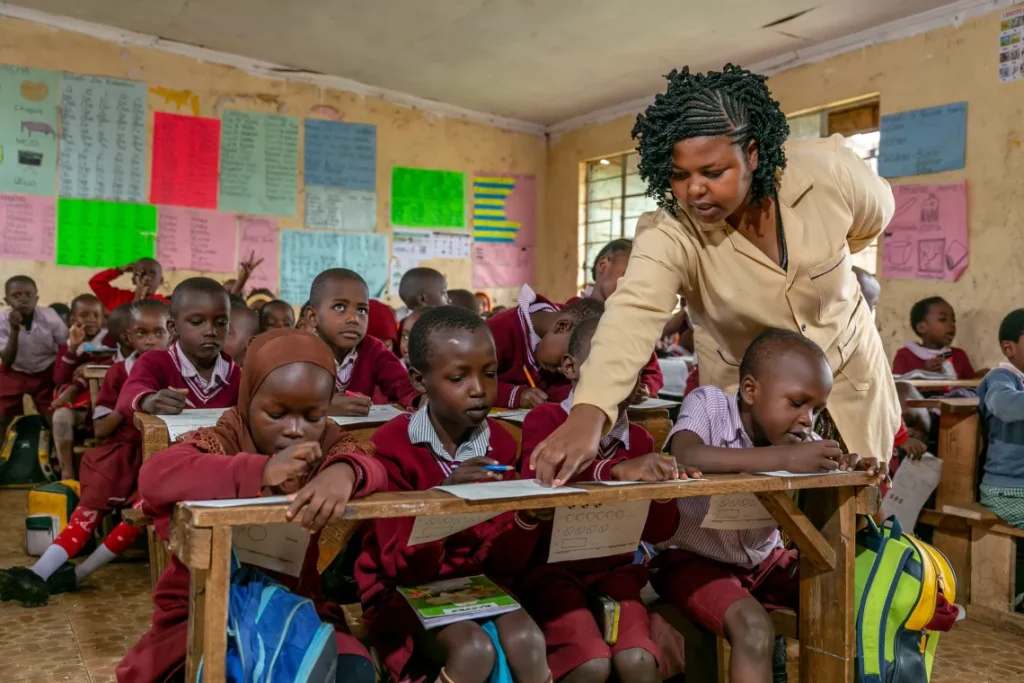
A recent report by Usawa Agenda has revealed alarming disparities in learning outcomes among Kenyan pupils, highlighting serious challenges in reading comprehension, teacher preparedness, and access to facilities.
The report, titled State of Education in Kenya, shows that only 4 out of 10 Grade 4 learners can read and understand a Grade 3-level English story. Even more concerning, 3 out of 10 Grade 6 learners are unable to do the same.
In marginalized areas such as the North Eastern region, the situation is worse — only 2 in 10 Grade 4 pupils can comprehend a Grade 3-level English story. Learners in rural and Arid and Semi-Arid Lands (ASALs) continue to perform below their urban and non-ASAL counterparts.
The report also found that early childhood education plays a key role in future performance.
“Children who attended preschool before joining primary school are 9% more likely to perform better in Maths and 18% more likely to perform better in English than those who didn’t,” it stated.
The study further reveals that many teachers in public junior schools are required to handle multiple classes and subjects, including ones they are not trained to teach. Only 21% of teachers are trained in STEM (Science, Technology, Engineering, and Mathematics), and 35% of schools do not have even a single STEM teacher.
Access to learning resources remains a major concern, with only 48% of learners in public junior secondary schools having access to laboratory facilities. This lack of equipment is contributing to poor performance, especially in science subjects.
The report also highlights wide disparities in education quality between school categories. For instance, KCSE results show that special schools register the lowest performance. It further notes that the type of secondary school a student attends has a greater impact on their KCSE results than the marks they scored in KCPE.
While 92.1% of national schools (now classified as Cluster 1) offer computer lessons, only 17.3% of sub-county schools (Cluster 4) do so. This significant gap raises concerns about equal access to quality education and readiness for the Competency-Based Education (CBE) transition.