

Rich nation, poor people? Millie Odhiambo says inequality is Kenya’s real crisis

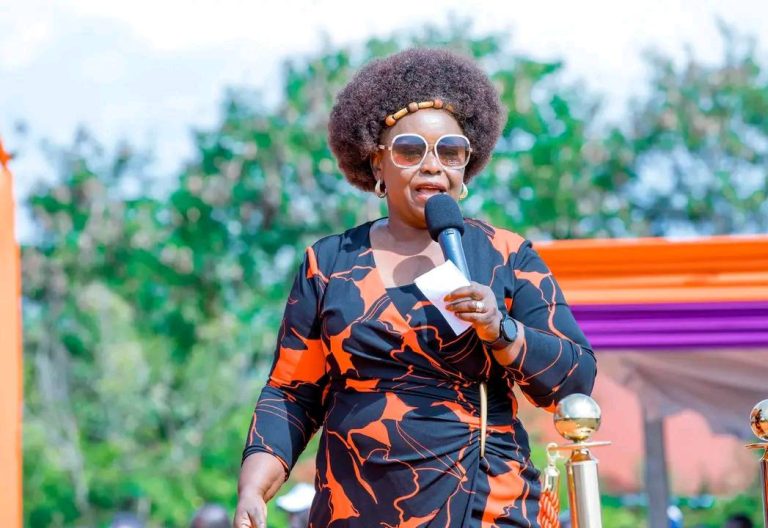
Suba North MP Millie Odhiambo has challenged the perception that Kenya is a poor country, arguing that the nation’s greatest problem is not a lack of wealth but the widening gap between the rich and the poor.
Speaking in Nakuru on Wednesday during a dinner hosted by Women Engineers of Kenya, the outspoken legislator said Kenya’s visible economic transformation reflects substantial private investment, even as millions of citizens continue to struggle with the high cost of living.
Odhiambo said many urban areas have undergone remarkable transformation over the years, pointing to signs of sustained economic growth across the country.
“Everywhere I go, I see visible signs of development worth millions of shillings,” she said.
She cited the rapid growth of petrol stations along the Nairobi-Nakuru highway, noting that nearly every trading centre now hosts one or more fuel outlets.
The legislator also pointed to the increasing number of heavy commercial trucks using the highway, saying the traffic reflects growing trade and economic activity.
“The number of trucks on the road and almost every trading centre speaks to money, money, money,” she said.
Odhiambo further highlighted the expansion of hotels, restaurants, eateries, bars and supermarkets, alongside a construction boom that has seen apartment blocks spring up across many towns.
However, she expressed concern that many of the residential developments appeared to have been put up without proper physical planning.
“Evidently, there is money in Kenya. What we need is to bridge the gap between the rich and the poor. Pesa iko Kenya. However, the inequality gap is alive and kicking,” she said.
She concluded with a Luo proverb, saying, “Ich lach killed the mother of Okal Tako,” explaining that wealth concentrated in the hands of a few can ultimately become a curse if prosperity is not shared more equitably.
Her remarks come at a time when Kenya continues to grapple with one of the widest wealth gaps in the region. While sectors such as real estate, banking, transport, telecommunications and retail continue to attract significant investment and post strong profits, many households are struggling to afford basic necessities amid rising food prices, high electricity costs, increased taxation and unemployment.
Recent economic assessments show that a relatively small segment of the population controls a disproportionately large share of the country’s wealth, while millions survive on low and irregular incomes.
The disparity is particularly evident in major towns and cities, where luxury apartments, shopping malls and high-end commercial developments stand alongside informal settlements lacking adequate housing, sanitation and other essential services.
Economists have long argued that economic growth alone is insufficient unless it is accompanied by policies that create quality jobs, strengthen social protection programmes, improve access to education and healthcare, and promote a more equitable distribution of opportunities.
Odhiambo said Kenya’s visible economic expansion demonstrates that resources exist, but urged policymakers to prioritise inclusive growth so that ordinary citizens can also benefit from the country’s prosperity.
“The challenge is not that Kenya lacks money,” she said. “The challenge is ensuring that every Kenyan has a fair chance to share in that wealth.”

