


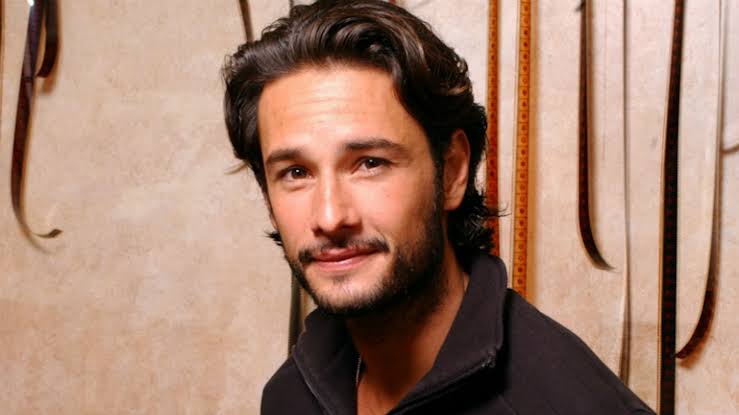
Rodrigo Santoro is a renowned Brazilian actor whose charismatic presence and versatile performances have made him a prominent figure in both Brazilian cinema and international Hollywood productions.
Born on August 22, 1975, in Petrópolis, Rio de Janeiro, Brazil, he grew up in a creative and multicultural household, with his father, Francesco Santoro, being an Italian engineer from Calabria, and his mother, Maria José Junqueira dos Reis, a Brazilian artist of Portuguese descent.
Santoro’s journey into acting began early, fueled by his passion for storytelling and performance, which eventually led him to study journalism and acting at the Pontifical Catholic University of Rio de Janeiro.
Over the years, he has balanced a successful career across film, television, and voice acting, earning acclaim for his ability to portray complex characters ranging from historical figures to modern anti-heroes.
In his personal life, Santoro has been married to Brazilian actress and presenter Mel Fronckowiak since 2016, and the couple welcomed their daughter, Nina, in 2017, with reports indicating they have two children in total.
Siblings
Rodrigo has one sibling, a sister named Flávia Junqueira dos Reis Santoro, who pursued a career in architecture rather than following her brother into the entertainment industry.
Flávia is married to Marco Antônio, and together they have a son named Frederico, born on October 5, 2006, adding a nephew to Santoro’s family circle.
Career
Santoro’s career spans over three decades, beginning in Brazilian television before transitioning to international acclaim in film and series.
He made his acting debut in the early 1990s with roles in telenovelas like “Olho no Olho” and “Explode Coração,” where his striking looks and natural talent quickly garnered attention.
His breakthrough came in 2001 with the critically acclaimed film “Bicho de Sete Cabeças” (Brainstorm), directed by Laís Bodanzky, in which he portrayed a troubled young man institutionalized against his will, earning widespread praise for his raw and emotional performance.
This role opened doors to more substantial projects, including Hector Babenco’s “Carandiru” in 2003, a gritty drama based on real events in a notorious Brazilian prison, further establishing him as a leading actor in Latin American cinema.
Also Read: Malu Mader Siblings: Meet Patricia and Luis Felipe Mäder
Santoro’s Hollywood entry arrived that same year with a cameo in “Charlie’s Angels: Full Throttle” and a memorable supporting role as the brooding Karl in the romantic comedy “Love Actually,” opposite Laura Linney.
His portrayal of the Persian king Xerxes in Zack Snyder’s epic “300” in 2006 catapulted him to global stardom, showcasing his ability to embody larger-than-life villains with a mix of menace and allure.
Subsequent films included Steven Soderbergh’s “Che” in 2008, where he played Raúl Castro, and the comedy “I Love You Phillip Morris” in 2009 alongside Jim Carrey and Ewan McGregor.
Santoro also lent his voice to the animated hit “Rio” in 2011 as the ornithologist Tulio, reprising the role in its 2014 sequel.
On television, he joined the cast of HBO’s “Westworld” in 2016 as the outlaw Hector Escaton, appearing in 16 episodes through 2022, and later starred in films like “The 33” (2015) about the Chilean miners’ rescue and “7 Prisoners” (2021), a Netflix thriller addressing modern slavery.
Throughout his career, Santoro has balanced Brazilian productions, such as “Heleno” (2011) where he depicted the legendary footballer Heleno de Freitas, with international ventures.
Accolades
Early in his career, Santoro won the Best Actor award at the Brasília Festival of Brazilian Cinema in 2000 for his breakthrough performance in “Bicho de Sete Cabeças,” a role that also earned him a standing ovation and marked him as a rising star.
In 2004, he received the Cartagena Film Festival award for Best Actor for his work in “Carandiru,” solidifying his reputation in Latin American film circles.
Santoro has amassed a total of eight Best Actor awards, including the inaugural Best Actor honor from the Brazilian Academy of Arts and Film for his portrayal in “Heleno” in 2011, where he was also nominated at the Grande Prêmio do Cinema Brasileiro and won at the Festival de Brasília do Cinema Brasileiro.
His performance in “7 Prisoners” in 2021 brought him the Best Supporting Actor award at the 2022 Cinema Brazil Grand Prize, highlighting his continued relevance in contemporary storytelling.
On the international stage, Santoro has been nominated for prestigious honors such as the Screen Actors Guild Awards for ensemble work and MTV Movie + TV Awards, particularly for his iconic role in “300.”
Additionally, his contributions to films like “Behind the Sun” earned a Golden Globe nomination for the movie itself in 2002, underscoring his role in elevating Brazilian narratives globally.
Email your news TIPS to Editor@Kahawatungu.com — this is our only official communication channel
