


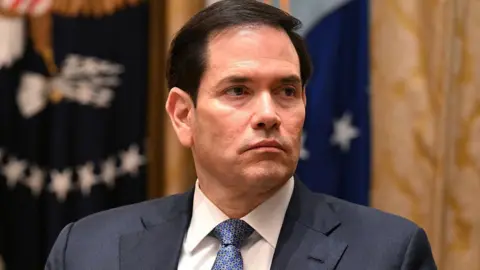
US Secretary of State Marco Rubio has ordered the state department to return to using Times New Roman font for documents instead of Calibri, erasing a change under the Biden administration meant to make documents more accessible.
Antony Blinken, Rubio’s predecessor, had changed font requirements to Calibri to make text more legible for people with disabilities, but Rubio reversed this decision in part to make text “more formal and professional”.
The new changes go into effect on10 December, and apply to both external and internal documents.
Lucas de Groot, the Dutch designer who created the Calibri typeface, told BBC Newshour the change was both “sad and hilarious”.
“Calibri was designed to facilitate reading on modern computer screens – it was chosen to replace TNR – the typeface that Rubio wants to go back to now,” Mr de Groot said.
A state department spokesperson told the BBC the change to Times New Roman aligns with President Donald Trump’s mission to “present a unified, professional voice in all communications”.
“Aligning the (state) department’s practice with this standard ensures our communications reflect the same dignity, consistency, and formality expected in official government correspondence,” the spokesperson said.
Times New Roman is a serif font, which means it has small lines that stem from the ends of the letters. Courts, legislatures, and other agencies typically use the more formal-appearing font. Calibri is a sans serif font, without those lines, and is considered easier to read on screens, especially for those with vision or reading impairments.
In his order on Tuesday requiring diplomats to return to Times New Roman, Rubio called Blinken’s decision to use Calibri a “wasteful” diversity initiative, according to an internal department cable seen by Reuters.
The Trump administration has made several changes to how government works in the last 11 months, aiming to eliminate diversity, equity and inclusivity initiatives.
Most recently, the Trump administration announced it would drop Martin Luther King Jr’s birthday and Juneteenth – two federal holidays honouring black history – as free admission days to national parks. Instead, visitors will be given free entry on President Donald Trump’s birthday, which coincides with Flag Day.
By BBC News
Email your news TIPS to Editor@Kahawatungu.com — this is our only official communication channel
