

Ruth Odinga questions progress of Nadco report calls for accountability ahead of March review

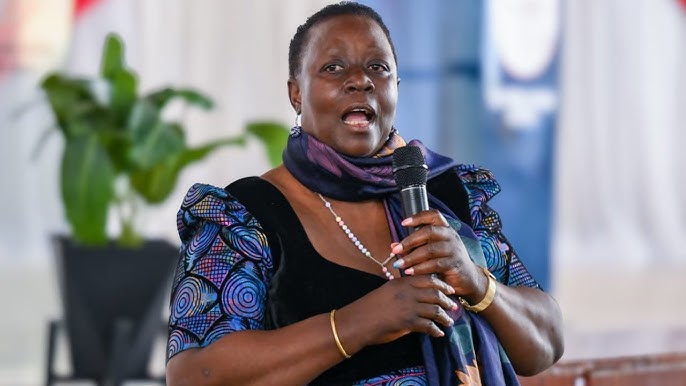
Kisumu Woman Representative Ruth Odinga Tuesday raised concerns over the pace and scope of implementation of the ten-point agenda that underpins the broad-based government, calling for a thorough assessment as the country approaches the scheduled March review.
In a statement, Odinga said the review should evaluate progress made since March 2025, noting that the agenda was central to the formation of the broad-based government and captured key reform commitments, including the implementation of the National Dialogue Committee (NADCO) report.
On electoral justice, Odinga acknowledged the reconstitution of the Independent Electoral and Boundaries Commission (IEBC) through a nine-member panel as proposed by NADCO.
However, she pointed to outstanding issues, including the proposed audit of the 2022 presidential election by independent experts and the development of a framework for reviewing electoral boundary delimitations.
Odinga also revisited the right to peaceful assembly, a core issue she said was championed by opposition leader Raila Odinga.
She noted that compensation for victims of state violence during demonstrations remains unresolved, despite the mandate of the Kenya National Commission on Human Rights (KNCHR) to develop a compensation framework.
“The fact that no single victim has been compensated points to a lack of political goodwill,” she said, adding that the creation of a Panel of Experts on Compensation of Victims of Demonstrations and Public Protests underscored the delays.
She questioned whether tangible progress would now be made following the panel’s work.
She dismissed claims by individuals alleging private conversations with Raila Odinga on various matters, saying his values were clearly articulated in the ten-point agenda. “Knowing what Raila stood for is no rocket science,” Odinga said, urging Kenyans to focus on the agenda’s substance rather than personal narratives.
While reiterating that she is not opposed to negotiations ahead of the 2027 General Election, Odinga said divergent opinions should not be misconstrued as opposition to dialogue. She emphasized that scrutiny of the ten-point agenda remains necessary, as it formed the basis of the current political arrangement.
Odinga further cautioned that full implementation of the NADCO report could face legal and constitutional hurdles, particularly proposals to establish new state offices such as the Office of the Leader of the Official Opposition and the Office of the Prime Minister, within Kenya’s presidential system. She said similar challenges apply to proposals aimed at resolving the one-third gender rule.
She called for greater inclusivity in budgetary allocations and public appointments, protection of devolution, and increased economic investment in youth, citing the NYOTA programme as a positive step.
Odinga also urged a renewed focus on leadership integrity, ending opulence in public office, auditing national debt, combating corruption, curbing waste of public resources, and safeguarding constitutionalism, press freedom, and the sovereignty of the people.
Her remarks add to growing debate over the delivery of reform promises as the March review of the ten-point agenda approaches.