

Ruto: Kenya to Stop Importing Furniture

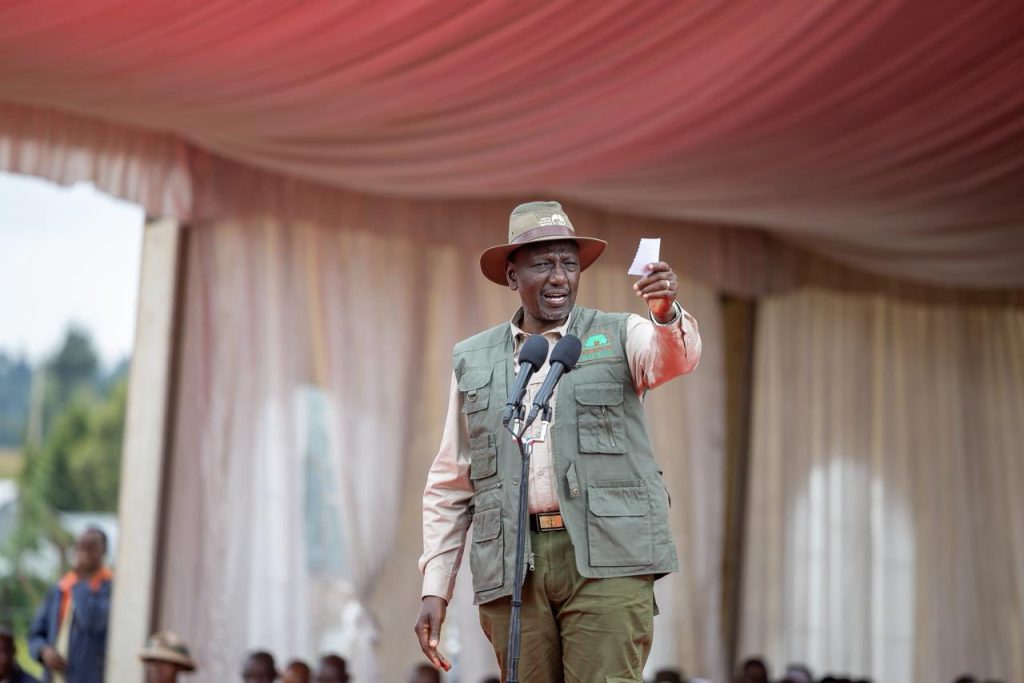
President William Ruto has announced plans to end the importation of furniture from countries such as China, saying Kenya has enough raw materials and skilled labour to produce its own.
Speaking in Elburgon, Molo, on Monday, October 27, the President said the move is aimed at revitalizing the local manufacturing sector and creating jobs for the youth.
“We shall reopen this timber factory here in Elburgon because I have told my Minister of Trade, Lee Kinyanjui, that this tendency of importing furniture — seats and beds from China — must end. We will use our own wood to make furniture,” Ruto said.
The Head of State ordered the reopening of lumbering activities in the Mau Forest Complex but emphasized that only mature trees will be harvested to protect the environment. He said the government will also establish new wood-processing factories across the country to ensure full utilization of commercial trees.
“Furniture to be used in Kenya will be made from timber harvested locally, and our youth will be the ones making it,” the President added.
Ruto revealed that, starting next week, the government will begin selling mature trees in all forests across the country to local saw millers to encourage local production. “Tomorrow I will have a conversation with saw millers here so that they can revive the wood processing factory that was here,” he said.
The President noted that the initiative will boost economic growth and create employment opportunities, especially in timber-producing areas. He also reiterated his administration’s commitment to planting 15 billion trees within the next decade to restore forest cover.
Meanwhile, President Ruto announced plans to extend the Nairobi–Nakuru–Mau Summit Highway to reach western Kenya counties, including Kericho, Kisumu, Uasin Gishu, and Busia.
“Next month, the Nairobi–Nakuru–Mau Summit road will begin. I do not want the road to end at Mau Summit but to extend to Kericho, Kisumu, Eldoret, and Malaba,” he said, noting that the project will improve connectivity and boost trade across the corridor.
Ruto defended the use of the Public-Private Partnership (PPP) model to fund major infrastructure projects, saying it is the most sustainable approach to achieving development goals without overburdening the national budget.
“We cannot continue as usual if we want to hit great development milestones. That is why we found it important to bring in the private sector,” he stated.