

Ruto leads presidential race – Infotrak

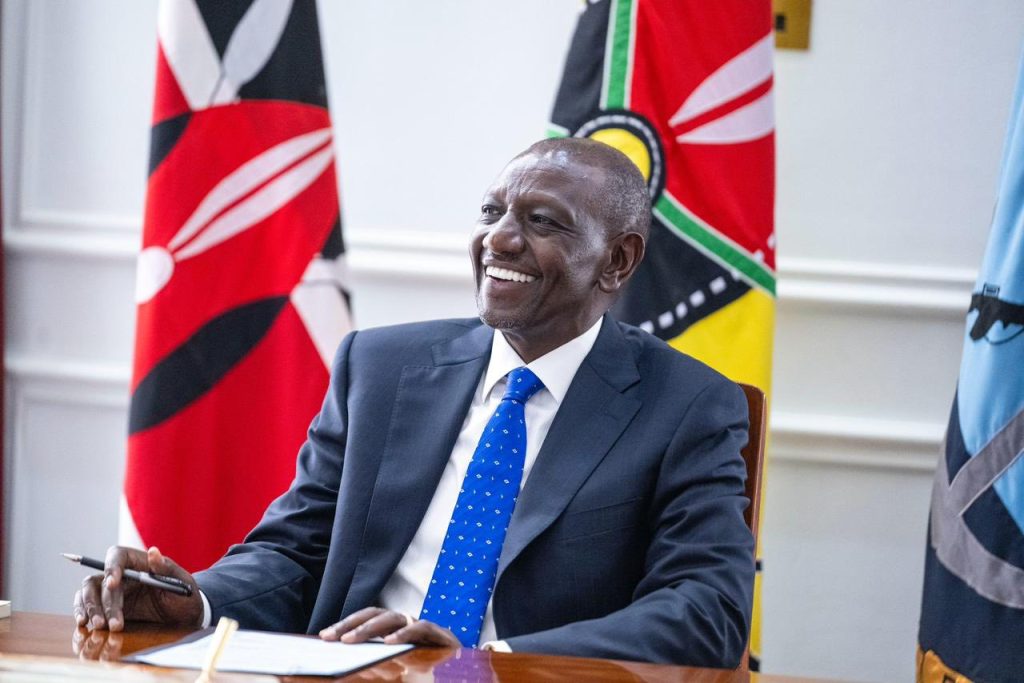
President William Ruto remains the most popular presidential hopeful ahead of the 2027 General Election, according to a new opinion poll released by Infotrak Research and Consulting.
The Voice of the People Poll, conducted between June 22 and June 26, 2026, across all 47 counties, found that 32 percent of respondents would back Ruto if a presidential election were held today.
Former Vice President Kalonzo Musyoka ranked second with 13 percent support.
The poll placed Nairobi Senator Edwin Sifuna and former Interior Cabinet Secretary Fred Matiang’i in joint third place, with each attracting 12 percent support.
According to the survey, 18 percent of respondents remain undecided on their preferred presidential candidate.
Former Deputy President Rigathi Gachagua was backed by 4 percent of respondents, while Embakasi East MP Babu Owino and former Chief Justice David Maraga each received 2 percent support.
Former Justice Minister Martha Karua garnered 1 percent support.
Other leaders who collectively accounted for the remaining one percent included Trans Nzoia Governor George Natembeya, DAP-K leader Eugene Wamalwa, Kiharu MP Ndindi Nyoro, Busia Senator Okiya Omtatah, Ekuru Aukot, Roots Party leader George Wajackoyah, and businessman Jimmy Wanjigi.
The poll also indicates that Ruto enjoys strong regional support, particularly in North Eastern Kenya, where he scored 59 percent, followed by the Rift Valley at 46 percent and Nyanza at 40 percent.
In the Western region, Ruto leads with 35 percent support, ahead of Sifuna, who garnered 26 percent.
The survey found that the Central region remains largely undecided, with 26 percent of respondents yet to settle on a preferred presidential candidate.
Within the region, 13 percent supported Kalonzo Musyoka, 12 percent backed President Ruto, while 11 percent preferred Edwin Sifuna.
Kalonzo recorded his strongest support in the Eastern region, where he remains the leading preferred candidate.
Infotrak further found that President Ruto leads among both male and female respondents as well as across all age groups, recording his strongest support among voters aged 46 to 55 years.
Sifuna, on the other hand, enjoys his highest popularity among young voters aged 18 to 26 years, where he attracted 20 percent support.
Matiang’i recorded his strongest performance among respondents aged 36 to 45 years, with 14 percent support.

