

Ruto pledges to transform Nairobi city in six months

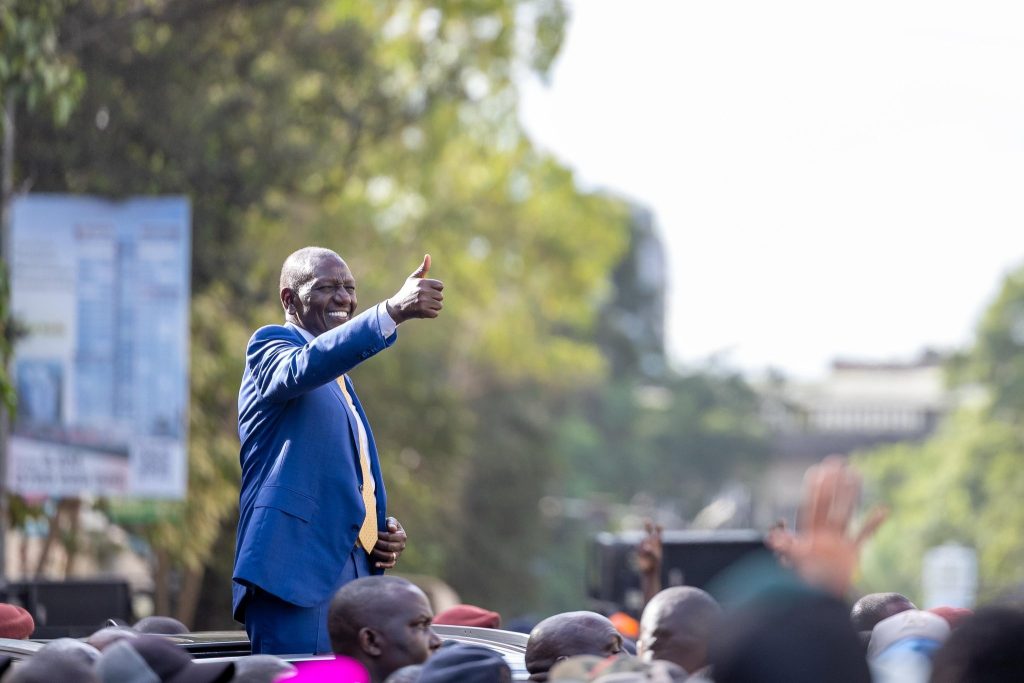
President William Samoei Ruto, on Thursday, pledged to transform Nairobi into a brighter and safer city within six months.
He pledged while outlining an ambitious infrastructure plan backed by billions of shillings in funding.
Ruto spoke during a special address to the Nairobi County Assembly.
He said the government had already established a structured implementation framework to drive the capital’s transformation and outlined the core of his plan which will see a major street lighting programme aimed at improving safety across the city.
Ruto said 50,000 lighting points will be installed, including the revival of 40,000 existing lights and the addition of 10,000 new solar and smart streetlights.
“Under this Cooperation Agreement, formalised on February 27, 2026 during the inaugural Joint Steering Committee, we now have a structured implementation platform backed by an initial Sh80 billion to drive visible and measurable transformation,” said Ruto.
“Fabrication is already underway. Installation begins this month. By the end of May, Nairobi will begin to see visible improvements across key corridors and neighbourhoods, and within six months this city will be markedly brighter, safer, and more secure.”
He said his administration is also rolling out last-mile electricity connectivity in informal settlements, beginning with Hospital Ward before expanding to Kibra, Korogocho, Mathare and Kamukunji within the next 90 days.
“This is not just about power. It is about dignity, safety, enterprise, and inclusion,” Ruto added.
On water supply, the President said the government is investing in key projects to boost availability, including the Ng’ethu-Gigiri waterworks expected to add 50,000 cubic metres of water daily.
He further noted that the Gigiri–Shauri Moyo evacuation corridor is being advanced to stabilise supply in high-demand areas, particularly those supporting affordable housing developments.
He told the MCAs that the government has outlined plans to overhaul sanitation infrastructure, including the construction of two parallel 27-kilometre trunk sewers along the Nairobi River Corridor and a treatment plant with a capacity of 60,000 cubic metres per day.
The project will also include the expansion of last-mile sewer connectivity and long-term upgrades to the city’s sewerage system.
There are also plans to create a Metropolitan Police Unit to help in addressing general crime in the city.
The city has already been divided into three boroughs to help in managing the security situation.

