

Ruto Signs Gambling Control Bill Into Law

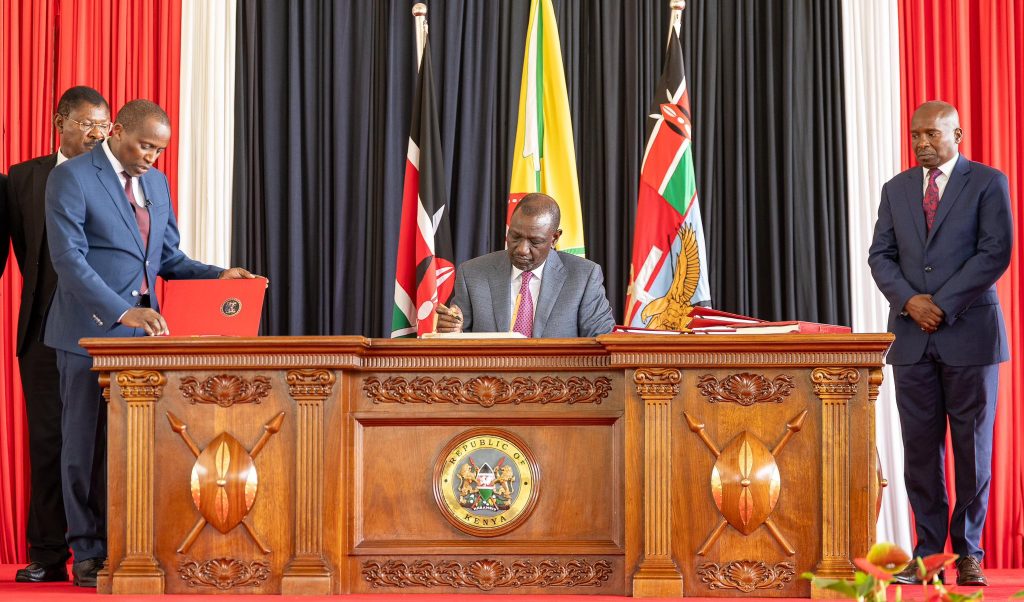
President William Ruto has officially signed the Gambling Control Bill into law, introducing stricter regulations for the betting industry in Kenya. The law was assented to on Thursday, August 7, during a ceremony held at State House.
One of the key changes in the new law is the introduction of a Sh20 minimum bet for any online gambling activity. This means gamblers will not be allowed to place bets below that amount on any licensed gambling platform.
According to the new law, any operator who allows betting below Ksh20 will face a fine of at least Ksh5 million or a jail term not exceeding five years.
The law also introduces new safeguards to protect minors from gambling. Operators must verify the age of every player before registering them on their platforms. Any child found registered will be a violation of the law.
“A player in an online gambling activity shall not bet an amount of less than twenty shillings in a competition,” the law reads in part. The Ksh20 bet will also include a saving component for the gambler, which will be determined by the Gambling Regulatory Authority in consultation with the Cabinet Secretary.
Furthermore, players will now be required to register and hold an account with the gambling company before participating. Operators must ensure these accounts are secure and not accessible to minors.
In addition, gambling companies will be required to pay out winnings quickly. Any monetary prizes must be transferred to the player’s account within two days, while non-cash prizes must be delivered within seven days.
The bill also paves the way for the creation of a Gambling Regulatory Authority, a new body that will oversee all licensing and monitoring of gambling activities across the country.
To obtain an online gambling license, individuals or companies are required to meet a range of strict conditions that ensure player safety, regulatory compliance, and operational integrity. These conditions include having robust online information security systems that protect user data and ensure secure transactions. Operators must also implement payment protection systems to safeguard funds and prevent fraudulent activities.
In addition, measures to prevent money laundering must be in place, including stringent verification processes and transaction monitoring protocols. Age-verification mechanisms are also essential to restrict underage individuals from accessing gambling services. License applicants must demonstrate that they adhere to responsible advertising policies that discourage addictive behavior and promote informed choices.
Furthermore, adherence to data protection guidelines is required to ensure the privacy and confidentiality of user information. Operators are also expected to actively participate in public awareness and education campaigns that highlight the risks associated with gambling and promote responsible practices among users.
The Authority will also work closely with the Communications Authority of Kenya to enable real-time monitoring of both physical casinos and online gambling platforms.
“A person making an application for an online gambling licence… shall submit to the Authority a proposed gambling control system,” the bill adds.
President Ruto said the new law is meant to curb the growing negative impact of gambling, especially among the youth.
“Gambling has taken a worrying trend, especially among our young people, posing a serious threat to our social fabric. To ensure that it does not become a menace to society, we have taken a comprehensive approach that strikes a balance between the cost and benefits of gambling,” said Ruto.
In addition to the Gambling Control Bill, the President also signed the Kenya Roads (Amendment) (No. 2) Bill, 2025 into law.