

Ruto tells housing department to construct 28,000 housing units for prisons officers

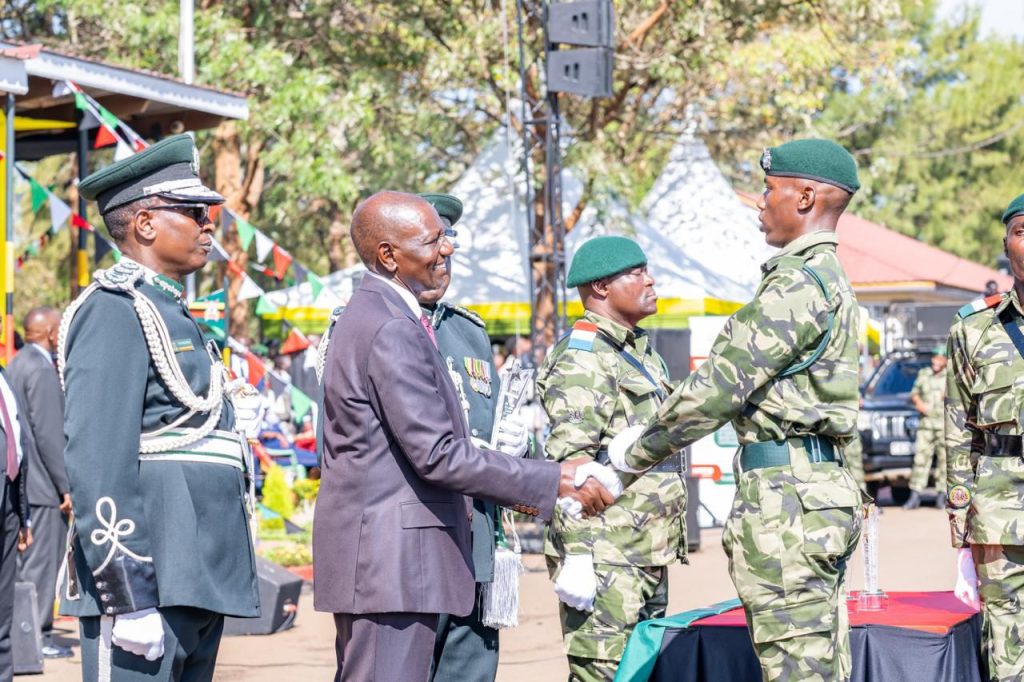
President William Ruto Thursday, directed the State Department for Housing and Urban Development to construct 28,000 institutional housing units for prison officers, with Phase One already underway in selected facilities.
In a major morale boost, President Ruto also highlighted the ongoing implementation of salary increments for Kenya Prisons Service officers, following the recommendations of the Maraga Taskforce.
He said entry-level pay for a prison constable has risen by 36 per cent, while the maximum salary scale has increased by 24 per cent after Phase I and II of the review.
Phase III of the salary adjustment will take effect on July 1, 2026.
“This demonstrates the government’s firm commitment to improving the welfare and motivation of our correctional officers,” he said.
The President noted that all Kenya Prisons Service staff are now covered under the Comprehensive Health Insurance Scheme through the Social Health Authority (SHA).
However, he challenged the State Department for Correctional Services to fast-track the registration of inmates under SHA, which currently stands at 56 per cent, to ensure full compliance.
He also confirmed the operationalization of the Wanini Kireri Magereza Level IV Hospital at the Prisons Staff Training College, which will serve both officers and surrounding communities.
He made the remarks when he presided over the pass-out parade of 3,862 Kenya Prisons Service officers, marking the end of nine months of intensive training and signalling renewed momentum in reforms within the country’s correctional system.
The colourful ceremony, filled with precision drills and ceremonial pomp, celebrated the induction of young men and women who now join the disciplined service at a time when the government is pushing for far-reaching transformation of the criminal justice sector.
Ruto described the occasion as a significant step in strengthening Kenya’s justice system, saying the newly trained officers will play a central role in maintaining law and order while supporting rehabilitation efforts.
“You are joining a disciplined service whose mandate goes beyond the safe custody of prisoners,” he said. “Your duty is to strengthen social order, support the administration of justice and help build safer communities across our nation.”
He linked the recruitment to the government’s broader development vision, noting that peace, stability and security remain critical pillars in Kenya’s journey toward economic transformation.
He emphasised that prison officers are a vital component of the national security architecture through their role in ensuring humane custody of offenders and supporting reintegration programmes.
The Kenya Prisons Service has also made notable strides in environmental conservation. According to the President, the department has planted more than 6.8 million trees in support of the national target of 15 billion trees by 2032.
National tree cover has risen to 12 per cent from less than 10 per cent five years ago, with prisons contributing significantly to the gains.
Officers were urged to take advantage of the upcoming rainy season to intensify tree-planting efforts.
Prison farms are contributing to food security, with maize stations achieving 85 per cent of projected harvests and rice production at Mwea Prison Farm reaching 60 per cent of expected yields.
Meanwhile, over 70 per cent of correctional facilities are now connected to the National Fibre Network under the Integrated Correctional Information Management System, improving efficiency and coordination across justice agencies.
Ruto urged the new officers to uphold professionalism, discipline and patriotism in their service.
“Maintain zero tolerance for malpractice and serve with integrity as you contribute to the transformation of our country,” he said.
The graduation adds a significant number of officers to the Kenya Prisons Service at a time when reforms, digitisation and welfare improvements are reshaping the correctional landscape