Site icon Kahawatungu

Ruto to deliver special national address at 7pm

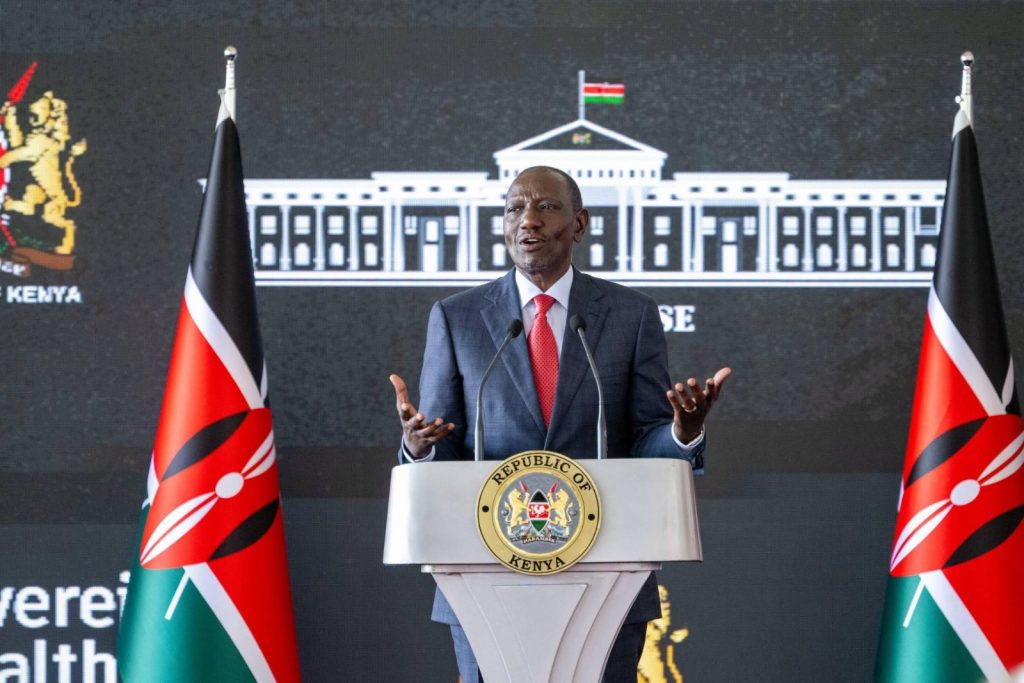
President William Ruto has signed the Sovereign Wealth Fund Bill, 2026 into law, establishing a national investment fund designed to preserve wealth generated from Kenya's natural resources and strategic investments for future generations. The new law creates a framework for investing revenues from petroleum, minerals and other strategic assets, with the aim of promoting long-term economic stability and sustainable national development. President Ruto described the legislation as a historic milestone that will ensure the country's natural resource wealth benefits both present and future generations. "With this consequential law, Kenya has put in place watertight mechanisms that will ensure the resources attained from strategic assets and natural resources endure for generations," Ruto said. He said the Sovereign Wealth Fund would ensure that proceeds from petroleum and other valuable mineral resources are not entirely consumed by the current generation but are invested for the benefit of future Kenyans. The Act establishes three key investment windows under the fund. The Stabilisation Fund will cushion the economy against internal and external shocks, while the Strategic Investment Window will finance commercially viable national development projects aimed at stimulating economic growth and creating jobs. The third component, known as the Urithi Fund, will preserve a portion of revenues from petroleum and mineral resources for future generations. Under the new law, 30 per cent of revenues generated from petroleum and mineral resources will be channelled into the Urithi Fund, with the remaining funds allocated to economic stabilisation and strategic investments. The Sovereign Wealth Fund becomes the second major financial institution established under the government's economic transformation agenda after the creation of the National Infrastructure Fund (NIF) in March 2026, which was designed to mobilise private capital for infrastructure development. Deputy President Kithure Kindiki welcomed the enactment of the law, describing it as one of Kenya's most significant economic reforms. "The entry into force of the Sovereign Wealth Act is one of the most consequential economic steps ever," Kindiki said. He noted that the legislation establishes a ring-fenced investment fund financed through proceeds from oil and mineral sales to help shield the country from economic shocks, including global crises such as the recent conflict involving Iran. According to Kindiki, part of the fund will be invested in commercially viable strategic infrastructure projects to generate returns, while 30 per cent of the proceeds will be reserved for future generations. "Today, Kenya has joined the ranks of Norway, the UAE, Kuwait and Botswana, ensuring use of the proceeds from our natural resources benefits both the current and future generations," he said.

President William Ruto is expected to deliver a Special National Address on Thursday, July 30, at 7:00 p.m., with the speech set to focus on the country’s development agenda.

The President is expected to outline the government’s vision for accelerating economic growth, infrastructure development and other key priorities under the Kenya Kwanza administration.

Ruto has consistently maintained that Kenya can achieve rapid transformation similar to that of Singapore within a generation through sustained investment in infrastructure, industrialisation and economic reforms.

He has argued that expanding roads, affordable housing, energy, railways and other strategic infrastructure projects will help position Kenya as a globally competitive economy.

The government recently introduced Infrastructure Funds aimed at mobilising additional financing for major infrastructure projects, with the administration saying the initiative will reduce reliance on traditional public financing and accelerate project implementation.

However, the President’s economic agenda has continued to attract criticism from sections of the opposition and some stakeholders.

Critics have accused the government of imposing a heavy tax burden on Kenyans and questioned the necessity of some flagship projects and reforms, arguing that they have increased the cost of living and placed additional pressure on businesses and households.

Concerns have also been raised over the country’s rising public debt, which has exceeded Sh12 trillion.

According to the Office of the Controller of Budget, more than 70 per cent of the revenue collected by the government is currently used to service public debt, limiting the resources available for other public expenditure.


Exit mobile version