

Senate Committee Directs Murang’a to Align Municipal Revenue Frameworks with Law

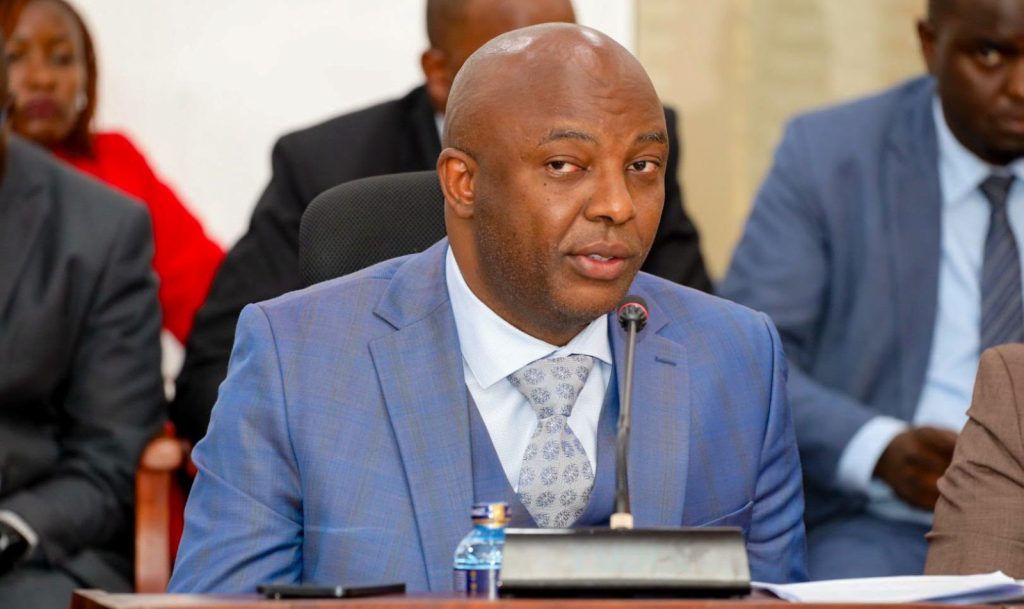
The Senate Standing Committee on Devolution and Intergovernmental Relations has directed Murang’a County to align its municipal operations and revenue frameworks with the law amid concerns over revenue management and budget utilisation.
The directive is aimed at ensuring that the county’s municipal boards achieve greater fiscal autonomy and effectively deliver services to residents.
The decision was issued by the committee chairperson and Wajir Senator Mohamed Abbas during a meeting with Murang’a Governor Irungu Kang’ata to review the governance framework of Murang’a, Kenol and Kangari municipalities.
The committee also assessed the municipalities’ compliance with the Urban Areas and Cities Act and the Public Finance Management (PFM) Act.
Although the county has gazetted delegated municipal functions and approved key regulatory policies, senators raised concerns over gaps between the policies and their implementation on the ground.
Lawmakers also questioned delays in the gazettement of municipal charters, noting that the process had taken as long as three years in some areas, including Kangari.
“Why take so long to gazette municipalities?” asked Marsabit Senator Mohamed Chute.
Senators further raised concerns over county documents that referred to the “transfer” of municipal functions instead of “delegation”, arguing that the wording could give the county executive excessive control over municipal affairs.
“In your gazette notices, you make reference to transferring a function yet the law expects you to delegate,” said committee vice chairperson Senator Catherine Mumma.
Governor Kang’ata acknowledged the error, describing the references to transfer as administrative drafting mistakes. He assured the committee that municipal managers were actively supervising dedicated local revenue collectors.
Financial data presented to the committee showed growth in local revenue collections during the 2025/26 financial year.
Kenol Municipality recorded the highest collections at Sh128,309,600, followed by Murang’a Municipality with Sh117,189,844 and Kangari Municipality with Sh48,285,711.
Despite the increase in revenue, senators raised concerns over low budget utilisation and the county’s centralised pooling of municipal revenues into the County Revenue Fund (CRF).
Governor Kang’ata defended the system, arguing that automated revenue collection systems made separate physical accounts unnecessary because digital records could track funds according to their source.
However, senators rejected the approach, insisting that municipalities must comply with the requirements of the PFM Act.
“We cannot apply the law selectively,” said Senator Peris Tobiko, who pointed to Section 179 of the PFM Act, which requires municipalities to maintain separate accounts, prepare individual budgets and manage their own implementation.
Murang’a Senator Joe Nyutu, who attended the meeting as a friend of the committee, also raised concerns over physical planning, cemeteries and recreational spaces in rapidly growing urban centres such as Kenol.
Governor Kang’ata responded that Kenol was operating under an approved physical development plan that provides for playfields, cemeteries and an industrial park.
He added that access roads had also been prioritised for infrastructure improvements to support the municipality’s growth.
The committee resolved to closely monitor Murang’a County’s progress in implementing the recommendations.
The county executive was given time to correct the administrative errors and ensure that municipal revenues are managed in accordance with the law and contribute directly to urban development and the delivery of public services.

