

Senate committee rejects Cherargei’s constitutional amendment bill amid public opposition

Senate committee rejects Cherargei’s constitutional amendment bill amid public opposition
The Senate Committee on Justice, Legal Affairs and Human Rights recommended the rejection of a controversial bill that sought to extend the terms of elected officials from five to seven years.
This was in a decisive blow to the proposed constitutional reforms.
The Constitution of Kenya (Amendment) (No. 2) Bill, 2024, sponsored by Senator Samson Cherargei, faced public opposition during the consultation phase, with 99.99% of submissions expressing strong disapproval.
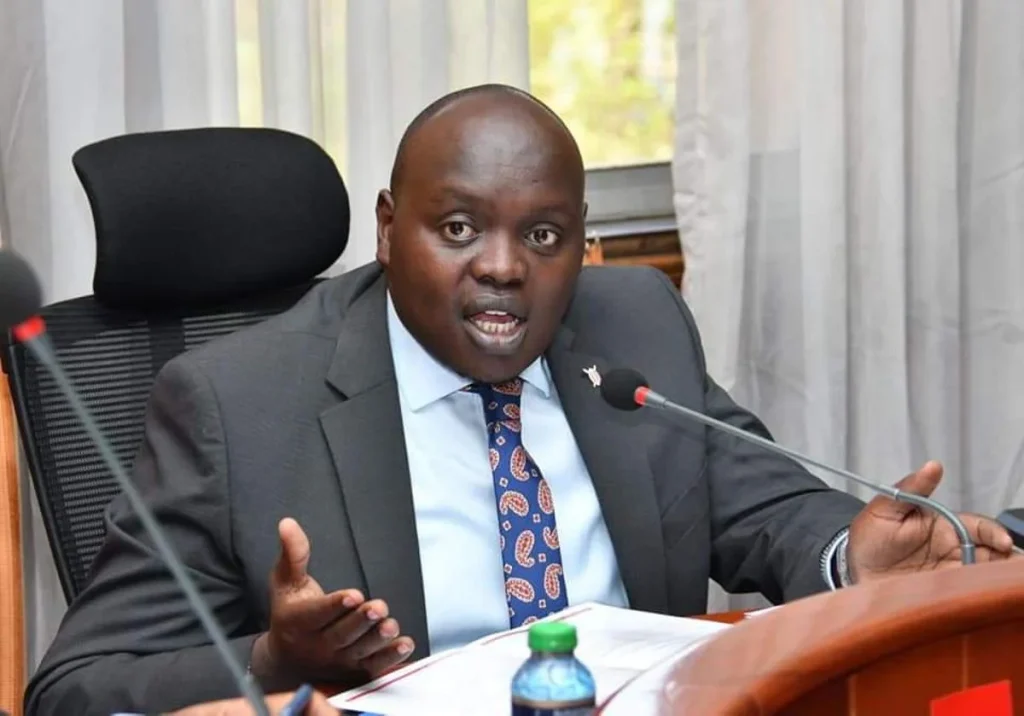
“The voice of the Kenyan people has been unequivocal,” declared Committee Chairperson Senator Hillary Wakili Sigei while presenting the report to the Senate plenary.
“Out of 168,801 submissions received, only eleven stakeholders provided specific comments on the bill’s clauses, while the rest overwhelmingly rejected the proposed amendments.”
The bill, which proposed extending the terms of the President, Members of Parliament, Governors, and County Assembly Members, also sought to introduce the position of Prime Minister and modify the Senate’s functions within the bicameral system.
“During our public hearing at the KICC Amphitheater on October 25, we witnessed an unprecedented show of unity among Kenyans,” Sigei emphasized.
“Save for one stakeholder, every single presenter urged the committee to reject this bill in its entirety.”
The committee’s decision was influenced not only by public opposition but also by procedural considerations.
“We find ourselves in a position where even if some amendments proposed in the bill had merit, parliamentary practice and court decisions prevent us from severing the condemned provisions,” Sigei explained. “The Constitution demands that such amendments garner support from both the public and parliamentarians before passage.”
The committee proposed significant procedural reforms. “We recommend that the Senate adopt stronger vetting mechanisms for constitutional amendment bills,” stated Sigei.
“Specifically, we’re calling for a requirement of at least fifteen senators’ signatures in support of any such proposal before it can be published as a bill.”
The chairperson highlighted the financial implications of processing controversial constitutional amendments.
“Subjecting bills to public participation incurs significant costs for Parliament. We must establish a proper sieving mechanism to ensure that proposals have reasonable support before advancing to this stage,” he said.
“This decision reflects our commitment to protecting both the spirit of our Constitution and the public interest,” Sigei concluded. “We cannot proceed with amendments that face such overwhelming opposition from the Kenyan people.”
The fate of the Bill now rests in the hands of its sponsor, Cherargei, who retains the right to move it to Second Reading despite the committee’s rejection.
For the bill to advance, Cherargei must first secure a seconder for the motion, and then marshal sufficient support from his fellow senators. Without adequate backing from the Senate, the bill will not proceed to Second Reading and will effectively collapse at this stage.
[13/10, 21:43] Cyrus Ombati Star: Teaching halted as Nigerian lecturers go on strike
Lecturers at public universities in Nigeria began a two-week strike over pay and funding.
The industrial action comes just weeks after universities resumed for a new academic year.
Announcing the decision, the leader of the Academic Staff Union of Universities (Asuu), Professor Chris Piwuna, described the decision as “inevitable” due to what he said was government failures.
The government has urged lecturers to reconsider the strike, stressing that constructive dialogue remains the best way to resolve the crisis.
The government added that striking lecturers can expect not to be paid under the country’s “No Work, No Pay” labour law.
In a statement, it said it had made a comprehensive offer to the union addressing key issues such as working conditions, institutional governance and staff welfare.
The government added that it was still awaiting ASUU’s official response.
Nigeria’s university lecturers have a long history of industrial action over issues of funding, salaries, and welfare.
ASUU’s disputes with successive governments date back to the 1980s.
Agreements reached in 1992, 2009 and 2013 have often gone unfulfilled, prompting repeated strikes.
The last major one in 2022 lasted for eight months, disrupting the academic calendar and affecting millions of students nationwide.
It took an industrial court to stop the strike and force the teachers to go back to the classrooms.
Observers say these recurring strikes reflect deeper structural challenges in Nigeria’s higher education sector – including chronic underfunding, politicised management and a persistent lack of trust between the government and university unions.
By BBC News

