

Senate Uncovers Health Crisis In Mandera, Wajir, And Marsabit

A Senate Health Committee has exposed serious problems in the healthcare systems of Mandera, Wajir, and Marsabit counties, revealing a deep crisis marked by expired drugs, equipment breakdowns, staff shortages, and questionable spending.
Led by Uasin Gishu Senator Jackson Mandago, the Senate team visited public hospitals and clinics in the three northern counties and found that many facilities are struggling to serve patients.
Mandera: Broken Machines and Untrained Staff
In Mandera, the committee toured Mandera Teaching and Referral Hospital, Khadija Dispensary, and Elwak Sub-County Hospital. At the main hospital, only three out of five dialysis machines were working, while the CEO, Okash Adan, said the facility needed at least 10.
Staffing was another big issue. Some people dispensing medicine were not trained pharmacists. Senator Mariam Omar said they found expired drugs and facilities without qualified pharmacy staff.
There were also allegations of government drugs being sold in private pharmacies. “That is not true,” said Dr. Khadija, a pharmacist. “We follow proper procedures.”
At Khadija Dispensary, Senators were shocked to see expired medicine on the shelves. When asked who was giving out the drugs, clinical officer Abdihaziz Mustafa admitted he was doing so without formal pharmacy training.
At Elwak Hospital, staff requested more vehicles to help with emergency services.
“Healthcare is not just about buildings. It’s about having the right staff, proper systems, and being accountable,” said Senator Mandago.
Wajir: Poor Safety, Stalled Projects, and Missing Supplies
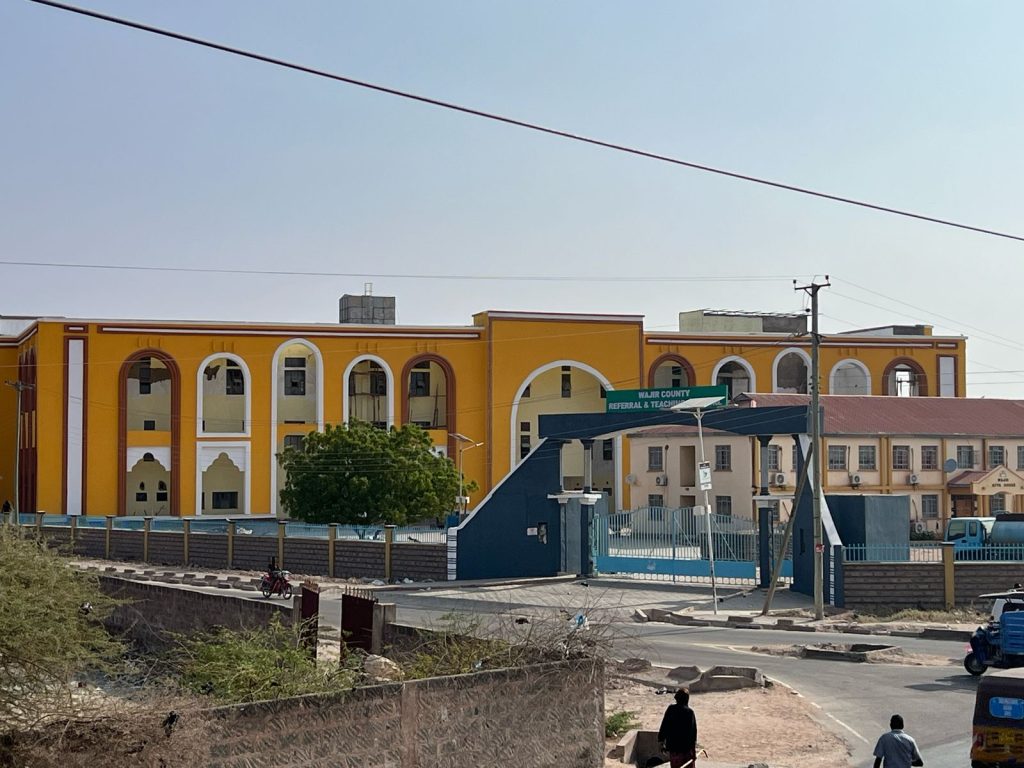
In Wajir, the Committee visited the Manyatta TB Centre and Wajir County Teaching and Referral Hospital. At Manyatta, staff complained about poor safety, lack of a working laboratory, and limited access to medical supplies. Shockingly, the facility’s in-charge said he didn’t even have keys to a cabinet storing vital lab reagents — which were under the control of the county pharmacist.
Expired drugs were also found dumped around the facility. The Committee raised questions about a stalled incinerator project and the quality of maternal care services.
Maternity nurse Henry Kiplangat highlighted challenges such as worn-out laundry machines, mosquito net shortages, poor roads, and no digital record-keeping.
Wajir Senator Abbas Sheikh Mohammed pressed for answers on how funds from the Social Health Authority (SHA) and the Facility Improvement Financing (FIF) were being used. Kiplangat said the facility had received Sh11 million from SHA and Sh5.7 million from FIF, and that SHA systems were working well.
There were also complaints from TB patients about poor nutrition. “Food is part of the hospital’s responsibility,” said the facility’s nutritionist when asked about the quality of meals.
Later, Wajir Governor Ahmed Abdullahi admitted the county was facing serious challenges. He promised reforms, including the supply of mosquito nets, the appointment of a permanent hospital CEO, and the completion of a Sh600 million modern waste disposal site by September.
Marsabit: Expired Drugs and Missing ICU Funds
In Marsabit, the Committee found Marsabit County Referral Hospital overwhelmed and poorly maintained. The cancer clinic is seeing twice the number of patients it used to, but there is no proper lab testing — samples are still being sent to Nairobi.
Senators found dry toilets, dirty wheelchairs, and overgrown hospital grounds. Nurse Lokho said the plumbing was not working. Staff admitted they were using expired drugs and sanitizers and that hazardous medical waste was being stored in abandoned toilets or dumped outside.
The team also discovered that a Sh200 million ICU budget from 2020 could not be fully accounted for. Neither the hospital CEO nor the county health executive could explain how the funds were used.
Governor Mohamud Mohamed Ali later said that only Sh18 million of that money had been used for ICU-related work and insisted the facility was operational.
The Senators also questioned why the hospital was sourcing drugs from a private pharmacy, Adhi Pharmacy, instead of the official supplier, KEMSA.
In all three counties, the Committee noted a disturbing pattern: poor staffing, expired medicine, broken sanitation systems, missing equipment, and unclear financial records. Some key health officials were absent, and many facilities were in a state of disrepair.
“We were shocked by the level of dysfunction,” said Bungoma Senator Wakoli Wafula. “In one hospital, we found expired drugs dumped in a disused toilet.”
With public health services falling apart while private clinics grow, the Committee is calling for urgent government action. Governors from the three counties have promised to fix the issues, improve staffing, and ensure better financial management.
Senators on the oversight mission included Jackson Mandago, Mariam Omar, Wafula Wakoli, Richard Onyonka, Tabitha Mutinda, and Abbas Sheikh Mohammed.

