


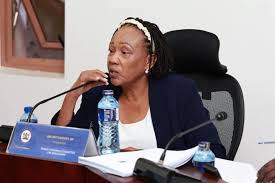
Senators pushed back against a Ministry of Education plan to merge Early Childhood Development Education (ECDE) teacher training with primary teacher education, warning that the move threatens devolution and could destabilise early learning in counties.
Lawmakers sitting in the Senate Education Committee said the directive, issued through an administrative circular, crosses constitutional lines by shifting control of ECDE teacher training back to the national government, despite the function being devolved to county governments.
At issue is a proposal by the Ministry to collapse the Diploma in Early Childhood Teacher Education (DECTE) and the Diploma in Primary Teacher Education (DPTE) into a single qualification, the Diploma in Teacher Education – Pre-Primary and Primary (DTE PP & P).
Committee chairperson Senator Betty Montet told the meeting that any changes touching on ECDE must involve counties and the public, warning that policy decisions cannot be imposed from Nairobi without consultation.
“This is not a minor administrative adjustment. It has real consequences for counties, training institutions and learners,” she said.
Senators also raised alarm over the fallout for students and colleges already operating under existing ECDE guidelines. Machakos Senator Kavindu Muthama said the abrupt shift has left trainees uncertain about their qualifications and future placement.
Concerns were further raised about the quality of early learning. Kajiado Senator Seki Lenku Ole Kanar cautioned that ECDE requires specialised training and warned that merging it with primary teacher education risks weakening the foundation of the Competency-Based Curriculum.
A caucus of professors from various universities in Kenya petitioned the Ministry of Education over the circular terminating standalone Early Childhood Development Education (ECDE) diploma programmes.
The directive, issued by Basic Education Principal Secretary Prof. Julius Bitok, merges early childhood and primary teacher education programmes into a single course, a move that has sparked concern among educators, students and county governments, where ECDE is a devolved function.
A circular dated January 19, 2026, has drawn sharp reactions from a section of university lecturers, who say the decision has left hundreds of students and parents, many already enrolled in colleges, uncertain about their future.
The circular announced the merger of the Diploma in Early Childhood Teacher Education and the Diploma in Primary Teacher Education to form a new programme, the Diploma in Teacher Education – Pre-Primary and Primary.
“In teacher training colleges, private, we have a membership of 500 colleges training ECDE teachers. This circular came on January 19. Our admission date is in August every year. We have students admitted in August and the circular discontinues them in January. What do we tell these students?” A lecturer posed.
The caucus argues that any major change within the education system should be implemented with a transition period of no less than five years, noting that teaching methods at the ECDE level differ significantly from those used in primary schools.
“Primary colleagues are teaching children to do Maths and English. We are preparing children on emotional control and self-control, and that is the Science,” said Dr. Rose Opiyo, a lecturer at Maseno University.
Another lecturer, Dr Hudson Ouko of Kenyatta University, said, “We have made a lot of strides and somebody has come cutting it left and right without consulting.”
County governments have also raised concerns.
Speaking on behalf of the Council of Governors (CoG), Kericho Governor Dr Eric Mutai said counties were not consulted on the proposed merger, warning that county bosses could move to court to block the directive.
“This circular is coming when we have teachers in class. What happens to those who have been trained? What happens to those we have employed?” Posed Dr Mutai.
ECDE veteran Ann Njenga added, “County governments can tell you how many ECDE teachers they have at the certificate level. They are working, they have children, they cannot leave their homes to go and train.”
However, the Ministry of Education has defended the move.
Bitok said the ministry is implementing a presidential directive based on recommendations by the Presidential Working Party on Education Reforms.
According to Prof. Bitok, the standalone ECDE diploma was abolished in 2023, but some privately owned colleges have continued to offer the course fraudulently.
Email your news TIPS to Editor@Kahawatungu.com — this is our only official communication channel
