

Shakahola witnesses reveal tragic tales of lost children, DNA links, and escape

Shakahola mass murder trial
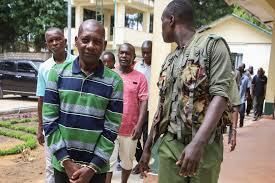
More chilling testimonies were presented Wednesday at the Tononoka Children’s Court before Principal Magistrate Nelly Chepchirchir in the ongoing trial against controversial preacher Paul Nthenge Mackenzie and his 35 co-accused facing multiple charges including cruelty to children, torture, and denial of the right to education, all connected to the infamous Shakahola massacre.
One of the witnesses, Charles Adundo, an elderly man and grandfather, recounted how he used to care for two of his grandchildren after his daughter, a mother of ten, left them in his custody.
He testified that his youngest son, the 35th accused, came one day and took the children from school, a moment that would mark the last time he saw them.
Another emotional testimony came from 70-year-old Felida Vugusa from Kapkerer, who told the court about her daughter, Sarah Khahisha.
She explained that Sarah became a mother at a young age and eventually had five children.
One Sunday, while Felida was at church, her daughter, son-in-law Mulama, and all five grandchildren vanished, including E.I. one of the witnesses.
She never saw them again. Felida added that the family had been attending a mysterious church she knew nothing about, and that Mulama was adamantly opposed to the children going to school.
The court also heard scientific evidence from Henry Kiptoo, a Government Analyst at the Government Chemist Department in Nairobi.
He explained that his team conducted DNA analysis on samples taken from bodies exhumed in Shakahola.
After collecting 333 samples from families who had reported missing loved ones, they were able to generate DNA profiles and compile two reports dated August 6, 2024 and November 13, 2024, identifying 38 and 31 bodies respectively. Some of the bodies identified were confirmed to be children and relatives of the accused persons.
Further forensic evidence was presented by Liwa Filbert, Director of the National Registration Bureau.
He told the court how, upon request, they used fingerprint matching via Form C4 to verify the identities of suspects.
While several suspects had given police false names, fingerprint analysis revealed their real identities, successfully identifying over 35 suspects involved in the case.
Adding to the human toll of the tragedy was 26-year-old Khadijah Wilson from Shakahola’s “Madukani” area, who told the court how she and her younger brother found a frail boy, identified only as P.P., sleeping outside their shop.
According to her, P.P. said he had escaped from Mackenzie’s area, where he had been subjected to fasting and starvation.
She sheltered the boy for nearly four months after alerting a village elder, who helped contact children’s officers.
The boy was eventually taken into custody for care and protection.
Khadijah testified that the boy was so malnourished and weak at the time of rescue that even school attendance was impossible.
“If we hadn’t rescued him, he would have died,” she told the court.
The matter was adjourned to September 19, 2025.

