

Sherrod Brown Net Worth

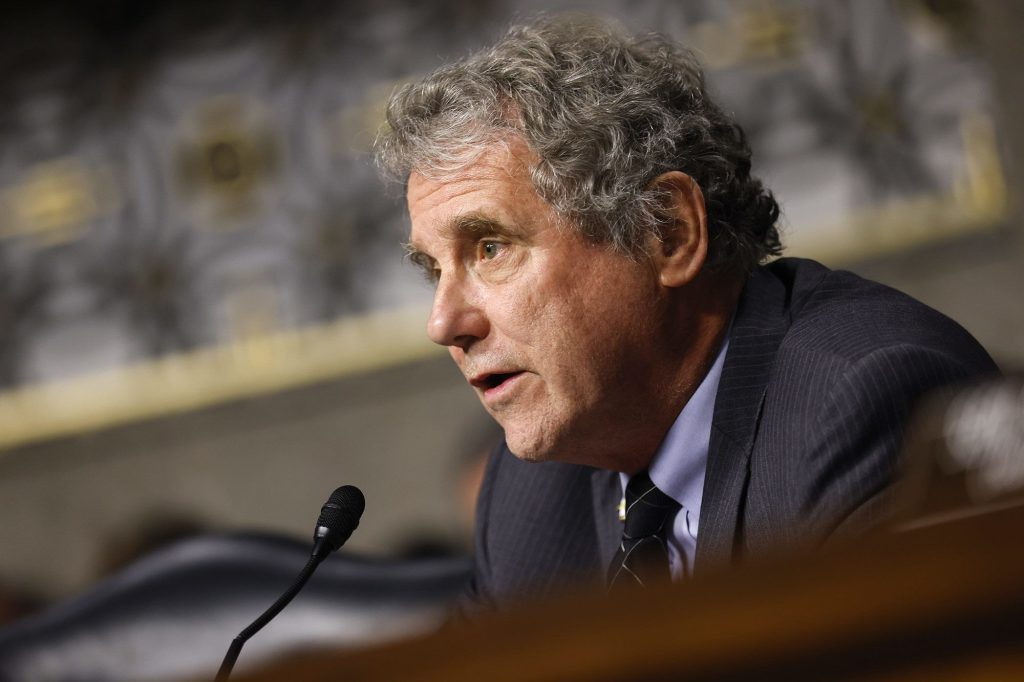
Sherrod Brown is an American politician and author with an estimated net worth of $1 million. He represented Ohio in the United States Senate for 18 years, from January 2007 to January 2025, after serving seven terms in the U.S. House of Representatives. A member of the Democratic Party, Brown has built his political career around workers’ rights, American manufacturing, trade policy and economic issues.
Before entering federal politics, Brown served in the Ohio House of Representatives and completed two terms as Ohio’s secretary of state. During his final four years in the Senate, he chaired the Senate Committee on Banking, Housing, and Urban Affairs.
Brown lost his 2024 re-election campaign to Republican businessman Bernie Moreno. However, he made a political comeback in November 2026, defeating Republican Senator Jon Husted in Ohio’s special Senate election. His victory means he will return to the Senate to serve the remainder of the term originally won by JD Vance.
Although his net worth is commonly estimated at $1 million, financial disclosures provide a more detailed picture of his assets, retirement accounts and income. His reported wealth is largely associated with retirement benefits, bank accounts and investments rather than major private businesses.
| Sherrod Brown Net Worth | $1 Million |
| Date of Birth | November 9, 1952 |
| Place of Birth | Mansfield, Ohio |
Financial Disclosures
Sherrod Brown’s net worth is estimated at approximately $1 million. However, the figure is not an officially confirmed valuation of his personal wealth.
His financial disclosures show a comparatively modest portfolio for someone who spent more than three decades in Congress. His 2025 annual financial disclosure, filed in August 2026, listed reportable assets worth between approximately $497,000 and $1.18 million.
The largest assets included his Ohio Public Employees Retirement System pension, valued between $100,001 and $250,000, and retirement investments held by his wife, journalist Connie Schultz. The filing also listed bank accounts with Huntington National Bank, Northwest Bank and the Congressional Federal Credit Union.
An analysis of the disclosure placed Brown’s estimated net worth at approximately $839,000. This figure represents the midpoint of the reported asset ranges after accounting for liabilities listed in the filing. It is not an exact valuation because federal disclosure rules allow assets to be reported within broad ranges.
The filing reported no liabilities, although congressional financial disclosure forms do not provide a complete picture of every household financial obligation. Primary residences, for example, are generally excluded from reportable asset totals.
His retirement benefits are an important part of his financial portfolio. Brown’s years in public service and his wife’s professional career have contributed to the household’s retirement investments and savings.
Sherrod Brown’s Salary
During his years as a U.S. senator, Brown received the standard annual Senate salary of $174,000. The base salary for most senators has remained at that level since 2009.
After leaving the Senate in January 2025, Brown received income from his Ohio retirement pension, teaching, writing and other professional activities.
His 2025 financial disclosure listed $47,689 in income from the Ohio Public Employees Retirement System. He also reported $5,500 from a temporary teaching position at Harvard University’s Kennedy School, $4,000 for an article published in The New Republic and $500 for an article in The New York Times.
His wife also reported income from teaching, writing, Substack and book royalties. However, federal disclosure rules do not always require exact amounts for spousal income.
Brown’s return to the Senate in 2027 will make him eligible for the standard congressional salary again. His campaign fundraising and political committee balances, however, are separate from his personal wealth and should not be included when calculating his net worth.
Early Life
Sherrod Campbell Brown was born on November 9, 1952, in Mansfield, Ohio. He grew up in the state and developed an interest in public affairs at an early age.
He attended Yale University, where he earned a bachelor’s degree in Russian studies in 1974. He later continued his education at Ohio State University, earning a master’s degree in education in 1981.
Between his university studies and political career, Brown worked as a teacher at Ohio State University’s Mansfield campus.
His educational background and early experience in public service helped shape his interest in labour issues, manufacturing, trade and economic policy. These subjects later became central to his work in the Ohio legislature and Congress.
Ohio House of Representatives
Brown entered electoral politics in the 1970s when he successfully ran for a seat in the Ohio House of Representatives.
He served in the state legislature from 1975 to 1982. During this period, he developed experience in state government and established himself as a Democratic politician interested in public policy and economic issues.
His time in the Ohio House provided a foundation for his next political assignment, which took him into statewide office.
Ohio Secretary of State
Brown was elected Ohio secretary of state and served from 1983 to 1991.
The office is responsible for overseeing elections, business registrations and other administrative functions of state government.
His two terms gave him statewide political experience and helped increase his visibility among Ohio voters. After leaving the office, he returned to electoral politics and successfully contested a seat in the U.S. House of Representatives in 1992.
U.S. House of Representatives
Brown entered the U.S. House of Representatives in January 1993, representing Ohio’s 13th Congressional District.
He served seven consecutive terms, remaining in the House until January 2007. His tenure coincided with major changes in Ohio’s manufacturing sector, including factory closures, job losses and growing concerns about international trade.
Trade policy became one of his best-known political issues. Brown opposed the North American Free Trade Agreement in 1993 and later opposed the Central America Free Trade Agreement.
He argued that some trade agreements placed American manufacturing workers at a disadvantage and contributed to the movement of jobs overseas.
Brown also wrote about trade and economic policy, subjects that later featured prominently in his books and Senate work.
United States Senate Career
Brown ran for the U.S. Senate in 2006 and defeated Republican incumbent Mike DeWine. He took office in January 2007 and was re-elected in 2012 and 2018.
During his 18 years in the Senate, Brown served on several committees dealing with banking, finance, agriculture, veterans’ affairs and other policy areas.
In 2021, he became chairman of the Senate Committee on Banking, Housing, and Urban Affairs. He held the position until his Senate tenure ended in January 2025.
The committee oversees important areas of the American economy, including banking regulation, housing policy, financial markets, consumer protection and insurance.
Brown used his position to advance issues relating to workers’ rights, pensions, manufacturing, trade enforcement and consumer financial protections.
His political approach was frequently described as economically populist because of his emphasis on working-class communities and American industrial jobs.


2024 Senate Election Defeat
Brown sought a fourth Senate term in the 2024 election. His Republican opponent was businessman Bernie Moreno, who received strong support from former President Donald Trump.
The race attracted national attention and became one of the most expensive Senate contests in the country.
Brown’s campaign reported more than $96 million in receipts during the 2023–2024 election cycle. However, campaign funds belong to the campaign committee and cannot be treated as the candidate’s personal income or net worth.
Moreno defeated Brown in the November 2024 election, ending the Democrat’s 18-year service in the Senate.
Brown left office on January 3, 2025, and was succeeded by Moreno.
Post-Senate Work
After leaving the Senate, Brown continued working on issues relating to American workers, manufacturing and economic opportunity.
In 2025, Harvard University’s Institute of Politics appointed him as a visiting fellow for the spring semester. He also launched the Dignity of Work Institute in March 2025.
The organisation focuses on workers, employment and economic policies aimed at ensuring that people benefit from their labour.
Brown also continued writing and contributing opinion articles. His financial disclosure shows that he received income from teaching and publishing during the period outside elected office.
His post-Senate activities allowed him to remain involved in public policy while preparing for another political campaign.
2026 Senate Election Victory
Brown returned to the political arena in 2025 when he filed to contest the 2026 Ohio Senate election.
He challenged Republican Senator Jon Husted, who had been appointed to the Senate in January 2025 after JD Vance resigned to become vice president.
The November 3, 2026 election became one of the most closely watched Senate contests in the country. Brown campaigned on issues including workers’ rights, economic opportunity, manufacturing and the impact of artificial intelligence data centres on local communities.
He defeated Husted, securing a political comeback two years after losing his Senate seat to Bernie Moreno.
The victory means Brown will return to the Senate and serve the remaining two years of the term originally won by Vance in 2022. His return also gives Democrats another seat in the chamber.
Books
In addition to politics, Brown is an author who has written about Congress, trade and American political history.
His books include Congress from the Inside: Observations from the Majority and the Minority, which draws on his experience in the House of Representatives.
He also wrote Myths of Free Trade: How and Why America’s Trade Policy Flies in the Face of Reality, examining the effects of American trade policies on workers and manufacturing.
In 2019, he published Desk 88: Eight Progressive Senators Who Changed America. The book explores the lives and political contributions of progressive senators whose desks Brown occupied during his Senate career.
His writing has provided another source of professional activity beyond elected office. His financial disclosures also indicate that royalty arrangements for some of his books remained in place, with proceeds from Myths of Free Trade designated for charitable organisations.
Personal Life
Sherrod Brown has been married to journalist and author Connie Schultz since 2004.
Schultz won the 2005 Pulitzer Prize for Commentary for her work at The Plain Dealer, a newspaper based in Cleveland, Ohio. She has also worked as a columnist, author and university instructor.
Brown and Schultz each had two children before their marriage, creating a blended family. They have eight grandchildren.
The couple have maintained careers in public service, journalism, writing and education. Their financial disclosures show household assets largely comprising pensions, retirement accounts and cash holdings rather than large individual stock portfolios or major private businesses.
After Brown left the Senate, the couple moved from their longtime Cleveland home to the Columbus area. They reportedly purchased a home in Bexley in 2025 and took out a mortgage of approximately $589,000.
The primary residence is generally not included in the asset totals reported on congressional financial disclosure forms.
Also Read: Herschel Walker Net Worth

