

Sonko moves to Appeals Court over his impeachment

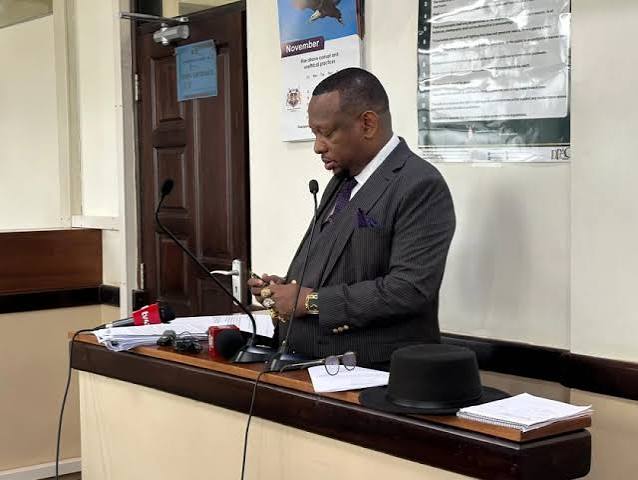
Sonko testifies in court budget refusal was at the heart of his fight with state
Former Nairobi Governor Mike Sonko has moved to the High Court seeking to nullify the 2021 judgment that upheld his impeachment.
He argued that the decision was tainted by judicial misconduct later established in separate proceedings against former judge Said Juma Chitembwe.
In a constitutional petition filed in Nairobi, Sonko wants the judgment declared a mistrial and a nullity, contending that Chitembwe’s failure to disclose his relationship with him or recuse himself undermined the fairness and integrity of the proceedings.
Sonko argued that the Supreme Court’s December 2023 decision upholding a tribunal’s recommendation for Chitembwe’s removal from office provides grounds to revisit the judgment that upheld his removal as Nairobi governor.
The petition sued the Judicial Service Commission (JSC) and the Attorney General with 10 interested parties, including the Independent Electoral and Boundaries Commission, activist Okiya Omtatah, the Nairobi County Assembly and the Senate.
Justice Gregory Mutai, who was handling the case, directed that the petition and accompanying application be served on the respondents and interested parties within seven days.
The parties were given 14 days from service to file their responses, after which Sonko will file rejoinders and written submissions.
The submissions are scheduled for highlighting on January 25, 2027.
” In my view, the Petition and the Motion raise issues that ought to be determined at the earliest opportunity,” ruled the court
At the centre of the dispute is Chitembwe’s participation in the three-judge bench that dismissed Sonko’s challenge to his impeachment on June 24, 2021.
In a separate case concerning Chitembwe’s conduct, the Supreme Court upheld a tribunal’s recommendation that he be removed from office after finding constitutional and ethical breaches, including his failure to recuse himself or disclose his relationship with Sonko in the impeachment proceedings.
Sonko argued that the findings raise fundamental questions about whether the 2021 judgment was reached in accordance with the constitutional guarantee of a fair hearing before an independent and impartial court.
He contended that the failure to disclose the circumstances surrounding the relationship compromised the integrity of the proceedings and rendered the judgment unconstitutional.
The former governor further argued that the decisions of the Court of Appeal and the Supreme Court that subsequently affirmed the High Court ruling should also be declared void because, in his view, they originated from a flawed trial.
He wanted the court to determine whether a judgment delivered by a bench that included a judge subsequently found to have breached constitutional standards of judicial conduct can continue to have legal effect.
Sonko also asked the court to determine what remedies are available where a judge’s lack of independence or impartiality is established after a decision has been delivered.
Among the orders sought are a declaration that the decisions in Nairobi High Court Petition No. E425 of 2020, consolidated with Petition No. E014 of 2021, and Petition No. E005 of 2021 were a mistrial and a nullity.
He also wants the court to invalidate the subsequent appellate decisions, compel the JSC to take action, and order a fresh hearing before an expanded bench appointed by the Chief Justice.
The petition further seeks to restrain the respondents from implementing or enforcing the impugned judgments and consequential decisions, as well as exemplary and punitive damages for the alleged violation of his right to a fair hearing.
Sonko was impeached by the Nairobi County Assembly on December 3, 2020, with the Senate upholding his removal on December 17, 2020.
He subsequently challenged the process in court, but a three-judge bench dismissed his petition, finding that the impeachment had complied with constitutional and statutory requirements.
The Court of Appeal and the Supreme Court later upheld the decision.
Chitembwe’s conduct was examined separately by a tribunal investigating his suitability to remain in judicial office.
The Supreme Court subsequently upheld the tribunal’s recommendation for his removal, citing breaches of constitutional and ethical obligations.
Sonko argues that the consequences of the impeachment judgment extend beyond his removal from office, claiming that it has affected his reputation, business interests and prospects of participating in public service.
He further contends that the decision continues to be relied upon by state institutions and cited in legal education as an important precedent on impeachment, despite the subsequent findings concerning Chitembwe’s conduct.

