

Sophia Oyweri: Young woman seeks to rewrite ward politics in Ichuni, Kisii

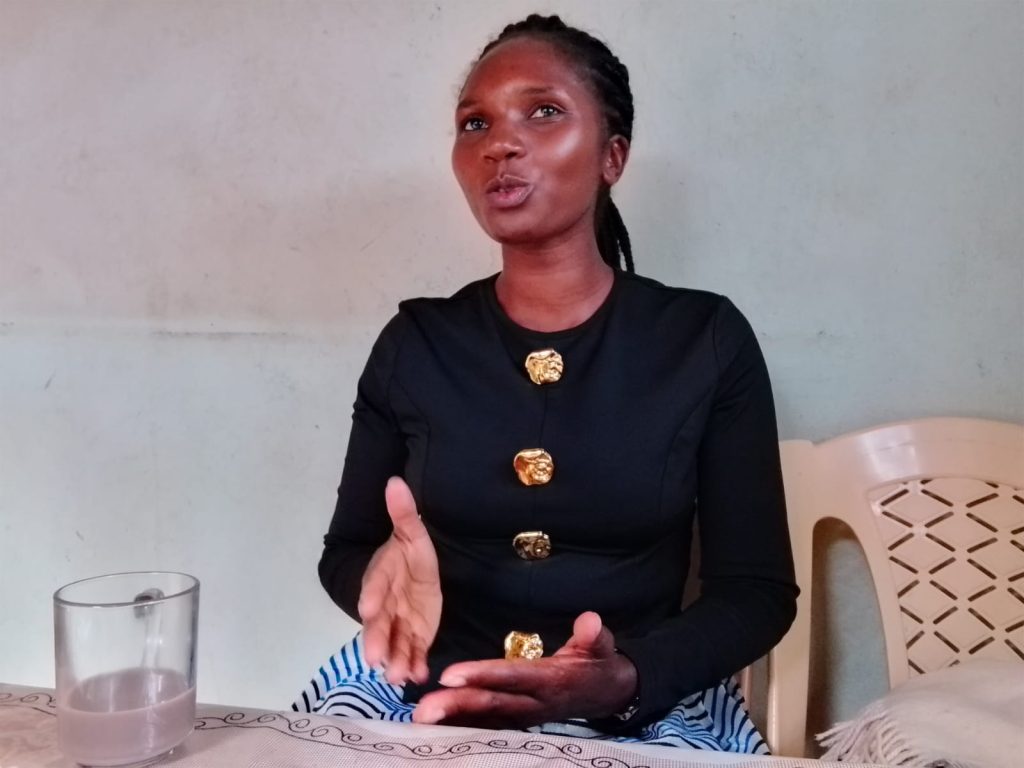
For an expectant mother in Giesembe, Ichuni Ward in Masaba South, a journey to a referral hospital can become a race against time when poor roads stand between her and lifesaving medical care.
For Sophia Oyweri, 28, such challenges reflect what she describes as years of inadequate representation under incumbent Member of the County Assembly (MCA) Wycliffe Siocha, whom she blames for the ward’s development challenges.
Oyweri is now seeking to change that narrative by contesting the Ichuni Ward MCA seat in the 2027 General Election, promising to prioritise road infrastructure, early childhood education, sanitation and economic opportunities for vulnerable families.
Her political ambitions are shaped by her childhood experiences, which she says exposed her to the difficulties ordinary households face when essential services and opportunities remain out of reach.
Armed with a degree in Mathematics and Business Studies from Jaramogi Oginga Odinga University of Science and Technology, Oyweri hopes to translate those experiences into a development agenda focused on improving the lives of Ichuni residents.
“When I look at the challenges facing our people, I see issues that demand practical solutions. Our children deserve better opportunities, and our families deserve services that improve their daily lives,” she says.
Roads and access to healthcare
Oyweri identifies poor roads as one of the ward’s most pressing challenges, arguing that impassable routes undermine farming, trade and access to essential services.
She says expectant mothers experiencing complications can struggle to reach referral hospitals outside the ward, particularly during emergencies at night when poor road conditions can delay transportation.
“Imagine an expectant mother going into labour in the middle of the night, only for the family to discover that the road is impassable. Every minute matters when a mother and her unborn child are fighting for their lives,” she says.
Her proposed agenda includes improving and maintaining feeder roads to connect villages with health facilities, schools and markets, including Keroka trading centre.
She argues that better roads would not only improve access to healthcare but also help farmers transport their produce to markets, support local businesses and ease the movement of residents.
Investing in early childhood education
Education is another key pillar of Oyweri’s proposed development agenda.
She raises concerns about what she describes as inadequate investment in early childhood development education (ECDE) infrastructure, saying young learners need safe classrooms, proper sanitation facilities and supportive learning environments.
According to Oyweri, investing in early childhood education should be treated as a priority rather than an afterthought, particularly for children from low-income households who depend on public institutions.
She also wants bursaries allocated transparently to ensure that needy learners are not denied educational opportunities because their parents cannot afford school fees.
Beyond formal education, Oyweri proposes expanding vocational training, entrepreneurship support and practical skills programmes to help young people become economically independent.
She believes equipping the youth with marketable skills would enable them to pursue employment, establish businesses and contribute to the local economy.
Sanitation and dignity in Keroka
Oyweri also wants improved waste management in Keroka, where she says garbage sometimes remains uncollected for days, raising concerns about sanitation and public health.
She argues that reliable waste collection and proper disposal systems are necessary to maintain a clean trading environment, protect residents and support businesses.
“A trading centre should not be left with heaps of garbage for days. Cleanliness is essential for public health, business and the dignity of the people who live and work there,” she says.
She maintains that sanitation should form part of a broader effort to improve public services and create a more conducive environment for traders and residents.
Breaking barriers for women in politics
As she prepares to enter the political arena, Oyweri says gender-based prejudice remains one of the challenges confronting women seeking elective office.
She argues that women are often forced to work harder to demonstrate their competence and convince voters that they can lead effectively.
“Women should be judged by their ideas and ability to serve, not by their gender. Our voices deserve to be heard,” she says.
Her candidacy would place her among aspirants seeking to challenge established political leadership at the ward level, where competition for elective positions is often shaped by local networks, development concerns and voter expectations.
For Oyweri, however, the decision to seek office is about more than personal ambition. She says it is an opportunity to advocate for communities she believes have not received adequate attention.
The road to 2027
With the 2027 General Election approaching, Oyweri faces the task of persuading Ichuni residents that her proposals can translate into tangible improvements in service delivery and development.
Her priorities touch on issues that directly affect households, including access to healthcare, education, sanitation and opportunities for young people.
She will need to convince voters that her vision is achievable and that she has the leadership capacity to turn her promises into practical interventions.
For now, Oyweri is positioning herself as a potential alternative to the incumbent, seeking to build a campaign around improved services, accountability and inclusive development.
Whether her message resonates with voters will become clearer as the political contest gathers momentum.
For the 28-year-old aspirant, the ultimate goal is to secure the mandate to represent Ichuni and pursue what she describes as a new direction for the ward.

