

South Korea’s President Yoon Suk Yeol Removed From Office After Martial Law Controversy

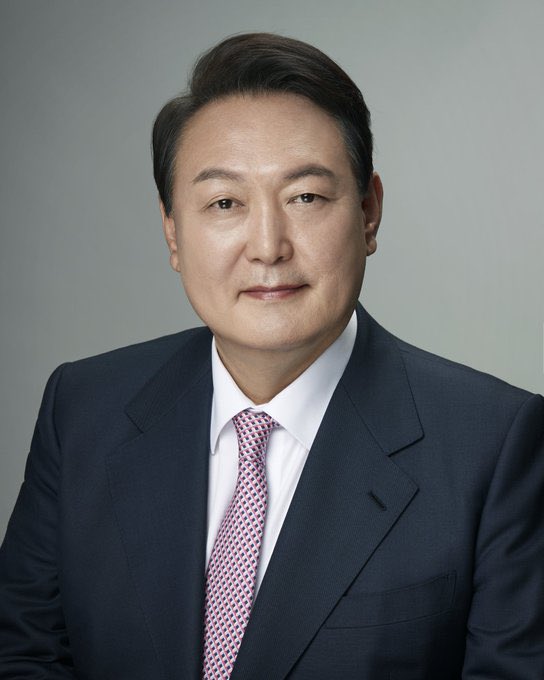
South Korea’s Constitutional Court has officially removed President Yoon Suk Yeol from office, ending months of political uncertainty following his controversial declaration of martial law in December. The ruling, delivered on Friday, upholds an impeachment vote passed by parliament last year.
With his removal taking immediate effect, Yoon must vacate the presidential residence as the country prepares for a new election. Under South Korean law, a general election to choose his successor must be held within 60 days.
A panel of eight justices unanimously ruled that Yoon’s imposition of martial law was unconstitutional. Acting Head Judge Moon Hyung-bae stated that Yoon had exceeded his authority by bypassing due process and deploying military force against lawmakers. The court determined that there was no legitimate crisis justifying such extreme measures and that Yoon’s decision violated the democratic process and citizens’ rights.
Yoon was initially arrested in January on insurrection charges but was released in March after a court revoked his arrest warrant. However, the charges still stand, leaving him at risk of further legal consequences, including a potential life sentence.
Yoon’s removal has sparked mixed reactions across the country. Outside the court, opposition parties and critics celebrated the ruling, while near the presidential residence, conservative supporters protested, expressing disappointment with the verdict.
His downfall is particularly striking given his past role as a prosecutor who played a key part in impeaching and imprisoning former President Park Geun-hye in 2017. Ironically, Yoon now becomes the second South Korean president to be removed from office by the Constitutional Court.
Yoon narrowly won the 2022 presidential election against Democratic Party candidate Lee Jae-myung, securing 48.56% of the vote against Lee’s 47.83%—the closest margin in South Korea’s history. His presidency gained international attention for strengthening ties with the U.S., including a 2023 White House state dinner hosted by then-President Joe Biden, where he famously sang American Pie. However, back home, his administration faced criticism over labor laws, minimum wage policies, and government control over the police. His wife, Kim Keon Hee, also attracted controversy after being accused of accepting luxury gifts.
Yoon’s downfall was fueled by his decision to impose martial law on December 3, 2024, in an apparent move to shut down parliament and suppress opposition lawmakers. The order, which lasted just six hours before being rescinded, was widely condemned as an unconstitutional power grab.
He justified the decree by citing political deadlock and alleged threats from “anti-state forces” linked to North Korea. However, military commanders later testified that they had been ordered to physically remove lawmakers from parliament. This revelation further damaged Yoon’s credibility and fueled calls for his removal.
Despite retracting the order, Yoon could not recover politically. His impeachment led to a broader crisis, with parliament also voting to remove his prime minister and acting president.
South Korea now enters a crucial transition period as the country prepares for fresh elections. Among the leading contenders to replace Yoon is opposition leader Lee Jae-myung, who lost to him in 2022.
Meanwhile, Yoon remains entangled in legal battles, including his insurrection trial. Although South Korea has not carried out an execution in decades, insurrection charges carry a maximum penalty of life imprisonment or capital punishment.

