

What Was Stephen Hawking Net Worth?

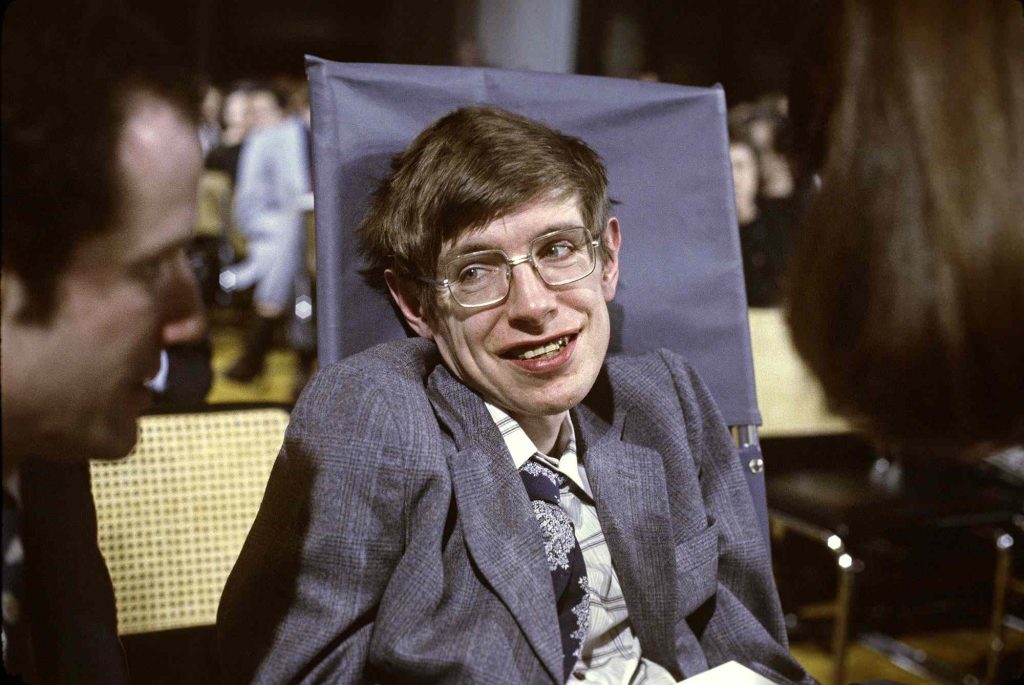
Stephen Hawking was an English theoretical physicist, cosmologist, and author who had an estimated net worth of $20 million at the time of his death in 2018.
Hawking was one of the most influential scientists of the modern era. He became internationally known for his groundbreaking work on black holes, cosmology, and the origins of the universe. Despite being diagnosed with motor neuron disease at the age of 21, he went on to build an extraordinary academic career that lasted for decades.
Hawking served as the director of research at the Centre for Theoretical Cosmology at the University of Cambridge. He was also the Lucasian Professor of Mathematics at Cambridge from 1979 until 2009, a prestigious position once held by Sir Isaac Newton.
Beyond academia, Hawking became a bestselling author and a global popularizer of science. His 1988 book A Brief History of Time introduced complex ideas about the universe to millions of readers and became one of the most successful popular science books ever published.
| Stephen Hawking Net Worth | $20 Million |
| Date of Birth | January 8, 1942 |
| Place of Birth | Oxford, England |
Early Life
Stephen William Hawking was born on January 8, 1942, in Oxford, England, to Frank and Isobel Hawking. He grew up in a family that placed a strong emphasis on education and intellectual curiosity.
As a child, Hawking attended several schools before enrolling at St Albans School. He developed a particular interest in mathematics and science and displayed an early talent for solving complex problems.
While still a student, Hawking and his friends built a basic computer using components from an old telephone switchboard and clock parts. His interest in science eventually led him to pursue physics at the University of Oxford.
Hawking began his university studies in 1959 at the age of 17. Although he was initially known for his interest in social activities and rowing, he excelled academically and graduated with honors with a degree in physics.
He later moved to the University of Cambridge to pursue graduate studies in cosmology. His research focused on the origins of the universe, general relativity, and the nature of black holes.
In 1966, Hawking earned his Ph.D. in applied mathematics and theoretical physics, specializing in general relativity and cosmology. His work on singularities also earned him the prestigious Adams Prize from the University of Cambridge.
Stephen Hawking’s Scientific Career
Hawking’s scientific career was defined by his groundbreaking research into black holes and the origins of the universe.
One of his most important contributions came in the 1970s when he demonstrated that black holes are not completely black. According to his theory, black holes can emit radiation and gradually lose energy. This phenomenon became known as Hawking radiation.
The discovery made Hawking a leading figure in theoretical physics and helped establish his reputation as one of the world’s most prominent scientists.
His work also challenged scientists to rethink existing ideas about the relationship between quantum mechanics, gravity, and black holes. His research contributed significantly to the study of cosmology and the fundamental laws governing the universe.
Hawking later became a household name through his efforts to make science accessible to the general public. His ability to explain complex scientific theories in relatively simple terms helped him reach audiences far beyond the academic world.
A Brief History of Time and Other Books
A significant portion of Stephen Hawking’s wealth came from his success as an author.
His most famous book, A Brief History of Time, was published in 1988. The book explored subjects including the Big Bang, black holes, time, space, and the origins of the universe.
Despite dealing with highly complex scientific concepts, the book became an international bestseller. It remained on the British bestseller list for a record-breaking 237 weeks and was translated into numerous languages.
The success of A Brief History of Time established Hawking as one of the world’s best-known science authors and helped generate substantial income through book sales and royalties.
He later published other works, including The Universe in a Nutshell, The Grand Design, and Black Holes and Baby Universes and Other Essays. These publications expanded his influence as a science communicator while contributing to his overall wealth.
Stephen Hawking’s Awards and Recognition
Throughout his career, Hawking received numerous awards and honors for his contributions to science.
He was awarded the Presidential Medal of Freedom, the highest civilian honor in the United States. He also received numerous academic distinctions and honorary degrees from institutions around the world.
In 2002, Hawking was ranked 25th in the BBC’s public poll of the 100 Greatest Britons.
His influence also extended into popular culture. He made appearances in television programs, including The Big Bang Theory, and his distinctive computer-generated voice became instantly recognizable around the world.
Hawking’s life was later portrayed in the 2014 biographical film The Theory of Everything, which starred Eddie Redmayne as the physicist. Redmayne won the Academy Award for Best Actor for his performance.

Health Challenges
Stephen Hawking was diagnosed with amyotrophic lateral sclerosis, commonly known as ALS or motor neuron disease, while he was a graduate student at Cambridge.
He was 21 when he received the diagnosis in 1963. Doctors initially believed he had only a few years to live, but Hawking defied those expectations and continued his scientific work for more than five decades.
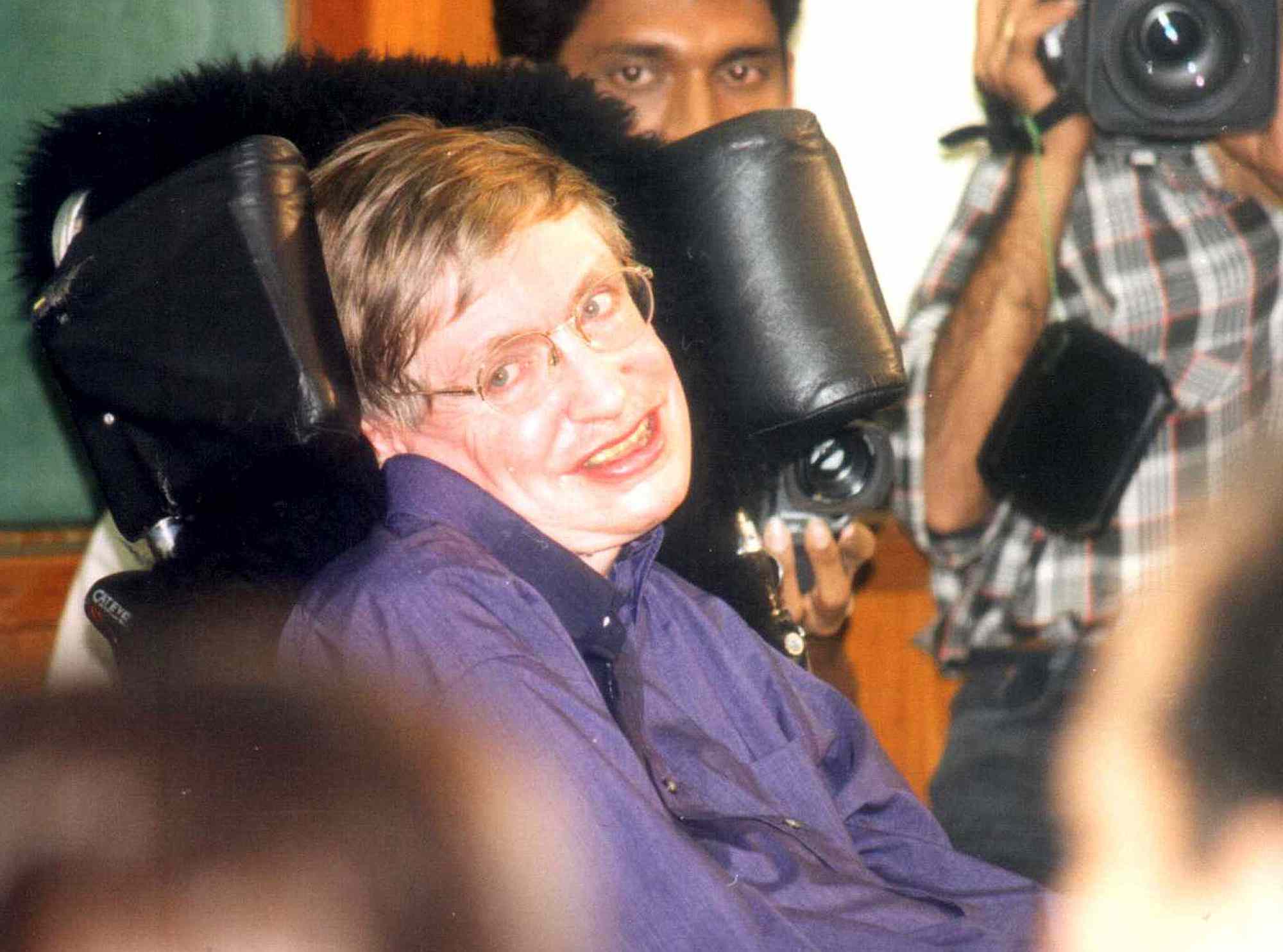
The disease gradually affected his ability to move and speak. Over time, he became almost entirely paralyzed and relied on a wheelchair and a computer-based speech-generating system to communicate.
Despite these physical challenges, Hawking continued to work, write books, give lectures, and participate in scientific discussions. His determination and achievements made him an inspirational figure to millions of people worldwide.
Personal Life
Stephen Hawking met Jane Wilde in 1962, and the two became engaged in 1964. They married on July 14, 1965, and had three children: Robert, Lucy, and Timothy.
The couple eventually divorced in 1995 after three decades of marriage. Hawking later married Elaine Mason, one of his former nurses. Their marriage ended in divorce in 2006.
Following his second divorce, Hawking became closer to his first wife, Jane, as well as his children and grandchildren.
Hawking also developed a reputation for his views on some of the biggest questions facing humanity. He believed that extraterrestrial life was likely to exist somewhere in the universe but warned that humans should be cautious about attempting contact with advanced alien civilizations.
He also described himself as an atheist and argued that the universe could be understood through the laws of science.
Death
Stephen Hawking died on March 13, 2018, at his home in Cambridge, England, at the age of 76.
Also Read: What Was Jeffrey Epstein Net Worth?

