

Support for Broad-Based Government Rises Sharply in Mt Kenya, TIFA

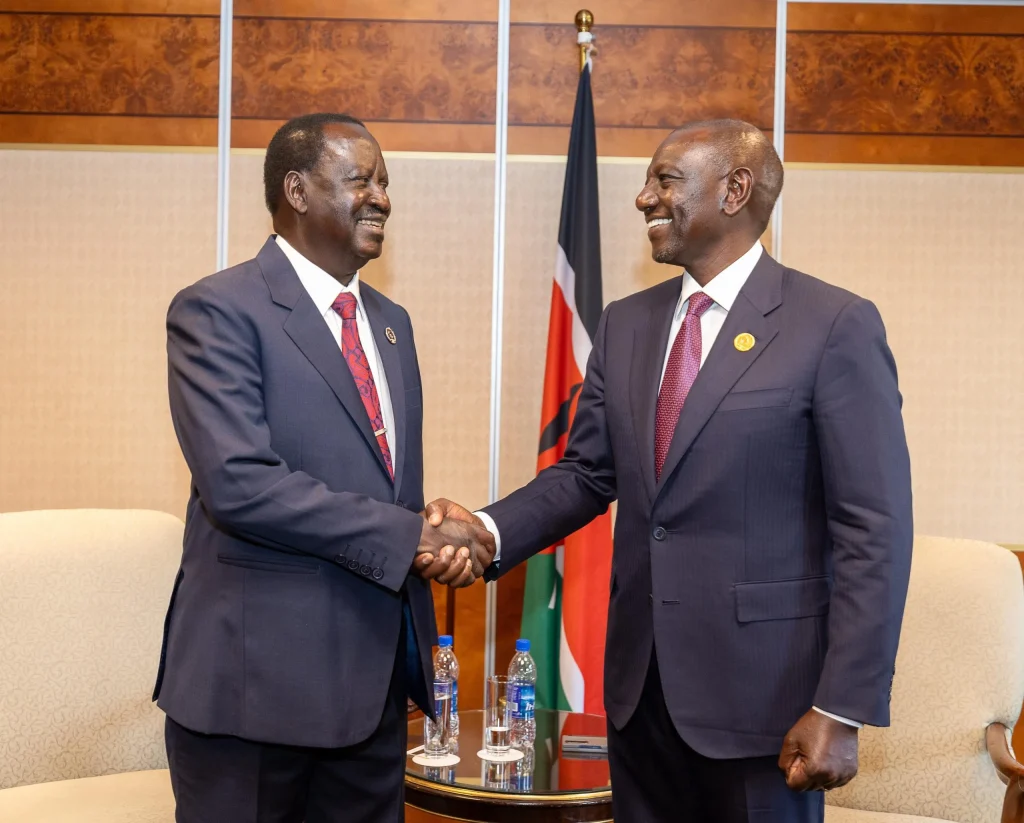
Support for the Broad-Based Government (BBG) has increased significantly in the Mt Kenya region, according to a new survey by research firm TIFA.
The survey shows that support for the BBG in Mt Kenya has risen by 11 percentage points compared to TIFA’s previous poll released on December 11, 2025. Although support in the region remains relatively low compared to other parts of the country, the increase marks a notable shift in public opinion.
The findings are based on a national survey conducted between November 10 and 17, during which 2,053 randomly selected Kenyan adults aged 18 and above were interviewed across all 47 counties.
Apart from Northern Kenya, where the BBG continues to record its highest and unchanged level of support at 61 percent, popularity of the BBG has grown sharply in several regions. Western Kenya and Nyanza recorded the biggest gains, with support rising by 31 percent and 25 percent respectively. In traditionally opposition-leaning areas such as Lower Eastern and Mt Kenya, support also increased by 15 percent and 11 percent.
“Whether such increased support derives mainly from the fading memories of the violent suppression of protests in June and July is unclear,” the TIFA report states.
The survey suggests that recent political developments may have played a role in the rising support. The Mbeere North by-election, where the United Democratic Alliance (UDA) candidate emerged victorious, is cited as one possible factor influencing attitudes in Mt Kenya.
Among Kenyans who support the BBG, the most commonly cited reason is its perceived promotion of national unity and reduction of ethnic tension. According to the survey, 72 percent of BBG supporters point to this as their main reason for backing the arrangement. Others cite increased political legitimacy and stability at 11 percent, and a fairer distribution of state resources at 10 percent.
However, the report notes that very few respondents mentioned specific government programmes such as the Hustler Fund, Social Health Authority reforms, affordable housing, education reforms or major infrastructure projects. “The absence of mentions of Kenya Kwanza’s flagship initiatives is striking,” the report observes.
On the other hand, corruption remains the main reason cited by those who oppose the BBG. About 35 percent of opponents say corruption is their biggest concern. Nearly as many, at 31 percent, argue that the BBG undermines democracy by weakening opposition oversight, particularly following the inclusion of the Orange Democratic Movement (ODM) in government.
Other critics point to a lack of public trust, participation, transparency and accountability, cited by 16 percent, while 13 percent say the BBG has failed to adequately address citizens’ needs. A smaller number, 3 percent, specifically mention human rights abuses.
“At the same time, it is notable that there is no mention of certain other complaints made against the BBG, such as high taxes, rising public debt or delayed county allocations,” the report adds.