

Swahili Scholars Push for AI, digital innovation to secure language’s global future

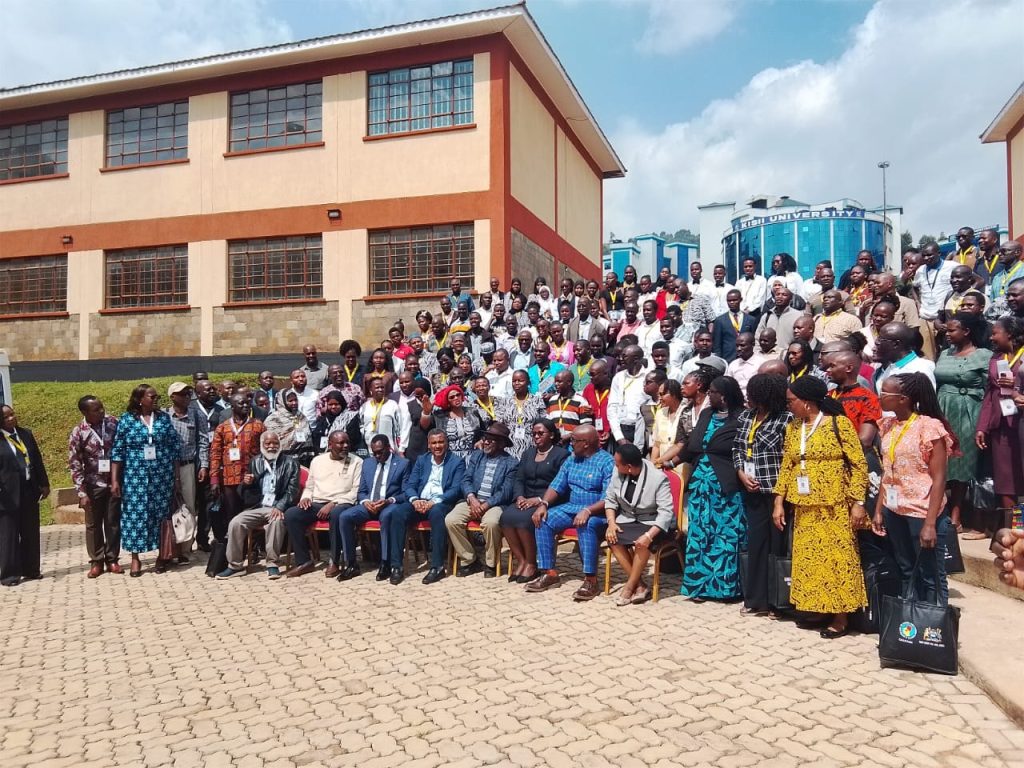
Swahili scholars, researchers, policymakers and technology experts from across East Africa have called for greater investment in artificial intelligence, digital platforms and language technologies to secure Kiswahili’s place as a leading global language in the digital age.
The call was made during a two-day regional conference that opened at Kisii University on Thursday, bringing together more than 200 delegates from universities, language institutions, government agencies and cultural organisations in Kenya, Uganda and Tanzania. Scholars from the United States also attended the forum to explore how emerging technologies can accelerate the growth of Kiswahili and enhance its competitiveness in the rapidly evolving digital economy.
The conference is examining strategies for expanding Kiswahili’s role in education, research, governance, commerce and innovation while addressing the challenges the language faces in an increasingly technology-driven world.
Kisii University Vice-Chancellor Prof. Nathan Ogechi said the meeting comes at a historic moment when Kiswahili is enjoying unprecedented international recognition.
He noted that in 2021, UNESCO proclaimed July 7 as World Kiswahili Language Day, making Kiswahili the first African language to receive such global recognition.
Today, the language is spoken by more than 200 million people across Africa and beyond and is increasingly being taught in universities across Europe, Asia and North America. Within the East African Community, Kiswahili serves as an official language and remains a key instrument for regional integration, trade and diplomacy.
Despite these milestones, Prof. Ogechi said Kiswahili still faces major challenges in the digital era.
Among them are inadequate language datasets required to develop artificial intelligence systems, limited online educational resources, insufficient investment in language technology and the overwhelming dominance of English and other foreign languages across digital platforms.
“Technology should not be viewed as a threat to Kiswahili but as one of the greatest opportunities for its expansion,” Prof. Ogechi said.
“If we invest in digital platforms, artificial intelligence and language technologies, Kiswahili will compete with the world’s leading languages.”
He said the conference seeks to identify practical solutions that will strengthen the language’s digital presence and position it for greater global influence.
Renowned author and scholar Prof. Chacha Nyachoti Chacha said Kiswahili has evolved beyond being East Africa’s lingua franca to become one of Africa’s most influential languages, gaining recognition in international institutions and universities around the world.
“Kiswahili is semantically rich and has the capacity to support scientific research, innovation and knowledge production,” he said.
“What remains is deliberate investment in digital resources that will unlock its full potential.”
He cautioned that inadequate digital infrastructure, limited funding for language technology and the dominance of foreign languages online continue to hinder the language’s growth.
Representing the East African Kiswahili Commission, Dr. Caroline Akimwe underscored the importance of research collaboration among countries in the region.
“Celebrating Kiswahili is important, but research must remain at the centre of our efforts,” she said.
“We must generate, document and share language data if Kiswahili is to flourish in the digital era.”
Former CHAKAMA chairperson and St. John’s University lecturer Dr. Shadiki Ndova urged digital content creators to use online platforms to promote positive values while expanding the language’s reach.
“As Kiswahili expands online, we must ensure the content produced promotes unity, ethics and values that strengthen our societies rather than weaken them,” he said.
Dr. Ndova encouraged writers, educators and young innovators to develop high-quality Kiswahili content through podcasts, blogs, educational websites, mobile applications and social media platforms, saying such initiatives would not only preserve the language but also create employment opportunities within the digital economy.
Jomo Kenyatta University scholar Prof. Clara Momanyi called for stronger partnerships between governments, universities and technology companies to develop digital tools such as online dictionaries, machine translation software, speech recognition systems and artificial intelligence applications.
“The future of Kiswahili lies in technology,” she said.
“We cannot expect the language to thrive globally if it is absent from the digital platforms where young people learn, communicate and innovate.”
Conference chairperson Dr. Jackline Akinyi echoed the call for increased investment in research and innovation, saying continuous technological advancement demands equally rapid development of language resources to ensure Kiswahili remains relevant and competitive.
Delegates are expected to conclude the conference by developing recommendations aimed at strengthening Kiswahili’s digital ecosystem through research, policy reforms, regional collaboration and technological innovation.
The discussions come as Kiswahili continues to gain prominence globally through its expanding use in diplomacy, education, cross-border trade and international communication.
Education Cabinet Secretary Julius Migos Ogamba is expected to address the conference on Friday.

