Tadeusz Mazowiecki Siblings: All About Jadwiga and Wojciech Mazowiecki

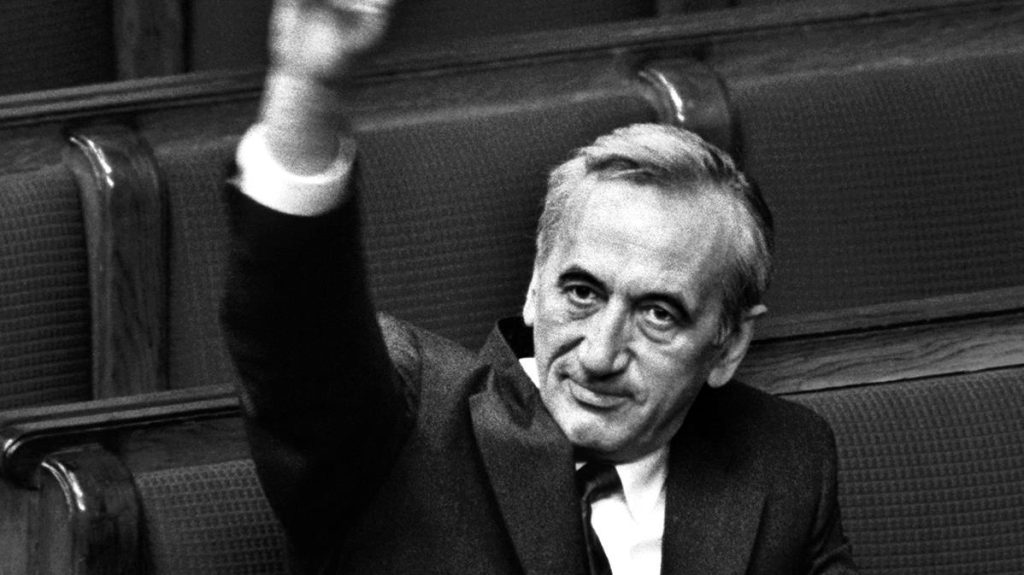
Tadeusz Mazowiecki PHOTO/Telegraph
Tadeusz Mazowiecki was a Polish author, journalist, philanthropist and politician born on 18 April 1927 in Płock and who died on 28 October 2013 in Warsaw.
He came from a Polish noble family of the Dołęga coat of arms.
His father, Bronisław Mazowiecki, was a physician who worked at the local hospital and was active in social causes, while his mother, Jadwiga Szemplińska, ran charitable work for the poor.
Mazowiecki’s education was interrupted by the Second World War; after the war he completed secondary school in Płock and began law studies at the University of Warsaw, though he did not finish the degree.
He became a leading figure in the Catholic intelligentsia, co-founded the monthly journal Więź, and later emerged as one of the principal advisers to the Solidarity movement.
In 1989 he became the first non-communist Prime Minister of Poland since the late 1940s, guiding the country through the initial phase of its democratic and economic transformation.
Siblings
Tadeusz was the youngest of three children.
His older sister, Jadwiga Krystyna Mazowiecka (1915–1994), worked as a teacher of French in Płock.
His older brother, Wojciech Mazowiecki (1925–1944), was a member of the Home Army and was killed in the Stutthof concentration camp during the German occupation.
The early loss of his brother and, later, his father left a lasting mark on the family.
Career
Mazowiecki began his public activity in the early 1950s within the official Catholic association PAX, editing Catholic newspapers before breaking with the organisation in 1955.
Also Read: Donald Tusk Siblings: Meet Sonia Tusk-Cieślak
In 1956 he co-founded the Club of the Catholic Intelligentsia in Warsaw and two years later established the independent monthly Więź, which he edited until 1981.
From 1961 to 1972 he served as a deputy in the Sejm of the Polish People’s Republic representing the independent Catholic group Znak.
In the 1970s he supported the Workers’ Defence Committee.
During the August 1980 strikes in Gdańsk he became one of Lech Wałęsa’s closest advisers and helped mobilise intellectual support for Solidarity.
Interned after the imposition of martial law, he remained a key figure in the underground opposition.
In 1989 he took part in the Round Table talks and, at Wałęsa’s request, accepted the post of Prime Minister.
His government, formed in September 1989, launched the Balcerowicz Plan of radical economic reform and began the dismantling of the communist system.
He left office in January 1991 after an unsuccessful presidential campaign.
He later founded and led the Democratic Union (later Freedom Union), served as a parliamentary deputy until 2001, and acted as the United Nations Special Rapporteur on human rights in the former Yugoslavia (1992–1995).
In his final years he served as an adviser to President Bronisław Komorowski.
Accolades
Mazowiecki received Poland’s highest state decoration, the Order of the White Eagle, in 1995.
Among his international honours were the French Legion of Honour, the Golden Order of the Coat of Arms of Bosnia, the Middle Cross with Star of the Hungarian Order of Merit, and the Srebrenica Award.
He was granted honorary doctorates by universities in Leuven, Genoa, Giessen, Poitiers, Exeter, Warsaw and Katowice, among others.
He was also named an honorary citizen of Sarajevo and Warsaw and received numerous literary and public-service prizes, including the Andrzej Strug Literary Award and the Jan Nowak-Jeziorański Award.