

Talanta Stadium 94 Per Cent Complete

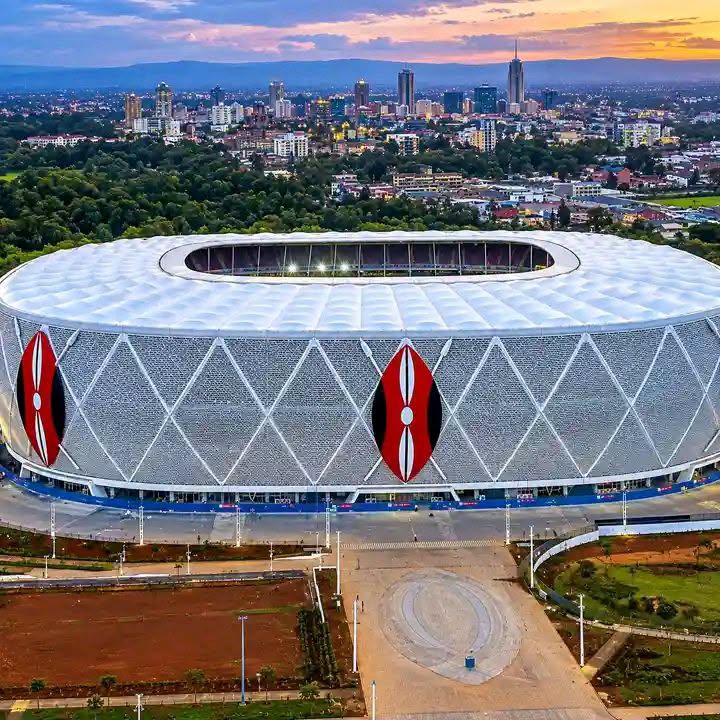
Construction of the Raila Odinga Talanta Stadium has reached 94 per cent completion as Kenya steps up preparations to co-host the 2027 Africa Cup of Nations (AFCON) tournament with Uganda and Tanzania.
The National Assembly Sports and Culture Committee inspected the 60,000-seater stadium to assess the country’s readiness to host the continental tournament.
The tournament is scheduled to run from June 19 to July 17, 2027, and will feature 24 national teams.
The committee, led by its chairperson Daniel Wanyama, was informed that the main stadium works were 95 per cent complete, while outdoor training facilities stood at 92 per cent and external works at 93 per cent.
The Ministry of Defence, which is undertaking the project, assured MPs that construction was on course for completion by December 31, the deadline set by the Confederation of African Football (CAF).
The committee was further informed that the stadium will undergo about three months of testing and commissioning after construction to ensure all systems and facilities are fully operational before the tournament.
The cost of the project currently stands at Sh45.8 billion, up from the initial budget of Sh35 billion.
The committee was told that the increase was attributed to taxes and other unavoidable costs incurred during implementation.
The Raila Odinga Talanta Stadium and Moi International Sports Centre, Kasarani, will host matches during the 2027 AFCON tournament, while several other facilities will serve as training venues.
They include Ulinzi Sports Complex, Lang’ata, Nyayo National Stadium and Police Sacco Stadium.
Four annex training facilities, two at Kasarani and two at Talanta Stadium, will also be used.
Kirigiti Stadium in Kiambu County and Utalii Sports Grounds will serve as venues for referee training.
During the inspection, MPs sought updates on infrastructure, transport, security, healthcare, water supply, hospitality and the readiness of training facilities.
Suba South MP Caroli Omondi raised concerns over recent leadership disputes within the Football Kenya Federation (FKF) and sought clarification on whether the disagreements could affect preparations for the tournament.
“Is there any potential threat from FKF that could undermine this great event that we have planned?” Caroli asked.
MPs also sought clarification on the potential impact of the anticipated El Niño rains on infrastructure around the stadium and measures being put in place to enhance security for fans.
Sports Kenya Director General Timothy Kilimo told the committee that the Kenya Rural Roads Authority (KeRRA) had started improvement works on roads serving the stadium, with completion targeted for April.
He said internal access roads were also under construction.
Kilimo said plans had been developed to manage pedestrian and vehicular movement around the stadium, including seven designated drop-off points.
A railway terminus is also being constructed next to the stadium and is expected to improve transportation during major events.
On healthcare preparedness, the committee was informed that the Confederation of African Football had inspected and approved hospitals located near the stadium.
The committee also heard that 210 hotels had applied to accommodate teams, officials and visitors during the tournament.
All the hotels had met the required qualification standards, although the high number of qualifying facilities had presented a challenge in selecting the final establishments.
Major Engineer Victor King’e, the lead project architect, said the stadium had been designed with medical centres on every floor.
He said a major medical facility on the ground floor would be equipped to handle medical emergencies and anti-doping requirements.
King’e said the stadium has an auxiliary one-million-litre water tank supplied by the Nairobi City Water and Sewerage Company.
The system is supported by two 60,000-litre backup tanks and two boreholes to ensure adequate water supply.
On electricity, the committee was informed that the stadium has eight generators capable of providing the 16-kilovolt supply required when the facility is operating at full capacity.
Solar power has also been incorporated to support external facilities, including street lighting.
Kilimo said Sports Kenya had developed a commercialisation policy that was at an advanced stage of preparation.
The policy will provide a framework for generating revenue from the facility through activities such as naming rights, concerts and other major events.
The committee will next tour the Moi International Sports Centre, Kasarani, to assess the progress of renovation works and other preparations ahead of the 2027 AFCON tournament.

