

Tanzania imposes fuel rationing on boda bodas ahead of planned protests

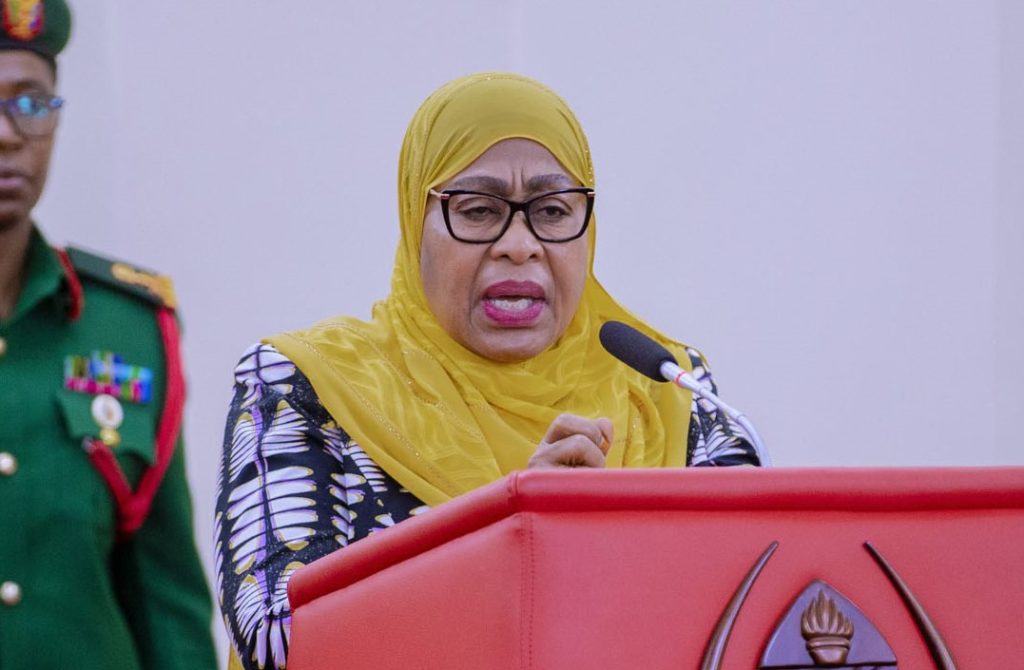
President Samia Suluhu Hassan speaking during the launch of the Independent Commission of Investigation into Incidents of Breach of Peace that occurred during and after the General Election.PHOTO/STATE HOUSE
The Tanzanian government ordered all petrol stations to limit the sale of fuel to tuk-tuks and motorbikes to two litres, a move aimed at curtailing planned demonstrations scheduled for December 9, 2025.
Police Commander Nestory John of Chunya District alleged that boda boda riders and tuk-tuk drivers are prone to transporting protesters to designated areas, causing chaos.
“We advise that ahead of the December 9, the boda boda riders and tuk tuk operators should not be sold more than two liters of fuel,” he said.
In line with the latest fuel prices by the Energy and Water Utilities Regulatory Authority (EWURA), 2 litres of petrol in Dar es Salaam goes for 5,504 Tzs, equivalent to Sh289.
The police commander further warned oil dealers to stop selling petrol along roadside areas, noting that officers will be on high alert to arrest anyone engaged in such practices.
Opposition parties had set aside December 9th for fresh demonstrations to protest what they termed as a ‘sham election’ where President Samia Suluhu won with 98 per cent of the votes.
The date coincided with the country’s Independence Day celebrations, which President Samia’s government canceled over the planned protests.
Instead, the government stated that the funds would be used to rebuild infrastructure damaged during the unrest.
“I urge my fellow Tanzanians to come together and discuss the issues affecting us. Let us not return to what we went through, because the consequences are irreparable,” Tanzania’s Prime Minister Mwigulu Nchemba stated.
His announcement comes as the opposition and others have been calling for people to gather on independence day – 9 December – to demonstrate about killings that took place following last month’s disputed poll.
The opposition believes hundreds of people died in the crackdown. The government has yet to give a death toll and has set up commission of inquiry.
President Samia Suluhu Hassan won the poll with 98% of the vote, described by the opposition as a “mockery of democracy”.
Her key opponents were unable to contest the poll: Tundu Lissu has been in detention on treason charges, which he denies, while Luhaga Mpina’s candidacy was rejected on technical grounds.
Election observers have since reported signs that the vote was manipulated and fell short of democratic standards.
An international coalition of lawyers and human rights groups has now formally asked the International Criminal Court (ICC) to investigate President Samia and her government for crimes against humanity allegedly committed during the unrest, including mass killings and the secret disposal of more than 500 bodies.
The 82-page document was formally submitted to the ICC’s Office of the Prosecutor on 13 November but was only been made public on Tuesday.
The government had imposed an internet blackout for five days from the 29 October election day and threatened anyone sharing photos from the protests.
Gruesome images and videos of dead Tanzanians have since been widely shared online, with international media verifying some of the graphic footage as authentic.
However, the government has criticised their portrayal as aimed at tarnishing the country’s image, insisting the country is safe.
On Sunday, the government spokesman Gerson Msigwa said the commission of inquiry would shed light into what happened. However, groups have raised concern over the independence of the commission.
At least 240 people were charged with treason after the protests, but the president later sought to ease tension and asked prosecutors to “show leniency”. Many of those charged have reportedly already been released.
On Monday, while announcing the cancellation of celebrations, Nchemba appealed to Tanzanians to avoid violence and insisted on the importance of political dialogue.
“I urge my fellow Tanzanians to come together and discuss the issues affecting us. Let us not return to what we went through, because the consequences are irreparable,” he said.
President Samia came into office in 2021 as Tanzania’s first female president following the death of President John Magufuli.
She was initially praised for easing political repression, but the political space has since narrowed.

