

Technological Gaps, Smuggling and Cross-Border Crime Challenge Operations at Busia Border

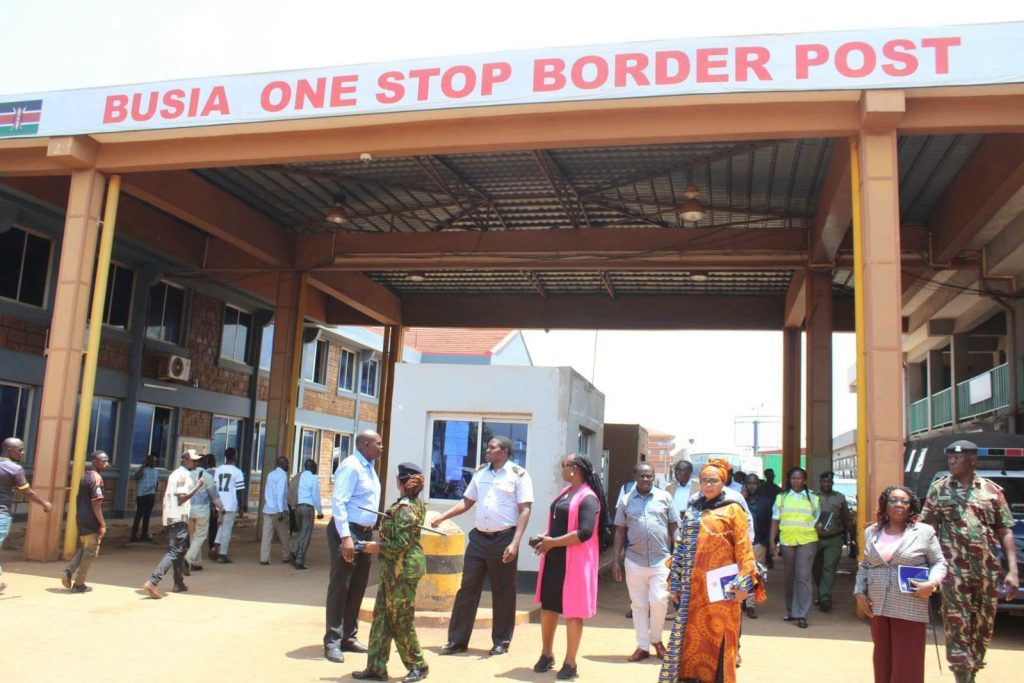
Technological gaps, limited parking space, smuggling and cross-border crimes have emerged among the key challenges affecting operations at the Busia and Malaba One-Stop Border Points (OSBPs).
The challenges were highlighted during a multi-agency stakeholder engagement by the National Assembly Select Committee on Regional Integration, which visited the two border points to assess their operations and engage government officials on the successes and challenges encountered.
The Committee, led by Chairperson Irene Mayaka, held meetings with officials from the Kenya Revenue Authority (KRA), Immigration Department and East African Community, among other agencies involved in facilitating the movement of people and goods across the borders.
The Committee also inspected the progress of the proposed Jumuia Market, which is expected to be constructed at the Busia border to promote inclusive cross-border trade among Kenyan, Ugandan and other East African traders.
KRA officials in charge of operations at the Busia and Malaba OSBPs, John Kiilu and Rodrick Safari, respectively, briefed the Committee on how the two border points operate.
The operations involve several government agencies, including the Kenya Bureau of Standards (KEBS), Agriculture and Food Authority (AFA), Kenya Forest Service (KFS), Kenya Fisheries, Immigration Department and the Ministry of East African Community, ASALs and Regional Development.
The agencies are responsible for ensuring that goods and services crossing the borders comply with the relevant requirements.
Committee members were taken through the process of scanning trucks entering Kenya from Uganda, including how technology is used to detect goods and enhance tax compliance.
“Honourable Members, all trucks entering Kenya from Uganda are scanned here and the images analyzed using our 3D machines to ensure safety and tax compliance. Passenger luggage is also scanned as we clear them at the Immigration desk,” officials explained.
However, officials said technological gaps were limiting their ability to effectively monitor activities along the border.
“We use non-intrusive scanners to manage risk and ensure tax compliance. However, we need more advanced machines as technology evolves rapidly. Provision of drones for border surveillance would greatly improve revenue collection, as we are losing a lot through non-gazetted routes,” they said.
Officials identified smuggling and cross-border crimes as other major challenges affecting operations at the two border points.
They called for greater cooperation among the three EAC Partner States and urged them to harmonise tax rates to address smuggling driven by differences in the prices of goods across the borders.
Limited parking space for trucks awaiting clearance was also identified as a challenge, with officials warning that congestion could worsen as cross-border traffic increases.
The Committee was also urged to advocate for the establishment of more border points to ease pressure on existing facilities and accommodate the expected growth in traffic over the next five years.
KRA officials told the Committee that revenue collection at the Busia and Malaba One-Stop Border Posts had increased to Sh1.4 billion, up from Sh900 million recorded during the previous year.
The increase was attributed to efforts to strengthen border operations and improve compliance among traders and other users of the facilities.
The Committee was also briefed on the proposed Jumuia Market, which is expected to support traders engaged in cross-border commerce.
Ministry of East African Community official Joseph Atito told the Committee that the process of acquiring a title deed for the proposed 40-acre site was still ongoing.
He said project designs were also yet to be completed before construction could commence.
“Once all these processes are complete, construction will start. As we speak, construction has not started,” Atito told the Committee.
Mayaka commended the government agencies operating at the two border points for their efforts and strategies aimed at facilitating the movement of people and goods and promoting trade.
She, however, encouraged the agencies to fully embrace the E-customs system to improve efficiency and increase revenue collection.

