

The County that is forgetting its dead: How urban renewal in Kisii has left the dead behind

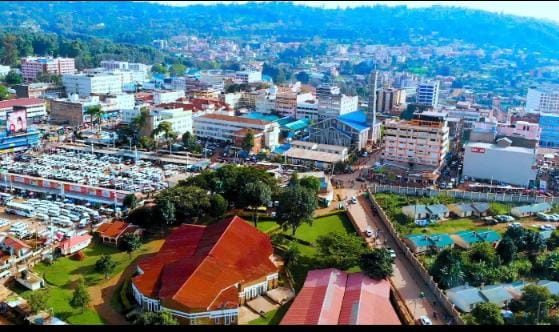
Cities are usually built with the living in mind.
In more progressive societies, however, planners also make room for the dead.
Not in Kisii.
The county’s latest urban renewal drive has created a troubling contradiction: as authorities transform Nyambera public cemetery into a modern market intended to accommodate street traders, the dead are effectively being edged out of the city’s plans.
For traders, the project promises order, dignity and economic opportunity.
For bereaved families, it presents a painful dilemma.
Kisii could soon have a modern market but no adequate alternative public cemetery—a problem that exposes the gap between rapid urban growth and the infrastructure required to support the full cycle of urban life.
For some families, the crisis is already personal.
John Getuma says his family recently struggled to find burial space after relatives sold most of their land in Mwembe.
“My parents had sold all the land and we built rental houses on what remained. When a family member died, we had nowhere to bury him,” he says.
The family eventually persuaded one of the buyers of their former land to surrender a small portion of his compound for the grave.
“It was shameful. It becomes even more painful when the municipal system cannot provide for the dead,” Getuma says.
Mary Keginka, a trader and town resident, says the absence of a functional public cemetery has left ordinary families in an increasingly difficult position.
“This town has not had a functional cemetery for more than four years. You can see the frustrations families are going through,” she says.
The problem is rooted partly in Kisii’s acute land pressure.
Shops, offices, roads, housing, markets and other developments compete for every valuable parcel of land.
“Every piece of urban land is under pressure from competing demands,” says land broker John Onsabwa.
Cemeteries rarely win that contest because they do not generate revenue.
Yet a cemetery performs an essential public function that cannot simply be left to private landowners.
Governor Simba Arati says funds allocated for acquiring alternative cemetery land at Nyatieko were lost through fictitious purchases and subsequent court battles.
He has consequently urged residents to consider cremation as an alternative.
But cremation remains unfamiliar to many families, particularly in a predominantly Christian society where burial traditions are deeply rooted.
“Some of us borrow heavily from the Bible on how we should handle the dead,” says church deaconess Mary Sarange.
For families with ancestral land in the countryside, transporting bodies home may provide an alternative.
But as Kisii becomes increasingly urbanised, that option is not available to everyone.
Dr Eric Onsongo, a Kisii University don, says a public cemetery should be treated as essential urban infrastructure.
“A city must plan not only for where people live and work, but also where they will eventually rest,” he says.
The push to create a modern market is nevertheless understandable.
Kisii’s street-vending problem has become increasingly difficult to ignore. Hawkers occupy pavements and road reserves, worsening congestion, restricting pedestrian movement and creating difficulties for formal businesses.
A properly planned market could bring much-needed order while providing traders with safer and more dignified working spaces.
But urban renewal inevitably creates winners and losers.
Moving traders into formal stalls could improve the town centre, while converting cemetery land into commercial space could stimulate economic activity.
The cost of replacing essential public land, however, can remain invisible until a family needs it.
That is why Onsongo says the county should urgently identify and secure a new public cemetery with adequate land, access roads, fencing, drainage and proper management.
Kisii cannot modernise by responding only to its most visible problems.
Traffic is visible. Hawkers are visible. Poor roads are visible.
Burial space is not.
Until death strikes.
The transformation of Nyambera cemetery into a modern market should therefore become both a symbol of Kisii’s ambitions and a warning about the consequences of urban planning that prioritises what generates immediate economic value over what serves essential public needs.
A truly modern city needs more than markets, paved streets and commercial buildings.
It must plan for the full cycle of urban life.
Kisii is making room for its traders.
It must now make room for its dead.

