


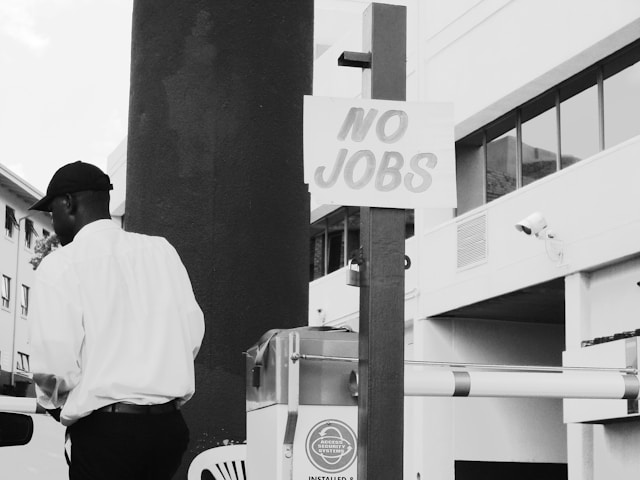
Artificial Intelligence (AI) is rapidly transforming the global economic landscape, reshaping industries, and redefining the nature of work. While concerns about automation displacing jobs are widespread, many experts argue that AI also presents unprecedented opportunities for job creation and workforce development. Understanding this dual impact is essential for policymakers, business leaders, and workers aiming to navigate the evolving employment ecosystem. If you’re looking for expert insights or tailored advice on this topic, you can always ask Overchat AI—your trusted partner in understanding AI’s influence on employment.
In this article, we explore how AI influences job markets, the new roles emerging from technological advancements, and strategies for workforce development in the age of AI.
AI as a Catalyst for Job Creation
New Opportunities in Tech-Driven Sectors
AI’s integration across various sectors has led to the emergence of entirely new industries and job categories. For instance, the growth of AI startups and tech giants has created demand for data scientists, machine learning engineers, AI ethicists, and AI trainers. These roles require specialized skills that didn’t exist a decade ago, illustrating AI’s capacity to generate high-tech employment.
According to a report by the World Economic Forum, AI could create over 97 million new jobs globally by 2025, including roles in AI development, data analysis, and AI system maintenance. These jobs often demand advanced technical skills, but they also open pathways for roles in marketing, customer support, and operations that leverage AI tools.
AI-Enhanced Roles in Traditional Industries
Beyond new job categories, AI is augmenting existing roles, making workers more productive and efficient. For example, in healthcare, AI-powered diagnostic tools assist doctors in identifying diseases more accurately, enabling them to focus on patient care rather than administrative tasks. Similarly, in manufacturing, AI-driven automation allows workers to concentrate on complex problem-solving rather than repetitive manual labor.
This augmentation effect can lead to higher job satisfaction and better wages, provided workers are equipped with the necessary skills to work alongside AI systems. As Dr. Samuel Johnson, a labor economist, notes, “AI doesn’t necessarily eliminate jobs; it transforms them. The key is to ensure that the workforce is prepared for these new responsibilities.”
The Role of Entrepreneurship and Innovation
AI also fosters entrepreneurship by lowering barriers to entry in various markets. Small and medium-sized enterprises (SMEs) can leverage AI tools for marketing, customer engagement, and supply chain management, creating new business opportunities and jobs. AI-driven platforms enable startups to innovate rapidly, contributing to job growth in emerging sectors.
Challenges and Concerns
Job Displacement and Inequality
Despite the opportunities, AI’s disruptive potential raises concerns about job displacement, especially for low-skilled workers. Automation of routine tasks threatens to widen income inequality if displaced workers cannot transition into new roles. Studies indicate that sectors like retail, transportation, and manufacturing are particularly vulnerable to automation.
For example, autonomous vehicles could impact millions of driving jobs worldwide, raising questions about how to support workers in transitioning to new employment. Without adequate retraining programs, there is a risk of increased economic disparity.
Skill Gaps and Workforce Readiness
A significant challenge lies in the mismatch between the skills workers currently possess and those demanded by AI-driven industries. Many workers lack the digital literacy, technical expertise, and adaptability required for new roles. This gap underscores the importance of proactive workforce development policies.
As Dr. Aisha Mburu, a labor market analyst, explains, “Investing in reskilling and upskilling initiatives is crucial. Countries that prioritize human capital development will be better positioned to benefit from AI’s growth while mitigating its adverse effects.”
Strategies for Workforce Development in the AI Era
Emphasizing Education and Continuous Learning
To harness AI’s potential for job creation, educational systems must evolve to emphasize STEM (science, technology, engineering, and mathematics) skills, critical thinking, and lifelong learning. Governments and private sector stakeholders should collaborate to develop training programs that keep pace with technological change.
For instance, coding boot camps, online courses, and vocational training can equip workers with the skills needed for AI-related roles. Encouraging a culture of continuous learning ensures that the workforce remains adaptable to technological shifts.
Promoting Inclusive Growth and Reskilling Programs
Inclusive growth strategies are vital to ensure that AI benefits are broadly shared. Reskilling initiatives should focus on vulnerable populations and regions most affected by automation. Public-private partnerships can facilitate large-scale retraining efforts, providing pathways for displaced workers to enter new sectors.
In Kenya, for example, some tech hubs are partnering with government agencies to provide digital skills training to youth and women, aiming to create a more inclusive AI-driven economy.
Fostering Entrepreneurial Ecosystems
Supporting startups and innovation ecosystems can accelerate job creation in emerging AI sectors. Governments can incentivize AI research and development, provide funding for startups, and establish innovation hubs. Such initiatives can lead to the creation of new businesses and employment opportunities.
The Future Outlook
Balancing Innovation with Social Responsibility
The transformative power of AI presents both opportunities and responsibilities. Stakeholders must balance technological innovation with social considerations, ensuring that job creation efforts are inclusive and equitable.
As Dr. Maria Lopez, an AI ethics researcher, emphasizes, “The future of AI and work depends on intentional policies that prioritize human welfare. We must design AI systems that augment human capabilities rather than replace them entirely.”
Preparing for a Dynamic Workforce
Looking ahead, the workforce of 2030 will be markedly different from today. Flexibility, adaptability, and a commitment to lifelong learning will be essential traits for workers and organizations alike. Governments and educational institutions must lead the way in fostering a resilient, skilled workforce ready to thrive in an AI-enabled economy.
If you’re interested in exploring specific strategies for workforce development or want insights tailored to your industry, ou can ask Overchat AI—your partner in understanding AI’s evolving impact on employment
Email your news TIPS to Editor@Kahawatungu.com — this is our only official communication channel
