


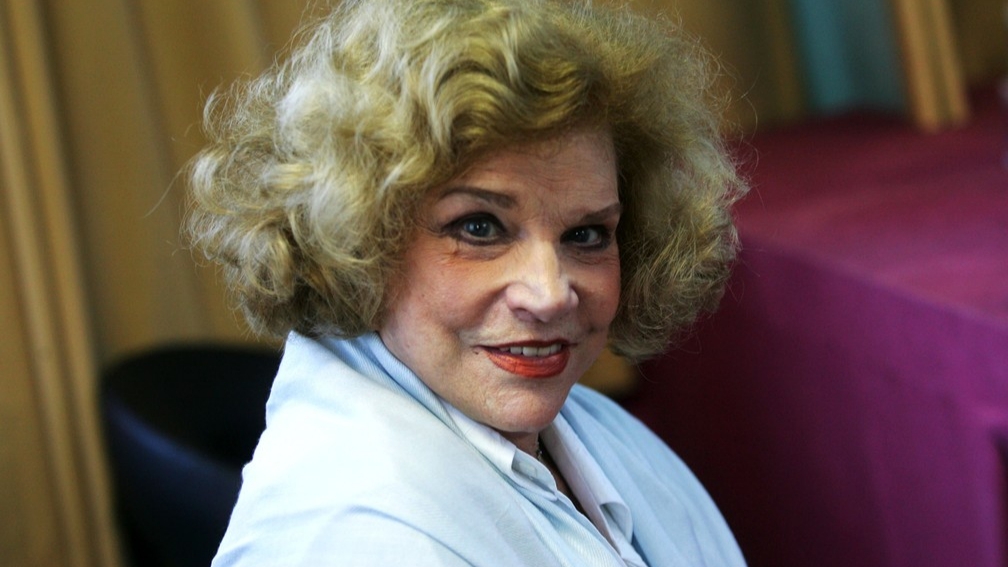
Tonia Carrero, born Maria Antonieta de Farias Portocarrero on August 23, 1922, in Rio de Janeiro, Brazil, was a renowned Brazilian actress.
She came from a family with a military background, as her father, General Hermenegildo Tavares Portocarrero, served in the armed forces, and her mother was Zilda de Farias Portocarrero.
From a young age, Carrero showed an interest in the performing arts, particularly dance, which eventually led her to pursue acting professionally.
She adopted the stage name Tonia Carrero and became one of Brazil’s most iconic figures in entertainment, known for her elegance, versatility, and strong screen presence.
Over the decades, she balanced her professional life with personal milestones, including three marriages—to artist Carlos Arthur Thiré from 1940 to 1950, Italian actor and director Adolfo Celi from 1951 to 1962, and engineer César Thedim from 1964 to 1977—and raising her son, actor Cecil Thiré, born in 1943.
Carrero passed away on March 3, 2018, in Rio de Janeiro at the age of 95 due to cardiac arrest following surgery, leaving behind a legacy celebrated in Brazilian culture.
Siblings
Tonia grew up with two older brothers, both of whom pursued careers intertwined with military service and education.
Her eldest brother was Humberto Luíz Tito de Farias Portocarrero, about whom limited public details are available, though he shared the family’s military heritage.
The other brother, General Heraldo Carlos Leopoldo de Farias Portocarrero, born in 1920, achieved distinction not only in the military but also in the field of elementary education, where he made notable contributions as a teacher and educator.
Career
Carter’s career began in the late 1940s and spanned over six decades, establishing her as a pioneer in Brazilian performing arts.
Also Read: Maria Padilha Siblings: Get to Know Angela Padilha Gonçalves
She made her theater debut at the Brazilian Theater of Comedy in São Paulo with the play “Um Deus Dormiu Lá em Casa,” starring alongside Paulo Autran, which marked the start of a fruitful collaboration.
In the 1950s, she co-founded the Tonia-Celi-Autran Company with her then-husband Adolfo Celi and Autran, revolutionizing Brazilian theater by staging a diverse repertoire that included classics by Shakespeare and Goldoni, as well as modern works by Sartre, bringing innovation and international flair to local audiences.
Her film career took off with roles in movies such as “Tico-Tico no Fubá” in 1952, where she showcased her dramatic range, followed by international appearances in films like “Alias Gardelito” in 1961 and “Copacabana Palace” in 1962.
Later films included “Pigmalião 70” in 1970 and her final big-screen role in “Chega de Saudade” in 2007, demonstrating her enduring appeal.
On television, Carrero became a household name through telenovelas, notably playing Stella Simpson in “Água Viva” in 1980, followed by prominent parts in “Louco Amor” in 1983, “Sassaricando” in 1987, and “Senhora do Destino” in 2004, where her sophisticated portrayals captivated viewers and solidified her status as a television icon.
Accolades
In 1981, Carrero won the APCA Trophy from the São Paulo Association of Art Critics for Best Actress in Television for her role in “Água Viva,” highlighting her excellence in telenovelas.
That same year, she was nominated for the Troféu Imprensa as Best Actress for the same performance, underscoring the widespread acclaim she garnered.
Later, in 2009, Carrero earned the Golden India Catalina at the Cartagena Film Festival for Best Supporting Actress in “Chega de Saudade,” a testament to her talent even in her later years.
Additionally, she was awarded the Prêmio Saci, a notable Brazilian film prize, further cementing her influence in cinema.
Email your news TIPS to Editor@Kahawatungu.com — this is our only official communication channel
