

Tooro Kingdom Succession Crisis: How King Oyo’s Burial Turned Into a Battle Over His Successor

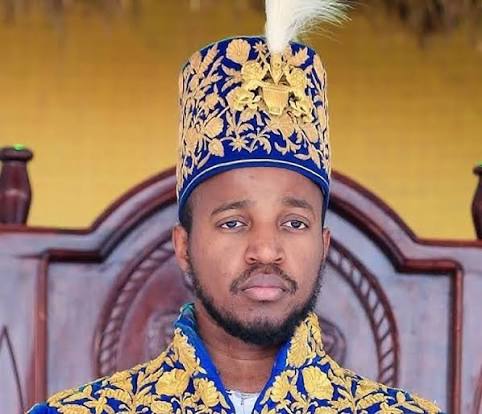
King Oyo Nyimba Kabamba Iguru Rukidi IV
FORT PORTAL, UGANDA — The death and burial of Tooro King Oyo Nyimba Kabamba Iguru Rukidi IV have plunged the kingdom into one of its most serious succession disputes in recent history, with rival claims emerging before the late monarch was even laid to rest.
At the centre of the dispute are two competing positions. The Babiito royal clan selected and publicly declared Prince Edward Rukidi Kijanangoma as the next King of Tooro, while members of King Oyo’s immediate family insist that the late monarch left a 2022 will naming his biological son as the first heir to the throne.
The controversy has now moved beyond the royal family and clan structures into the legal sphere, with Uganda’s Attorney General advising that the will and the identity and eligibility of the alleged son are matters that may ultimately have to be resolved through the courts.
At the same time, the Ugandan government has made clear that it will not formally gazette Kijanangoma as King of Tooro while the succession remains contested.
August 27, 2026: King Oyo Dies in the United States
King Oyo Nyimba Kabamba Iguru Rukidi IV died on Thursday, August 27, 2026, in Dallas, Texas, at the age of 34.
The monarch had been receiving treatment for cancer in the United States. His death brought an end to a 31-year reign that began when he ascended the Tooro throne as a three-year-old child in 1995.
Oyo became internationally known as one of the world’s youngest monarchs and remained the cultural head of the Tooro Kingdom for more than three decades.
In the statement announcing his death, Tooro Kingdom Prime Minister Calvin Armstrong Rwomiire Akiiki said the late king had left behind a prince who would be identified at an appropriate time.
That reference would become central to the succession crisis that followed.
September 4: King Oyo’s Body Returns to Uganda
On Friday, September 4, the body of King Oyo arrived at Entebbe International Airport from the United States.
After the official reception, the casket was transported by military helicopter to Kyegegwa District before being taken by road to the Karuziika Palace in Fort Portal.
The arrival marked the beginning of the official mourning period, with the late king’s body lying in state at the palace as members of the public, political leaders, cultural figures and mourners paid their final respects.
But behind the public mourning, disagreements over who would inherit the throne were already beginning to intensify.
September 9: Babiito Elders Select a Successor
The succession crisis became public on September 9 when the Babiito royal clan announced that its succession committee had selected Prince Edward Rukidi Kijanangoma as the next king.
Kijanangoma, 56, is a cousin of the late King Oyo and has worked for many years as a journalist and news presenter with Uganda’s state broadcaster, UBC.
The announcement was made by the head of the Babiito clan, Omujwera Musuuga Charles Kayondo Kamurasi.
The announcement followed an earlier development that has received comparatively little attention in the public debate. The succession committee had initially selected another royal relative, Prince George Desmond Kamurasi.
George Desmond Kamurasi, who is based in the United Kingdom and is involved in football, reportedly did not take up the position. The succession process subsequently moved to Kijanangoma.
This added another layer to an already complicated process because the royal family was simultaneously asserting that Oyo had left behind a son who should inherit the throne.
The Royal Family Rejects Kijanangoma’s Selection
King Oyo’s immediate family rejected the announcement.
Princess Ruth Komuntale, the late king’s sister, said Oyo had left a will in 2022 which named his biological son as his successor.
The royal family argued that the succession process should therefore not proceed while the alleged heir identified in the will remained unaccounted for.
Queen Mother Best Kemigisa also appealed for restraint and urged those involved in the succession dispute to allow the family to mourn.
Her message was essentially that the burial of the late monarch should take precedence over the struggle for the throne.
The Mystery of King Oyo’s Alleged Son
The most unusual element of the dispute is the identity of the alleged heir.
The royal family says King Oyo’s will provides that if he was survived by a son who was lawfully recognised as his biological child, that son would become heir to the Tooro throne.
However, the son had not previously been publicly identified by the kingdom, and questions emerged over his identity and documentation.
Members of the succession process reportedly sought information about the child, including a photograph and details concerning his mother. The information presented to the committee reportedly raised questions and inconsistencies, including conflicting information concerning the mother’s clan.
The lack of publicly established evidence concerning the alleged heir became one of the main reasons the rival succession process continued.
The dispute therefore involves at least two separate questions: whether Oyo’s alleged son exists and qualifies under the terms of the will, and whether the will itself is valid and legally applicable to the succession of the Tooro throne.
Neither question has been conclusively settled.
What King Oyo’s 2022 Will Says
The document at the centre of the dispute is a will dated September 14, 2022.
According to the legal interpretation subsequently provided by Uganda’s Attorney General, the will gives priority to a son of King Oyo who is lawfully recognised as his biological son.
The will also contains provisions for alternative succession in the event that the king had no son able to assume the throne.
The Attorney General’s interpretation is significant because it means the document cannot simply be ignored while the competing claim remains unresolved.
Attorney General Dr Sam Mayanja subsequently advised that King Oyo’s will should guide the succession unless its validity is successfully challenged in court.
Claims of “House Arrest” at the Palace
As the dispute escalated, Queen Mother Best Kemigisa alleged that the royal family had effectively been placed under house arrest.
She said royal guards had been withdrawn from the palace and soldiers deployed, restricting movement and limiting the family’s ability to receive visitors.
The Queen Mother appealed to the army leadership and President Yoweri Museveni to allow the family to mourn and bury King Oyo peacefully.
The allegations added a political and security dimension to what had initially been presented as a cultural succession dispute.
September 10: Government Intervenes
As tensions grew, the Ugandan government became increasingly involved in efforts to prevent the succession dispute from overshadowing King Oyo’s burial.
A Memorandum of Understanding was reached involving representatives of the Government of Uganda, the Queen Mother, the Musuuga and the Babiito clan.
The agreement specifically barred succession-related activity during the burial at the Karambi Royal Tombs.
The MOU stated that no succession-related ritual, declaration, installation, proclamation or other act intended to recognise or advance any claimant to the throne should take place at the royal tombs during the burial.
The agreement was intended to allow the kingdom to complete the mourning and burial ceremonies before the succession question was addressed separately.
September 11: Museveni Calls for Unity
President Yoweri Museveni intervened publicly as tensions rose.
He called on the people of Tooro to resolve the succession controversy peacefully and urged the competing sides to favour unity over division.
The President’s intervention was significant because Uganda’s traditional kingdoms have cultural authority but operate within the constitutional framework of the Republic of Uganda.
Museveni’s message was also a warning against allowing a dispute over the throne to become a wider source of political or social division in the Tooro region.
September 12: King Oyo Is Buried
King Oyo was finally laid to rest on Saturday, September 12, at the Karambi Royal Tombs in Fort Portal.
The funeral service was held at St John’s Cathedral and attracted thousands of mourners, government officials, cultural leaders, members of the royal family and representatives from different parts of Uganda.
The burial followed an approximately six-kilometre procession through Fort Portal to the royal tombs.
The ceremony was supposed to provide closure after nine days of mourning. Instead, it became another major chapter in the succession dispute.
Charles Kamurasi Declares Kijanangoma King
During the funeral service, Babiito clan head Omujwera Musuuga Charles Kayondo Kamurasi publicly declared that the kingdom had a new king.
“I now wish to state to the people of Tooro and Uganda and inform you that we have a new king.”
He identified Edward Rukidi Kijanangoma as the new King of Tooro.
The announcement produced mixed reactions among mourners, with some applauding while others objected.
The declaration was particularly significant because it came despite the agreement that succession-related declarations and rituals should not take place during the burial.
Oyo’s mother and sister did not use their funeral remarks to endorse the competing succession claim. Instead, they concentrated on remembering the late king and calling for peace and unity.
The Archbishop of the Church of Uganda, Stephen Kazimba Mugalu, similarly warned against words and actions that could deepen divisions during a period of grief.
The Nine Coffee Beans and the Battle Over the Ritual
One of the most consequential moments occurred at the Karambi Royal Tombs.
According to Tooro tradition, a successor can perform a ritual involving the casting of nine coffee beans into the grave of the deceased king. The ritual is understood as a traditional confirmation or transfer of the kingship.
Kijanangoma performed the ritual during Oyo’s burial.
However, this is where the government’s legal position becomes particularly important.
Attorney General Sam Mayanja had advised that the nine-bean ritual should be suspended because the succession was disputed. His position was that performing the ritual could be interpreted as confirming a successor before the underlying dispute had been resolved.
Despite that advice, the ritual was performed during the burial ceremonies.
The disagreement over the ritual illustrates the central problem facing Tooro: the difference between a declaration made under customary authority and recognition under Uganda’s legal and constitutional framework.
The Government Says Kijanangoma Will Not Be Gazetted Yet
The succession dispute did not end with Kijanangoma’s declaration.
Attorney General Dr Sam Mayanja said the government would not gazette Kijanangoma as the King of Tooro until the succession dispute had been resolved.
Gazettement is important because it would constitute formal government recognition of the traditional leader within the legal framework governing cultural institutions in Uganda.
Mayanja said the Babiito clan’s decision did not, by itself, resolve the dispute because the decision remained contested by members of the royal family.
He argued that where the dispute cannot be resolved through the appropriate council of elders and clan structures, the matter can be taken to court.
The Attorney General’s position effectively means that Kijanangoma can currently be described as the declared successor, king-designate or claimant to the Tooro throne, but the central government has not formally gazetted him as the recognised King of Tooro.
This distinction is likely to remain crucial as the dispute develops.
What the Attorney General Says the Law Requires
In his legal opinion, Attorney General Mayanja referred to Uganda’s Constitution, the Institution of Traditional or Cultural Leaders Act and the customs and traditions of the Batooro.
He said succession to a traditional institution is principally connected to birth and descent, meaning the existence of a direct biological descendant could have major implications for the dispute.
His interpretation was that where there is a direct descendant who qualifies under the late king’s valid will, that person should succeed according to the applicable law and customs.
Mayanja also said that any dispute concerning the validity or interpretation of Oyo’s will could ultimately be determined by a court of law.
In other words, the Attorney General has not simply declared Kijanangoma’s selection legally void. Instead, he has said that the unresolved dispute prevents the government from treating the succession as settled.
The legal opinion also raised questions surrounding the status of the Tooro Kingdom’s constitutional arrangements and the framework under which the succession is to be determined.
A Kingdom Caught Between Custom and the Law
The Tooro succession dispute presents an unusual collision between traditional authority, customary practice and modern constitutional law.
The Babiito clan is the royal clan from which Tooro kings are traditionally chosen. Its leaders therefore regard the clan’s succession process as fundamental to determining the next Omukama.
At the same time, Uganda’s Constitution recognises traditional and cultural leaders within a legal framework.
The dispute has therefore raised a difficult question: can a customary selection settle the matter when a member of the royal family produces a purported will naming another heir?
That question has not been conclusively answered.
The dispute is therefore not merely a contest between two individuals. It is also a contest over which process has the final authority to determine succession when customary selection and the late monarch’s expressed wishes appear to conflict.
Who Is Edward Rukidi Kijanangoma?
Prince Edward Rukidi Kijanangoma is a member of the Babiito royal family and a cousin of the late King Oyo.
He is 56 years old and has a long career in broadcasting. He has worked with Uganda Broadcasting Corporation, giving him a public profile that extends beyond the traditional structures of the Tooro Kingdom.
His selection by the Babiito succession committee was presented as the outcome of a customary process designed to identify Oyo’s successor.
Following the announcement, however, his position became contested by members of Oyo’s immediate family, who maintain that the late king’s son has priority under the 2022 will.
Kijanangoma’s supporters, on the other hand, maintain that the clan followed the appropriate traditional process in selecting him.
The Unanswered Question: Who Is King Oyo’s Son?
The identity of the alleged son remains one of the most closely watched aspects of the dispute.
The royal family says the child is the late king’s biological son and therefore falls within the first category of heirs identified in Oyo’s will.
However, the child’s identity and status have not been publicly established to the satisfaction of all parties involved in the succession process.
Questions have been raised concerning documentation, the child’s mother and the circumstances surrounding the claimed parentage.
Social media has meanwhile produced claims about more than one person allegedly being King Oyo’s child. Such claims should be treated with caution until they are independently verified by the royal family, court records or other authoritative sources.
The absence of a publicly verified identity has allowed speculation to flourish, making this one of the most sensitive parts of the succession dispute.
Why the Dispute Could End Up in Court
The Attorney General’s position points toward a possible legal battle.
The first question would be whether the alleged son is genuinely King Oyo’s biological child and whether he satisfies the conditions contained in the will.
The second question would concern the validity and interpretation of the will itself.
The third would involve how the provisions of the will interact with Tooro’s customary succession practices and Uganda’s laws governing traditional and cultural institutions.
A court could therefore potentially be asked to determine issues involving the will, parentage, succession rights and the legal effect of the competing customary declarations.
Until those questions are answered, competing claims to the throne are likely to continue.
What Happens Next?
The immediate future of the Tooro Kingdom is likely to revolve around several developments.
- Identification of the alleged heir: The identity and status of King Oyo’s purported son could become central to the dispute.
- Verification of the will: The authenticity and legal validity of the September 14, 2022 document could come under scrutiny.
- Action by the Babiito clan: Clan elders may be required to defend or reconsider their selection of Kijanangoma.
- Possible court proceedings: If the dispute cannot be resolved through customary mechanisms, the matter could be taken before the courts.
- Government recognition: The central government has indicated that it will not gazette Kijanangoma until the dispute is resolved.
- Questions over the traditional ritual: The fact that the nine-bean ceremony was performed despite the Attorney General’s advice could itself become part of the wider dispute.
- Potential political intervention: President Museveni and the central government may continue pushing the competing sides toward an agreement that prevents the dispute from escalating.
Why the Tooro Succession Matters
The Tooro Kingdom is one of Uganda’s traditional cultural institutions and has a significant historical and cultural presence in western Uganda.
The Omukama is not Uganda’s political head of state or head of government. However, the king holds substantial cultural significance for the Batooro and plays an important role in preserving the kingdom’s identity, traditions and institutions.
That is why the succession dispute has attracted attention far beyond the royal palace.
A prolonged disagreement could affect the functioning of the kingdom’s cultural institutions and potentially deepen divisions among members of the royal family, the Babiito clan and their supporters.
A Succession Crisis Unlike Any Other in Modern Tooro
The irony of the crisis is that King Oyo himself inherited the throne as a child after the death of his father, King Patrick Matthew Kaboyo Olimi III.
More than three decades later, his death has once again exposed difficult questions surrounding how the Tooro throne should be inherited and how customary authority should interact with Uganda’s legal system.
For now, Tooro has a declared successor in Edward Rukidi Kijanangoma, but the central government has withheld formal recognition. At the same time, members of Oyo’s immediate family continue to insist that the late king’s son is the rightful heir under his will.
The result is an extraordinary situation: King Oyo has been buried, a successor has been publicly declared and a traditional accession ritual has been performed, yet the question of who is legally and customarily entitled to occupy the Tooro throne remains unresolved.
The next decisive chapter may therefore not take place at the royal palace or the royal tombs, but in a council of elders or, ultimately, in a Ugandan courtroom.
Timeline of the Tooro Succession Dispute
- August 27, 2026: King Oyo Nyimba Kabamba Iguru Rukidi IV dies in Dallas, Texas.
- September 4, 2026: His body returns to Uganda and is taken to Karuziika Palace in Fort Portal.
- September 9, 2026: The Babiito succession committee announces Prince Edward Rukidi Kijanangoma as successor.
- September 9, 2026: Princess Ruth Komuntale rejects the selection and says Oyo left a will naming his son as heir.
- September 10, 2026: The succession dispute intensifies as questions emerge over the alleged heir and the royal family raises security concerns.
- September 10–12, 2026: Government representatives and the royal leadership agree that no succession ritual or declaration should take place during the burial.
- September 11, 2026: President Yoweri Museveni calls for unity and a peaceful resolution.
- September 12, 2026: King Oyo is buried at the Karambi Royal Tombs.
- September 12, 2026: Charles Kamurasi publicly declares Edward Rukidi Kijanangoma as the new King of Tooro.
- September 12, 2026: Kijanangoma performs the nine-coffee-bean ritual at the royal tombs.
- September 14, 2026: Attorney General Sam Mayanja says the government will not gazette Kijanangoma while the succession dispute remains unresolved and indicates that the will should guide the process unless successfully challenged.
- September 15, 2026: The succession remains disputed, with no final agreement between the royal family, the Babiito clan and the government.
Bottom Line
The Tooro succession question is not yet settled.
Prince Edward Rukidi Kijanangoma has been publicly declared by the Babiito clan as the successor to King Oyo and has performed an important traditional succession ritual. However, the late king’s immediate family disputes the selection and says Oyo left a will giving priority to his biological son.
The Ugandan government has so far stopped short of formally recognising Kijanangoma, with the Attorney General saying the matter must first be resolved.
Until the competing claims are reconciled, or a competent court determines the outstanding legal questions, Tooro’s succession remains contested.
King Oyo has been buried. The battle over who succeeds him has only just begun.

