

Top Insurers Offering Coverage for Commercial Roofing Work

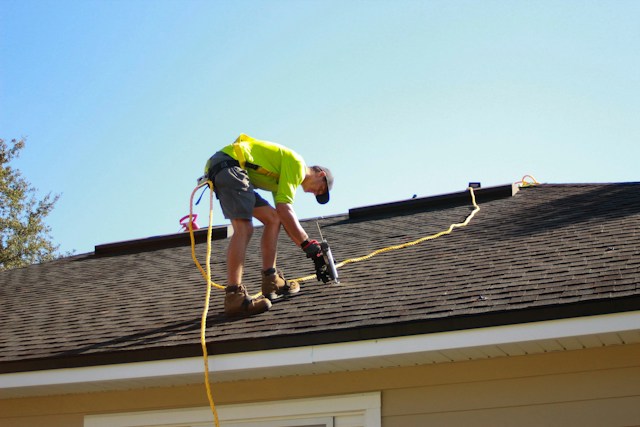
Top Insurers Offering Coverage for Commercial Roofing Work
Commercial roofing sits near the top of the risk ladder for any trade: elevated work, heavy materials, job sites that can change overnight. That combination makes finding the right insurer something more than a paperwork formality. The insurers listed here are among the top options for commercial roofing work, covering a range of contractor sizes, project types, and coverage needs.
Finding the right insurance for roofing work
Not every insurer treats roofing the same way. Some lump it in with high-risk specialty trades and price accordingly; others run construction-specific divisions that actually know the difference between a commercial flat-roof replacement and a small residential patch job. The clearest signal of a good fit is whether the insurer or broker underwrites contractors whose roofing exposure profile looks like yours: multi-story work, large crews, multi-state footprints. Size matters too. A brokerage built around $50M contractors will serve a $500K operation poorly, and the reverse is just as true.
1. Unlimited Contractors Insurance
A specialty commercial brokerage that structures layered risk-transfer programs for roofing contractors generating $1M or more in annual revenue, with access to 30+ carrier markets and a four-phase, year-round stewardship cycle.
- Coverage lines: General liability, workers’ compensation, commercial auto, excess and umbrella towers up to $100M+, builder’s risk, surety bonding, contractor’s professional liability, pollution coverage, and tools and equipment insurance. OCIP, CCIP, wrap-up programs, and subcontractor default insurance (SDI) for GCs managing multi-sub commercial projects are also available.
- Who it fits: Roofing contractors in the $5M to $100M+ revenue band who need more than a standard liability policy, particularly those running multi-state operations or working under owner-controlled insurance requirements.
- Standout feature: The four-phase stewardship cycle (risk discovery, program design, market placement, and active stewardship) replaces the once-a-year renewal call with ongoing program management. The team holds CPCU and CRIS credentials, with an average of 15+ years in construction insurance. UCI is licensed in 47 states.
2. The Hartford
A Fortune 500 carrier with over two centuries of history and a dedicated small-business commercial division that covers construction and contracting trades, including roofing.
- Coverage lines: General liability, commercial property, workers’ compensation, commercial auto, and business owner’s policies; professional liability and umbrella available.
- Who it fits: Small to mid-size roofing contractors looking for a single carrier relationship; The Hartford serves over 1.3 million small businesses and works primarily through independent agents and brokers.
- Standout feature: The company’s scale – approximately 27,220 employees and a broad claims network – means faster claims handling and financial stability backed by an S&P 500 balance sheet.
- Consideration: The Hartford is a generalist carrier rather than a construction-specialty shop, so roofing-specific risk structures like OCIP/CCIP or high excess towers typically require a separate broker to arrange.
3. Travelers
One of the largest U.S. commercial property and casualty insurers, with explicit industry-specific divisions for construction, making it a practical option for roofing contractors who need recognized carrier paper.
- Coverage lines: General liability, commercial auto and trucking, workers’ compensation, property, umbrella, surety bonds, and business owner’s policies; construction is listed as a named industry vertical.
- Who it fits: Mid-size to larger commercial roofing operations that need admitted carrier paper on construction contracts, or those bidding on projects that specify approved insurer lists.
- Standout feature: As the second-largest writer of U.S. commercial property and casualty insurance, Travelers brings underwriting depth in construction that many generalist carriers don’t. Revenue reported at $48.83 billion in 2025, per the company’s public filings, reflects meaningful claims-paying capacity.
- Consideration: Coverage is placed through independent agents, so the quality of program design depends heavily on the agent’s construction-industry knowledge.
4. biBERK (Berkshire Hathaway Direct)
A direct-to-small-business insurer operating within the Berkshire Hathaway Insurance Group, built to cut out the broker middleman and lower premiums for contractors who need standard coverage lines quickly.
- Coverage lines: General liability, workers’ compensation, business owner’s policy (BOP), professional liability (E&O), commercial auto, and umbrella.
- Who it fits: Small roofing contractors or sole operators who need straightforward liability and workers’ comp without broker fees; biBERK states its direct model can reduce premiums by up to 20% compared to traditional distribution.
- Standout feature: Policies available in all 50 states, fully online; backed by Berkshire Hathaway’s financial strength and a claims history that includes $62 billion disbursed across the group in 2025.
- Consideration: biBERK is designed for small businesses (149 employees as of mid-2024), so contractors with complex multi-state exposures, wrap-up requirements, or high excess needs will likely outgrow what a direct, standardized platform can offer.
5. Nationwide
A Fortune 100 mutual insurer headquartered in Columbus, Ohio, with an A+ rating from Standard & Poor’s and a broad commercial lines portfolio that includes contractor coverage.
- Coverage lines: Commercial general liability, workers’ compensation, commercial auto, business owners’ policies, umbrella, and specialty/surplus lines through its excess and surplus division.
- Who it fits: Roofing contractors looking for a financially stable mutual carrier with a national footprint; Nationwide ranks No. 72 on the 2025 Fortune 500 and employs approximately 24,000 people.
- Standout feature: The mutual ownership structure means no stockholder pressure on underwriting decisions, which can translate to more stable pricing over time. The company’s S&P A+ rating signals strong claims-paying ability.
- Consideration: Like most large generalist carriers, Nationwide distributes through agents rather than construction-specialist brokers, so the program a roofing contractor receives will vary based on the agent’s experience with the trade.
What insurance coverage do roofers actually need
Commercial roofing contractors typically need four coverage lines at minimum. General liability is non-negotiable on any commercial job site – it covers third-party bodily injury and property damage claims. Workers’ compensation is legally required in nearly every state; it’s especially critical in roofing, where fall injuries are both the most frequent and the most expensive claim type. Commercial auto covers the vehicles shuttling crews and materials from site to site. And an umbrella or excess liability policy adds a buffer above the general liability limit – something most commercial property owners and GCs will demand before a roofer ever sets foot on the roof.
But that’s just the floor. Larger commercial roofing operations often need builder’s risk coverage while a project is active, surety bonds to bid on public or institutional contracts, and tools and equipment insurance for high-value gear sitting on open job sites. Contractors handling design-build or specification work may also need professional liability. Anyone stepping onto a project with an OCIP or CCIP in place needs to understand exactly how that project-wide policy interacts – or conflicts – with what they’re already carrying.
The truth is, the top insurers offering coverage for commercial roofing work differ quite a bit in how well they handle the full picture. A carrier covering GL and workers’ comp is a starting point, not a finish line. On larger commercial projects, the gap between a policy that pays and one that doesn’t often traces back to how the program was put together, not which carrier’s name is on the declaration page.
Bottom Line
Roofing is one of the more closely scrutinized trades in commercial construction, and the right insurer depends on the contractor’s size, project mix, and state footprint. Small operators tend to do well with direct writers like biBERK, or with established carriers like The Hartford and Nationwide that offer standard coverage through accessible agent networks. Mid-size and larger commercial roofing contractors – especially those working across state lines or managing wrap-up programs – need something more deliberate. Honestly, that’s where construction-specialist brokers with access to multiple carriers tend to outperform what any single insurer can put together on its own.

