

Treasury Asked to Hire Key Staff to Prevent Groundwater Training Agency Collapse

The National Treasury has been urged to urgently recruit procurement and other critical officers for the Regional Centre on Groundwater Resources Education, Training and Research (RCGW) to prevent disruptions to the institution’s operations.
The recommendation was made by the National Assembly Public Investments Committee on Commercial Affairs and Energy during a review of audited accounts of the groundwater training institution covering the 2018/2019 to 2024/2025 financial years.
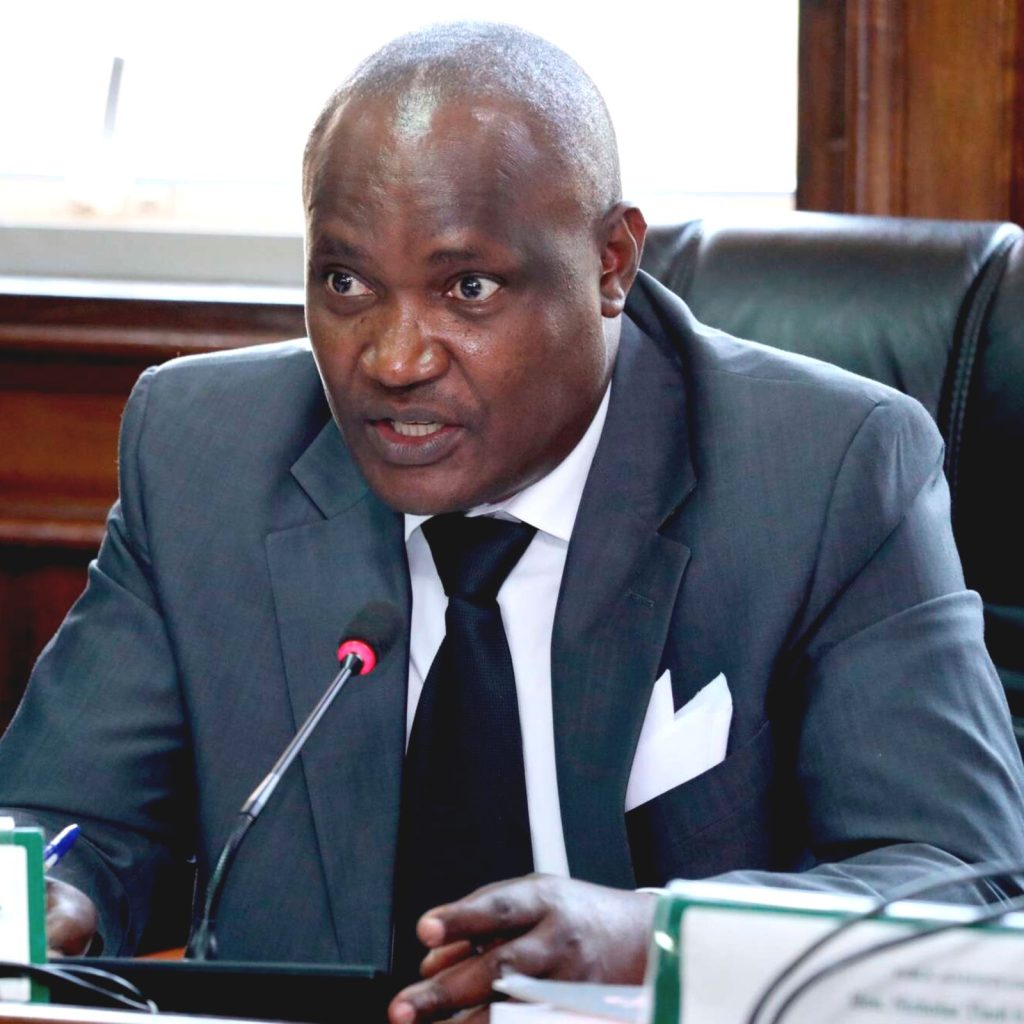
The Committee, chaired by Pokot South MP David Pkosing, raised concerns over findings by the Office of the Auditor-General that the agency was undertaking key functions outside the required legal and financial management frameworks due to a shortage of qualified personnel.
RCGW, a state corporation under the Ministry of Water, Sanitation and Irrigation, was established to promote training, research and capacity building in groundwater management, an area considered critical to Kenya’s water security and economic development.
Members noted that the shortage of personnel had affected the institution’s procurement operations, forcing it to rely on officers from the Information Communication and Technology (ICT) department to manage online procurement systems.
The Committee warned that the arrangement could expose the agency’s procurement processes to risks and trigger further audit concerns that could undermine its operations.
Consequently, lawmakers directed RCGW to engage the National Treasury to facilitate the recruitment of two procurement officers and other specialists required in key departments.
The Auditor-General had also raised concerns that the centre was operating with a limited workforce, relying largely on staff seconded from the parent ministry.
According to the audit report, only the Chief Executive Officer and four other employees were directly employed by the centre, despite its Human Resource Policy Manual of 2019 providing for a workforce of 80 officers.
“The understaffing may hinder effective delivery of services due to poor segregation of duties among the staff,” the Auditor-General noted.
RCGW Acting Chief Executive Officer Patrick Murunga told the Committee that the institution lacked authority to recruit its own employees, forcing it to depend on contractual staff and officers deployed from the ministry.
The Committee also raised concerns over weaknesses in the agency’s ICT governance systems.
The Auditor-General found that the centre had not developed and implemented an ICT policy as required under the Code of Governance for State Corporations.
The absence of an ICT policy, the auditor noted, created uncertainty on measures to safeguard data confidentiality, integrity and availability.
The audit further established that RCGW lacked a documented and tested disaster recovery plan to guide operations during ICT-related emergencies.
It also did not have an Information Technology Strategic Committee to oversee ICT operations, making it difficult to confirm the institution’s preparedness in protecting its systems and recovering from possible disruptions.
Committee Chairperson Pkosing directed the agency to appear before the committee with heads of key departments during the next meeting to address the administrative challenges affecting its operations, including human resource and ICT gaps.
“This is very important because if these issues are not resolved, you risk jeopardising your operations and it is Kenyans who will suffer,” Pkosing said.
The Committee is currently reviewing audit queries affecting water sector agencies for the period between the 2018/2019 and 2024/2025 financial years.

